
Perpetual motion
Perpetual motion refers to hypothetical devices or processes that would run indefinitely without external energy input, violating conservation of energy and thermodynamic laws; modern physics regards them as impossible.
Overview
Perpetual motion denotes the idea of a system or device that, once started, would continue motion forever and, in many formulations, deliver useful work without further energy input. In popular usage this is often expressed as a machine that requires no fuel or external source yet produces continuous energy. Such a notion conflicts with the established principles of physics, in particular the law of conservation of energy and the laws of thermodynamics.
Image gallery
5 Images
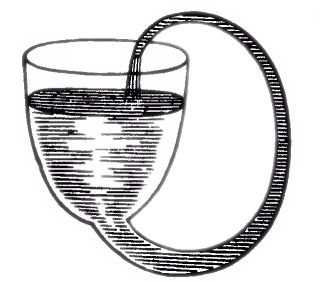


Definition and common claims
Proposed perpetual motion designs claim one or more of the following: net production of energy, complete conversion of ambient heat into work, or perfectly lossless operation. Inventors and hobbyists have described overbalanced wheels, self-refilling reservoirs, magnetic assemblies, free-energy magnets, and devices said to extract energy from environmental fluctuations. In encyclopedic and scientific contexts the term usually applies to any proposal that would produce continuous work without compensating energy input; engineers and physicists treat such claims with extreme skepticism.
Types and classification
- Perpetual motion of the first kind: Machines that would create energy and thus violate energy conservation (first law of thermodynamics).
- Perpetual motion of the second kind: Devices that would convert heat from a single reservoir entirely into work, reducing total entropy and violating the second law of thermodynamics.
- Perpetual motion of the third kind: Systems claimed to sustain motion indefinitely by eliminating dissipation (friction, wear, electrical resistance); these rely on idealized zero-loss conditions that cannot be achieved in practice.
Historical background and attempts
The pursuit of perpetual motion devices has a long history spanning many cultures and centuries. Medieval and Renaissance inventors described overbalanced wheels and other mechanical contrivances; in later centuries magnetic and thermodynamic schemes appeared. Patent offices and scientific bodies gradually responded: many patent systems require demonstrable function for claims that would imply a perpetual motion device, and scientific journals reject manuscripts that conflict with fundamental conservation laws without extraordinary evidence.
Why they are impossible in practice
Two basic principles rule out perpetual motion as a practical possibility. The first law asserts that energy cannot be created or destroyed, only transformed; any apparent net production of energy implies a hidden source or an accounting error. The second law introduces entropy and sets limits on how heat can be converted into work. Together these constrain engines and processes: losses such as friction and heat dissipation are inevitable in real systems, and extracting organized work from random thermal motion requires a compensating increase of entropy elsewhere.
Thought experiments and statistical mechanics
Famous thought experiments such as Maxwell’s demon and analyses of Brownian motion once appeared to offer loopholes. Detailed studies show that information, measurement, and microscopic fluctuations have thermodynamic costs: when these are accounted for, the apparent violation disappears. The Brownian ratchet, proposed as a device that could extract work from thermal noise, fails under scrutiny because thermal fluctuations affect every part of the apparatus and because dissipative processes restore compliance with the second law.
Patents, fraud, and cultural impact
Perpetual motion proposals have frequently led to patent applications, exhibitions, and sometimes fraud. Many patent offices now require working models or credible demonstrations for claims that would contravene known physical laws. The notion of perpetual motion remains a potent cultural metaphor for impossibility or false promises, and it has also served as a pedagogical example that motivated clearer formulations of energy conservation and entropy in the development of modern thermodynamics.
Modern claims and critical appraisal
Contemporary claims often involve magnets, so-called free-energy devices, or attempts to harness vacuum energy. While research into novel energy sources and efficiency improvements is legitimate, extraordinary claims require extraordinary evidence: independent testing, reproducible data, and consistency with established physics. Skeptical inquiry, measurement of energy flows, and adherence to thermodynamic accounting identify errors, hidden inputs, or measurement artifacts in most demonstrations.
Educational and research value
Although true perpetual motion is impossible, studying its proposals has educational value. Examining failed designs improves understanding of energy bookkeeping, irreversibility, and the limits of optimization. Courses and outreach often present perpetual motion as a case study in scientific reasoning, error analysis, and the historical development of physical law. For accessible background on tools and machines see general references to machine design and engineering; for foundational principles consult treatments of the law of conservation of energy and thermodynamics.
Summary
Perpetual motion remains a useful concept in history and education but not a practical possibility. Modern physics explains why continuous production of work without energy input or entropy increase cannot occur. Claims that appear to achieve perpetual motion should be examined rigorously, with careful measurement and attention to known conservation laws.
Questions and answers
Q: What is perpetual motion?
A: Perpetual motion refers to a movement that continues forever once started without additional energy added.
Q: Can perpetual motion machines exist?
A: No, perpetual motion machines cannot exist because they would violate the law of conservation of energy.
Q: What does the law of conservation of energy state?
A: The law of conservation of energy states that energy cannot be created or destroyed but can only be transformed from one form to another.
Q: What is the interest in perpetual motion machines?
A: Perpetual motion machines have interested inventors for a long time, even though it has been shown that such a machine cannot exist.
Q: How have perpetual motion machines been classified?
A: Perpetual motion machines have been classified into different types, each of which breaks a different law of thermodynamics.
Q: Why do people still try to build perpetual motion machines?
A: People still try to build perpetual motion machines because they are fascinated by the idea of an endless source of energy.
Q: What is the problem with perpetual motion machines?
A: The problem with perpetual motion machines is that they violate the law of conservation of energy, which is a fundamental principle of physics.
Tags
Related articles
Author
AlegsaOnline.com Perpetual motion Leandro Alegsa
URL: https://en.alegsaonline.com/art/75895
Sources
- kilty.com : "Kilty.com"
- books.google.com : Thermodynamics for Engineers
- books.google.com : Mechanical Sciences: Engineering Thermodynamics and Fluid Mechanics
- veljkomilkovic.com : Perpetuum mobile