
German South West Africa (Deutsch‑Südwestafrika)
German South West Africa was a German colony from 1884 to 1915 in the territory of present‑day Namibia, notable for its settler economy, railway development, and the violent suppression of indigenous resistance.
Overview
German South West Africa, known in German as Deutsch-Südwestafrika, was a colonial possession of the German Empire on the southwest coast of Africa. It existed formally from 1884 until military defeat and occupation in 1915. The territory corresponds to modern Namibia and from 1891 its administrative centre was the town of Windhoek, which remains the country’s capital.
Image gallery
10 Images




Territory, population and economy
The colony covered a large area, commonly given as about 835,100 km2 (roughly 322,434 sq mi). Its economy combined commercial farming by European settlers with mining, port trade and the construction of railways. German settlers established farms and towns, while infrastructure projects linked coastal harbours to inland districts.
Administration, settlement and society
Governance followed typical colonial patterns: a German governor and civil service supervised settler interests, land expropriation and labour recruitment. Missionary activity, commercial companies and rail links shaped social and economic life, and German cultural institutions left a linguistic and architectural imprint still visible in places.
Indigenous resistance and atrocities
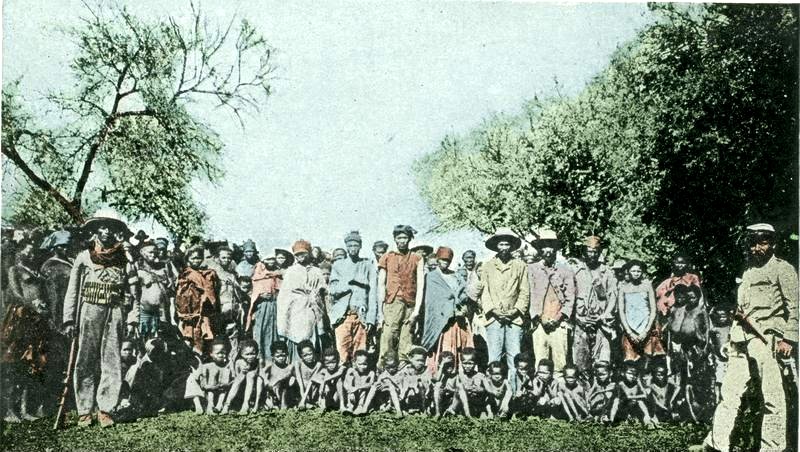
Indigenous groups, particularly the Herero and Nama, resisted dispossession and labour demands. Between 1904 and 1908 colonial forces crushed uprisings; the campaign against these groups has been widely described as genocidal and resulted in the deaths or displacement of large numbers of people, a central and tragic part of the colony’s history.
End of German rule and legacy
During World War I South African forces occupied the territory, ending German administration. After the war the League of Nations mandated it to South Africa, beginning a new chapter that ultimately led to independence as Namibia in 1990. Debates over historical memory, land, and reparations continue to influence politics and scholarship.
Key points
- Colonial dates: 1884–1915.
- Capital from 1891: Windhoek.
- Territory size: about 835,100 km2 (322,434 sq mi).
- Former colony is today Namibia.
Related articles
Author
AlegsaOnline.com German South West Africa (Deutsch‑Südwestafrika) Leandro Alegsa
URL: https://en.alegsaonline.com/art/38470