
Georg Nees: Pioneer of Computer Art and Generative Graphics
Overview of Georg Nees, a German mathematician and early computer artist, his work in generative graphics, career, methods, influence, and notable distinctions.
Overview
Georg Nees (23 June 1926 – 3 January 2016) was a German mathematician, computer scientist and artist who is widely recognized as one of the earliest pioneers of computer-generated art. Working at the intersection of mathematics, philosophy and visual design, he helped establish algorithmic processes as a legitimate means of artistic creation and contributed to the emergence of generative graphics during the mid-20th century.
Image gallery
2 Images
Education and academic career
Nees studied a combination of mathematics, physics and philosophy at universities including Erlangen and Stuttgart. Later in life he served in academic and advisory roles, teaching and promoting computational approaches to visual form. In 1977 he was named Honorary Professor of Applied Computer Science at the University of Erlangen, a recognition of his influence on both technical practice and artistic discourse. He also served as a scientific advisor to journals concerned with semiotics and aesthetics and remained active as a thinker and educator until his retirement in 1985.
Methods, style and notable approaches
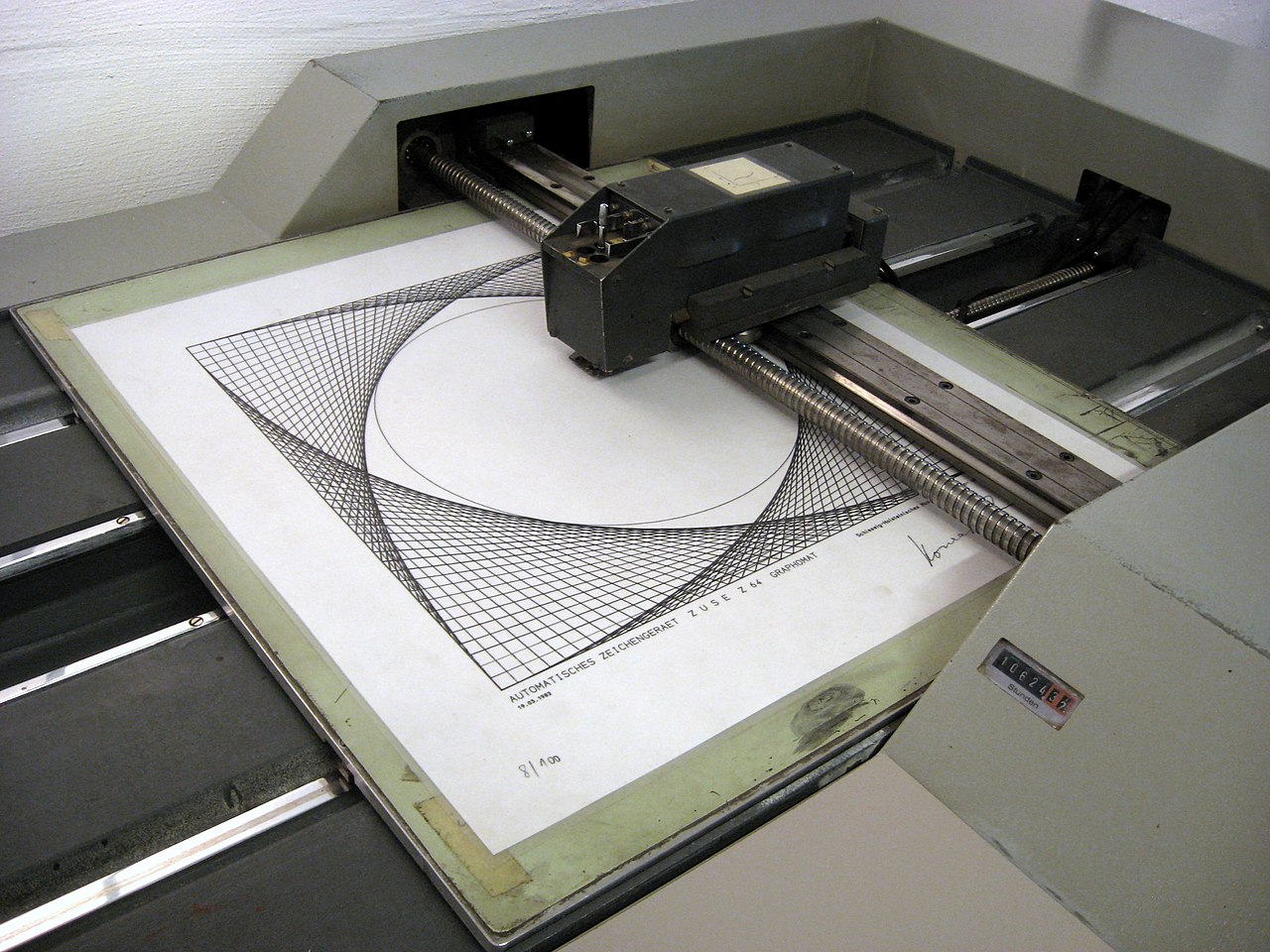
Nees's work is defined by the use of algorithmic rules and early digital devices — such as computer plotters — to produce visual compositions. Rather than manually drawing each line, he wrote programs that encoded procedures, mathematical relations and controlled random elements to generate forms. The resulting images range from precise geometric patterning to more complex, emergent structures that reveal the underlying logic of their generation. His practice demonstrated that code could function as both tool and creative collaborator.
Works, exhibitions and examples
- Many of Nees's early pieces were produced for academic exhibitions and symposia that introduced the public to machine-generated imagery.
- He participated in the first wave of digital art presentations alongside contemporaries who explored plotting devices and mainframe computation.
- Examples of his approach include iterative grid transformations, parametric line systems and programmatically varied repetitions that yield complex spatial effects.
Influence and legacy
Georg Nees is often mentioned together with Frieder Nake and A. Michael Noll as the "3N" group of early computer artists who demonstrated the expressive potential of digital computation. His combination of formal mathematico-philosophical training and practical programming helped bridge technical research and the art world, influencing later generations of generative artists, designers and researchers in fields such as procedural graphics, computational aesthetics and digital media theory. His contributions also played a part in legitimizing computer science as a discipline with creative as well as technical dimensions.
Distinctions, later life and death
Among his formal recognitions was his appointment at Erlangen and ongoing invitations to speak and advise on semiotics and visual theory. Georg Nees was born in Nuremberg and returned there later in life. He passed away on 3 January 2016 in Nuremberg; reports state the cause as heart failure. His writings, program listings and early plots remain points of reference for historians of digital art and for practitioners exploring the boundaries between rule-based systems and visual expression.
Further reading and resources
- Academic profiles and retrospective summaries: academic profile and biography.
- Details about his studies and ties to Erlangen: Erlangen university records.
- Context on his education in Stuttgart: Stuttgart studies and background.
- Biographical notes and local history from his birthplace: Nuremberg references.
- Information on his honorary professorship in applied computer science: appointment at Erlangen.
- Contemporary reports on his passing: reports of his death.
Related articles
Author
AlegsaOnline.com Georg Nees: Pioneer of Computer Art and Generative Graphics Leandro Alegsa
URL: https://en.alegsaonline.com/art/38165
Sources
- medienkunstnetz.de : medienkunstnetz.de/kuenstler/nees/biografie/
- informatik.uni-erlangen.de : informatik.uni-erlangen.de/wp-content/uploads/Jahresberichte/JB_2003.pdf
- dada.compart-bremen.de : "Georg Nees - Database of Digital Art"