
George A. Miller: Pioneer of Cognitive Psychology and Memory Research
Overview of George A. Miller (1920–2012), his role in the cognitive revolution, the 'magical number seven' finding, work on language and memory, career highlights, and lasting influence.
George Armitrage Miller (February 3, 1920 – July 22, 2012) was an American psychologist whose research and advocacy helped launch the modern field of cognitive psychology. His experimental studies of memory, language and information processing shifted psychology away from strict behaviorism toward an emphasis on internal mental structures and measurable cognitive operations. Miller's name is widely associated with the idea that human short-term storage is sharply limited, and with practical concepts such as "chunking" that follow from that observation.
Image gallery
2 Images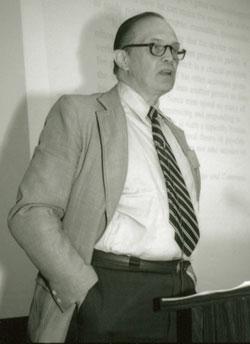
Main contributions
- Short-term memory capacity: Miller's influential 1956 paper introduced the heuristic that many people can reliably hold about seven items in immediate memory, phrased as "the magical number seven, plus or minus two." This stimulated decades of work on memory span and inspired refinements such as the distinction between short-term store and working memory.
- Chunking: From his memory studies came the idea that individuals can increase the effective amount of information they handle by organizing elements into larger, meaningful units or "chunks." This principle has been applied in education, user interface design and data presentation.
- Language and cognition: Miller conducted and promoted research at the intersection of language and thought, helping to establish psycholinguistics as a core subfield that treats language processing as an observable cognitive activity.
- Cognitive revolution and institutions: Miller was a visible proponent of studying internal mental processes and helped build institutions and groups where these ideas could be developed and tested experimentally.
Miller's original phrasing of the memory limit emphasized both experimental evidence and theoretical caution. The "seven plus or minus two" statement was never meant to be an absolute law; rather it summarized a pattern emerging from tasks like digit span, immediate recall of word lists, and judgments of absolute magnitude. Later research has shown that capacity depends on item complexity, practice, and strategies such as chunking, and has led to more nuanced models of memory and working memory.
Career and intellectual context
Active through much of the 20th century, Miller moved from an early interest in behaviorist methods to a focus on internal representation and processing. He collaborated with colleagues across psychology, linguistics and computer science to develop experimental paradigms and theoretical frameworks that treated cognition as information processing. He co-created research centers and influenced graduate training that produced many subsequent leaders in cognitive science.
Throughout his career Miller received major honors, including the National Medal of Science in 1991, in recognition of his role in making the study of the human mind an experimentally tractable scientific enterprise. He continued to write and lecture on memory, language and the methodology of cognitive science, leaving a large published legacy and a generation of students and collaborators.
Legacy and practical impact
Miller's work has had practical consequences beyond academic psychology. The chunking principle explains why telephone numbers are grouped, why headings and organization aid comprehension, and why interface designers limit information presented at once. In research, his careful mixture of experimental data with theoretical insight remains a model: cognitive psychology today builds on his insistence that internal processes can be framed as testable hypotheses and measured with rigor.
Notable facts: Miller's succinct phrasing of cognitive limits helped popularize scientific ideas; his work bridged disciplines; and his influence is visible in psychology textbooks, human factors, education, and artificial intelligence research that draws on human information-processing constraints.
For more on Miller's research and its context, see writings and retrospectives in cognitive science and psychology sources. Key themes across his work are the measurable limits of immediate memory, strategies (like chunking) that mitigate those limits, and the broader project of treating the human mind as an object of experimental study.
cognitive psychology | 20th century psychology | language studies | memory research | awards | human mind
Questions and answers
Q: Who is George A. Miller?
A: George A. Miller was one of the founders of cognitive psychology in the 20th century, who studied thinking, language, and memory.
Q: What did Miller find out about human memory?
A: Miller found that if you ask people to remember a list of words or numbers, most people can remember only between five and nine words or numbers.
Q: What did Miller's paper "The magical number seven, plus or minus two" explain?
A: Miller's paper explained the limitation of human short-term memory, stating that people can remember only between five and nine words or numbers.
Q: What did Miller explore in his studies?
A: Miller explored the areas of thinking, language, and memory in his studies.
Q: What did George A. Miller receive in 1991?
A: In 1991, George A. Miller was awarded the National Medal of Science.
Q: In what area did Miller make a shift from behaviorism to psychology?
A: Miller moved from behaviorism to cognitive psychology.
Q: How did Miller revolutionize the world of psychology?
A: Miller revolutionized the world of psychology by showing that aspects of the human mind could be observed and tested in a laboratory setting.
Related articles
Author
AlegsaOnline.com George A. Miller: Pioneer of Cognitive Psychology and Memory Research Leandro Alegsa
URL: https://en.alegsaonline.com/art/38171
Sources
- wordnet.princeton.edu : wordnet.princeton.edu/