
Anarcho-capitalism
Anarcho-capitalism is a political philosophy that advocates elimination of the state in favor of private property, voluntary markets, and private law enforcement and arbitration.
Overview
Anarcho-capitalism is a libertarian political philosophy that argues the functions typically associated with government can be provided by private, voluntary institutions operating within a market. Proponents hold that property rights, contract enforcement, and dispute resolution can be managed without coercive state power. Critics raise questions about inequality, monopolies, and public goods.
Image gallery
6 Images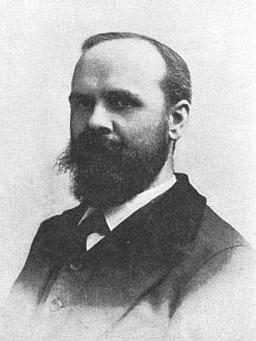


Core principles
Key ideas within anarcho-capitalism include private property as the organizing principle for social relations, non-aggression or voluntary interaction as a moral constraint, and market-based provision of services usually seen as public. Advocates envision private arbitration, insurance, and security firms replacing courts and police, and private contractual arrangements supplanting legislation. These claims are often framed in terms of efficiency, individual liberty, and consent.
History and intellectual roots
The concept took shape in the 20th century drawing on classical liberalism, Austrian economics, and individualist anarchism. Thinkers commonly associated with the school include economists and philosophers who argued for minimal or no government and for extensive reliance on markets for social coordination. For summaries and further reading see overview material and historical surveys such as introductory resources.
Practical proposals and examples
Practical proposals range from privatizing roads, courts, and security to establishing competing legal systems that citizens can choose by contract. Supporters point to private arbitration in commercial law and private security firms as partial precedents. Detractors question whether private providers would protect minority rights, supply public goods, or prevent concentrated private power.
Critiques and distinctions
- Critics argue anarcho-capitalism underestimates collective action problems, externalities, and the potential for private monopolies.
- Supporters reply that competition, reputational constraints, and voluntary associations would limit abuses and improve services.
- Analytically, anarcho-capitalism is distinct from left-wing anarchism because it emphasizes private property and markets rather than communal ownership.
Contemporary relevance
While a purely anarcho-capitalist society has not been realized, its ideas influence debates about privatization, regulatory rollback, and the role of markets in providing social services. Ongoing discussion addresses transitions, safeguards for vulnerable people, and hybrid arrangements mixing private and public institutions. For further perspectives and critiques, readers can consult critical reviews and comparative analyses at academic or educational sources.
Related articles
Author
AlegsaOnline.com Anarcho-capitalism Leandro Alegsa
URL: https://en.alegsaonline.com/art/3780
Sources
- mises.org : The Ethics of Liberty
- alexpeak.com : The Market for Liberty
- mises.org : The Production of Security
- mises.org : Equality: The Unknown Ideal
- infoshop.org : "An Anarchist FAQ - F.1 Are "anarcho"-capitalists really anarchists?"
- jimhenry.conlang.org : "Reviews by Jim Henry: Vernor Vinge"
- reason.com : "Neal Stephenson's Past, Present, and Future; The author of the widely praised Baroque Cycle on science, markets, and post-9/11 America" · web.archive.org
- interviews.slashdot.org : "Neal Stephenson Responds With Wit and Humor"
- anarchism.net : "On the Steppes of Central Asia"
- purelogic.us : "The Pure Logic of Choice"
- catallaxymedia.com : "Sharper Security Series"
- escapefromterra.com : "Big Head Press – Thoughtful Stories, Graphic Novels Online And In Print – Escape From Terra – by Sandy Sandfort, Scott Bieser, Leila Del Duca and Lee Oaks!" · web.archive.org