
Anti‑Armenian sentiment (Anti‑Armenianism)
Hostility, prejudice, or discrimination directed at Armenians, their culture, or the Republic of Armenia; ranges from individual bias to state-level persecution and denial.
Anti‑Armenian sentiment, often called anti‑Armenianism, denotes hostility toward or prejudice against Armenian people, Armenian culture, and the modern Republic of Armenia. It can appear as personal bias and hate speech, social exclusion, institutional discrimination, or organized violence and denial of historical injustices. Observers treat the phenomenon as a set of attitudes and practices that vary by place and period but share a common focus on Armenians as a target.
Image gallery
7 Images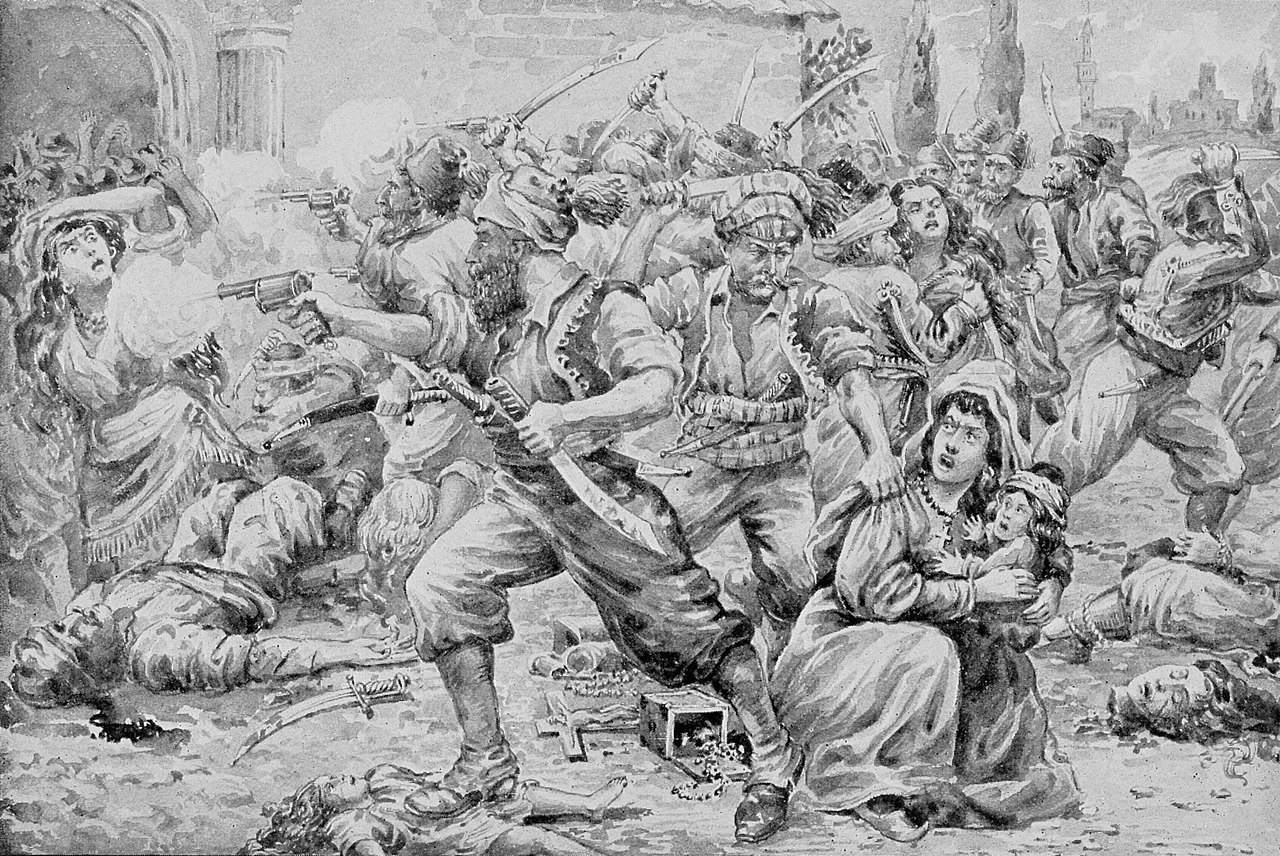


Characteristics and common forms
Expressions of anti‑Armenian sentiment include verbal attacks and stereotyping, attacks on cultural heritage, legal or administrative obstacles directed at individuals or communities, and explicit policies that marginalize or persecute. In some cases prejudice is accompanied by denial or minimization of atrocities. These patterns range from isolated acts of intolerance to structured campaigns of repression.
- Individual hostility: insults, threats, and social exclusion; sometimes framed as cultural or religious animus. See discussions of hostility or prejudice.
- Institutional discrimination: laws, administrative practices, or official rhetoric that disadvantage Armenians or erase their presence.
- Violence and persecution: targeted attacks on people, places of worship, or property; historically linked to larger conflicts and population displacements.
- Denialism and historical revision: rejection or minimization of documented mass violence, which fuels continued grievance and mistrust.
Historical and geopolitical context
Anti‑Armenian attitudes have deep historical roots in regions where Armenians have lived as a distinct ethnic and religious community. In the modern era, contentious events such as the early 20th‑century mass killings and deportations, and later interstate conflicts, shaped mutual perceptions. Contemporary geopolitics — including disputes over territory and national narratives — often intensify hostile rhetoric. Discussions about these events feature in political debates involving the Republic of Armenia and its neighbors, and are linked to questions of recognition and justice.
Contemporary manifestations and notable examples
Intense anti‑Armenian sentiment is frequently observed in connection with the Nagorno‑Karabakh conflict and with disagreements over historical memory. Nationalist groups and some political actors in neighboring countries have been identified as promoting hostile campaigns; international organizations and advocacy groups have documented abuses and documented concerns about treatment of Armenian minorities. For example, analysts point to policies in certain states and to the activities of extremist organizations as drivers of discrimination and occasional violence. The dispute over Nagorno‑Karabakh is a recurrent flashpoint in regional tensions (Nagorno‑Karabakh).
Impact, responses and distinctions
Effects of anti‑Armenian sentiment include migration, loss of cultural heritage, intercommunal mistrust, and diplomatic friction. Responses range from legal protections, truth‑seeking and memorialization efforts, to civil society campaigns against hate speech. International actors and human rights organizations monitor incidents and press for safeguards. It is important to separate legitimate criticism of policies or political actors from prejudice directed at an ethnic or national group; critique becomes problematic when it generalizes, dehumanizes, or seeks to erase rights and history.
Where to learn more
Readers seeking background on the Armenian community and related topics can consult materials on Armenian history, diaspora experiences, and contemporary politics. For the people and polity often subject to these attitudes, see general introductions to the Armenian people and the Republic of Armenia. Debates about individual acts of hatred are distinct from state policies and institutional persecution; see references on individual hatred and on institutionalized persecution. National contexts sometimes implicated in modern controversies include actions by the Turkish government and nationalist movements in the region.
Understanding anti‑Armenian sentiment requires attention to historical memory, legal protections for minorities, and how geopolitics shapes public discourse. Accurate historical research, respectful dialogue, and enforcement of anti‑discrimination norms are widely recommended responses to reduce prejudice and its harms.
Questions and answers
Q: What is Anti-Armenianism?
A: Anti-Armenianism is hostility toward or prejudice against Armenian people, Armenian culture, and the Republic of Armenia.
Q: How is anti-Armenianism expressed?
A: Anti-Armenianism can range from individual hatred to institutionalized persecution.
Q: What is the cause of difficulties experienced by the Armenian minority in Turkey?
A: Several organizations have stated that difficulties experienced by the Armenian minority in Turkey are a result of an anti-Armenian attitude by the Turkish government as well as by ultra-nationalist groups such as the Grey Wolves.
Q: Is modern anti-Armenianism based on race and culture?
A: Modern anti-Armenianism often seems to lack a racial and cultural basis and appears to be based more on geopolitics and history, in addition to diplomatic and strategic interests, involving the modern states of Turkey and Azerbaijan.
Q: What are two examples of intense anti-Armenianism?
A: The controversy and emotions surrounding the Armenian Genocide and Nagorno-Karabakh are two examples of intense anti-Armenianism in both countries.
Q: With what is modern Anti-Armenianism usually associated?
A: Modern Anti-Armenianism is usually associated with either extreme opposition to the actions or existence of the Armenian Republic and belief in an Armenian conspiracy.
Q: Why is there intense anti-Armenianism in both Turkey and Azerbaijan?
A: Intense anti-Armenianism in both Turkey and Azerbaijan is due to the controversy and emotions surrounding the Armenian Genocide and Nagorno-Karabakh.
Tags
Related articles
Author
AlegsaOnline.com Anti‑Armenian sentiment (Anti‑Armenianism) Leandro Alegsa
URL: https://en.alegsaonline.com/art/4604
Sources
- armenian.ch : Armenian
- tallarmeniantale.com : Weems Interview
- nytimes.com : "A PBS Documentary Makes Its Case for the Armenian Genocide, With or Without a Debate"
- kerimkerimov.az : kerimkerimov.az