
Gate of Yemen (Bab al-Yaman) — Main Gate of Old Sana'a
Bab al-Yaman is the principal historic gate of Sana'a's old walled city, commonly attributed to Ottoman rebuilding in the 17th century. It marks the northern entrance and remains a social and cultural landmark.
Overview
The Gate of Yemen, known in Arabic as باب اليمن (Bab al-Yaman), is the principal entrance to the old walled city of Sana'a. Positioned on the northern side of the historic city wall, the gate opens onto a public square and has long served as a visible threshold between the dense medieval urban core and the surrounding modern fabric. For a geographic reference see the map reference.
Image gallery
8 Images


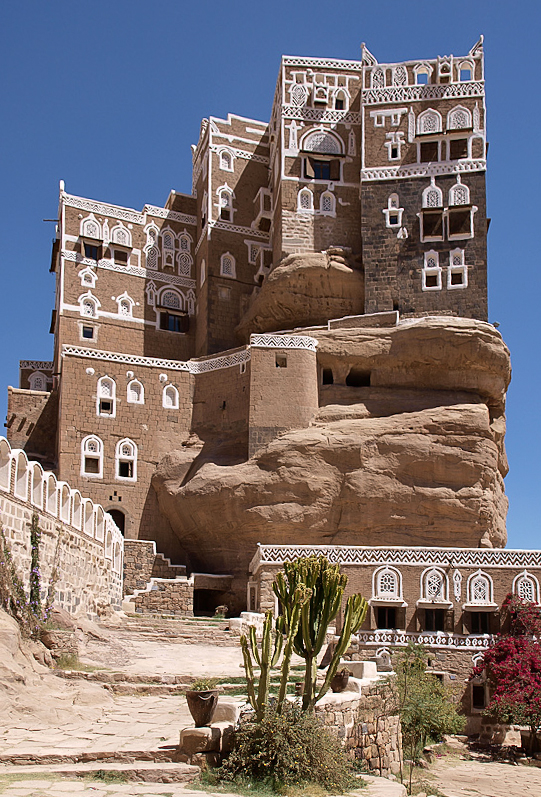
Name and location
The Arabic name literally means "Gate of Yemen" and signals the gate's historic role as a main approach toward the city from parts of the northern and central highlands. It stands within the fortified ring that defines the old city of Sana'a, whose distinctive multi-storey tower houses and compact street pattern contribute to its World Heritage recognition.
Architecture and appearance
Frequently described in accounts of the city, the gate is a monumental urban portal: a large arched opening set in a thick masonry wall, with adjacent defensive wallwork and an open space in front used traditionally for markets and traffic. The visible fabric shows layers of repair and alteration, combining local stone and brick techniques with later surface finishes. Decorative elements are generally modest and functional, consistent with fortified gates that also served as points of control and passage rather than purely ceremonial monuments.
Historical role
Local tradition and historical sources commonly associate the present gate with Ottoman-period rebuilding and maintenance, typically dated to the 17th century during Turkish administration. As the main northern entrance, Bab al-Yaman regulated movement of people, goods and information into the old city. It has been part of everyday civic life, used by merchants, pilgrims and residents, and has functioned as a meeting place and market edge for generations.
Cultural significance and conservation
Bab al-Yaman is more than an architectural feature: it is an emblem of Sana'a's continuity as an inhabited historic centre. The gate forms part of an urban landscape that has attracted attention for preservation and study, including measures to maintain structural stability and the gate's relationship to surrounding streets and markets. Conservation has faced challenges from environmental wear, changing traffic patterns and the demands of urban life.
Practical information for visitors
- Arabic name: باب اليمن
- Location: northern wall of Old Sana'a — see Sana'a
- Period: commonly associated with Ottoman (Turkish) rebuilding in the 17th century
- Country: Yemen
Visiting notes
- Approach the gate on foot to appreciate the surrounding traditional houses and market activity.
- Observe the repaired masonry and plaster layers that reveal the structure's long use and maintenance history.
- Follow local customs and sensitivities when photographing people or nearby religious sites.
- Check current travel and access conditions before planning a visit, as circumstances can change.
Overall, the Gate of Yemen remains a concise emblem of Sana'a's urban history: an entrance that has welcomed generations, adapted through repairs, and continues to signify the threshold of one of the Arabian Peninsula's most historically layered cities.
Related articles
Author
AlegsaOnline.com Gate of Yemen (Bab al-Yaman) — Main Gate of Old Sana'a Leandro Alegsa
URL: https://en.alegsaonline.com/art/37709