
Gang of Four (band)
English post-punk band from Leeds known for jagged guitar, danceable rhythms and politically charged lyrics; prominent 1977–1984, influential on alternative music and later reunions.
Gang of Four are an English post-punk band formed in Leeds in the late 1970s. The original quartet combined singer Jon King, guitarist Andy Gill, bass guitarist Dave Allen and drummer Hugo Burnham. Their sound and image were immediately distinct from contemporaries: terse, abrasive guitar lines, tight rhythm sections and lyrics that addressed politics, consumer culture and social relations.
Image gallery
4 Images


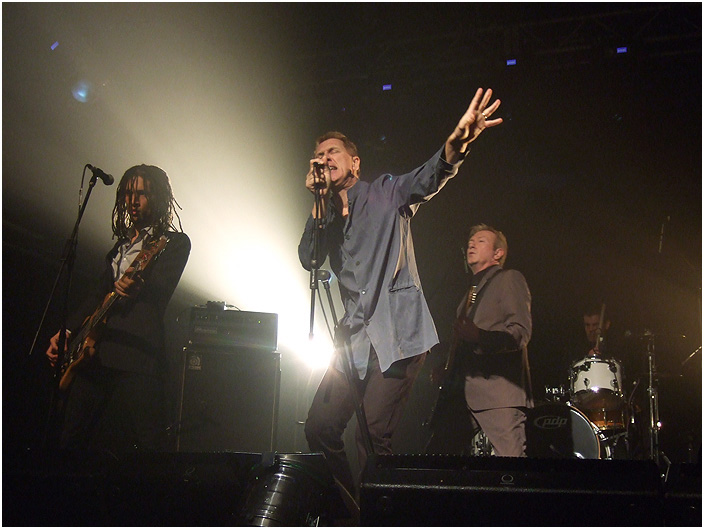
Musical style and themes
Gang of Four blended elements of punk, funk and dub with a sharp, angular guitar approach and prominent bass grooves. The band often used minimalist arrangements and danceable beats to carry incisive, sometimes Marxist-informed commentary. Songs such as "Damaged Goods" exemplify their combination of abrasive textures and rhythmic propulsion.
History and development
The group emerged from the British post-punk movement and released a string of influential records at the end of the 1970s and early 1980s, most notably the debut album Entertainment! They recorded subsequent albums including Solid Gold and Songs of the Free. During the early 1980s original members changed: Dave Allen departed and later formed Shriekback, while other personnel rotations followed. The band was most prominent between 1977 and 1984, and later incarnations continued to perform and record with Andy Gill at the helm until his death.
Influence and legacy
Gang of Four are widely cited as a crucial influence on post-punk, indie rock and alternative dance music. Critics and musicians have praised their fusion of political lyricism with grooves that invite movement, and Entertainment! is frequently listed among seminal records of its era. Their approach opened possibilities for bands to combine intellectual themes with dance-oriented production.
Members and selected releases
- Original members: Jon King (vocals), Andy Gill (guitar), Dave Allen (bass), Hugo Burnham (drums).
- Key albums: Entertainment!, Solid Gold, Songs of the Free.
- Representative single: "Damaged Goods".
For additional reading, archival material and discographies see resources and interviews linked by fan and music archives: Leeds scene pages, label histories and dedicated retrospectives online. Scholarly and popular accounts explore their role in reshaping rock music conventions and political songwriting within post-punk traditions. Further biographies and music databases provide chronologies of line-up changes and later projects associated with former members Andy Gill and others Dave Allen.
Related articles
Author
AlegsaOnline.com Gang of Four (band) Leandro Alegsa
URL: https://en.alegsaonline.com/art/37454