
Game Gear (Sega handheld video game console)
Sega's Game Gear is a handheld color-screen console introduced in 1990. It competed with the Game Boy, had a backlit colour display, a library of Sega ports and accessories including a TV tuner.
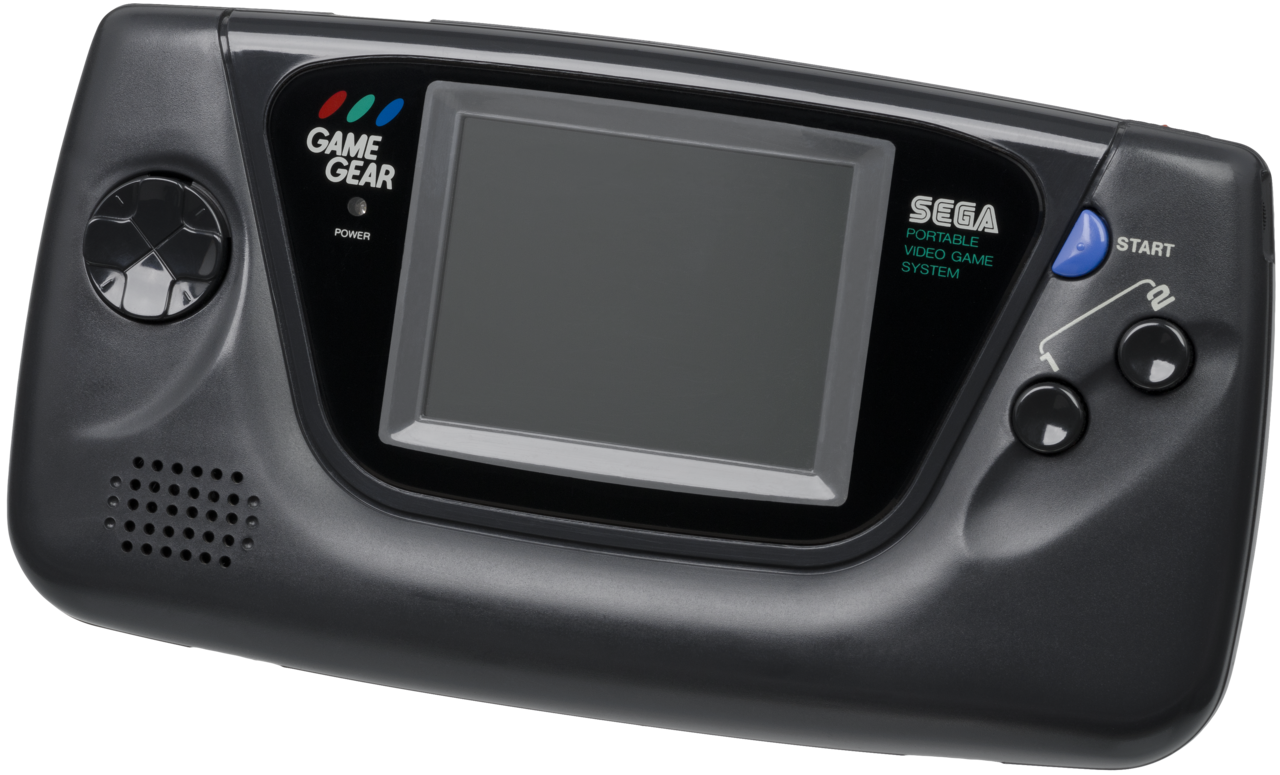
The Game Gear is a handheld video game system produced by Sega and first launched in Japan in 1990. It arrived soon afterward in other territories including Europe, the United States and Australia. Marketed as a portable alternative to home consoles, the Game Gear is best remembered for its full-colour, backlit display and a library that included original titles, arcade ports and conversions of Sega arcade and console games.
Image gallery
7 Images


Design and hardware
At the time of its release the Game Gear stood out for several hardware features. It used a backlit, active-matrix colour display rather than the monochrome screen common on rival handhelds. The unit included a built-in speaker and could also output sound to headphones. Power was supplied by six AA batteries, which gave only a few hours of play depending on screen brightness and the cartridge; as a result battery life was noticeably shorter than some competitors.
- Screen: a colour, backlit LCD (colour screen).
- Audio: mono speaker and headphone jack.
- Power: six AA cells with limited runtime.
Software, compatibility and accessories
The Game Gear library included platformers, racers, sports and arcade-style titles, many of which were ports of Sega's console and arcade hits. A number of accessories expanded its functionality: a TV tuner add-on allowed the system to receive television broadcasts, and other peripherals included a light gun, carrying cases and adapters to play converted Master System games.
- Game library featured both original games and licensed ports (Game Gear catalogue).
- Notable accessory: TV tuner.
- Expansion options: regional adapters and converters to increase playable software.
Market position and history
Sega positioned the Game Gear as a higher-spec alternative to handheld rivals. Compared with Nintendo's monochrome Game Boy from Nintendo, the Game Gear offered a colour display and more arcade-like visuals but was larger, typically sold at a higher price and consumed more power. Those trade-offs affected sales and user preference: many players valued the Game Boy's portability and long battery life, while others preferred the Game Gear's visual fidelity.
Legacy and notable facts
The Game Gear is remembered as an ambitious portable that pushed colour and display technology for handhelds of its era. Its strengths—bright colour graphics and a catalog tied to Sega's software library—were balanced by practical drawbacks such as short battery endurance. Today the system is of interest to collectors and retro-gaming enthusiasts, and it remains a notable chapter in the early 1990s handheld wars.
For more details on hardware variants, ports and region-specific releases see resources linked to Sega's production history and platform documentation: overview, manufacturer, launch region, European release, US release, Australian release, display tech, audio, power, pricing, competitor, Game Boy comparison and TV accessory.
Related articles
Author
AlegsaOnline.com Game Gear (Sega handheld video game console) Leandro Alegsa
URL: https://en.alegsaonline.com/art/37390