
Gas operation (firearms)
Gas operation diverts propellant gas from a fired cartridge to cycle autoloading weapons. Explains how it works, main system types (direct impingement, piston), components, history, examples, pros and cons.
Gas operation is a broad family of mechanical systems that harness some of the high-pressure gas produced when a cartridge is fired to drive the cycling of an autoloading firearm. Instead of relying on the shooter's manual manipulation of a bolt or a separate recoil mechanism, a gas system captures a portion of the expanding gases and converts that energy into linear or rotational motion used to unlock the action, extract and eject the spent case, cock the firing mechanism, and chamber the next round.
Image gallery
6 Images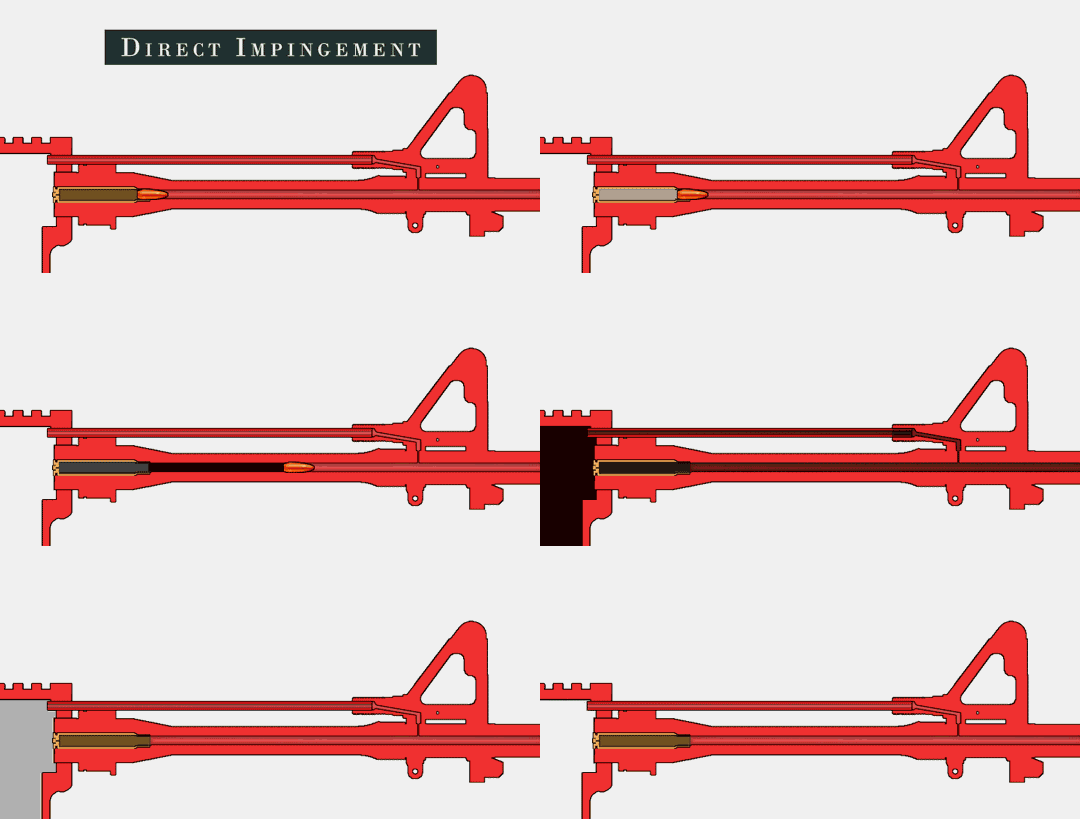


Basic components and function
- Gas port: a small hole in the barrel that bleeds gas from the bore into the gas system.
- Gas block or trap: channels the diverted gas to a tube, piston, or other receiver-side component.
- Gas tube and piston assembly: transfers gas pressure into mechanical motion; systems vary in how and where force is applied.
- Operating rod / bolt carrier: the part moved by the gas-powered element to perform unlocking, extraction, ejection, and feeding.
Different design choices determine how gas energy is delivered to the bolt and what side effects appear—heat, fouling, and the timing and magnitude of recoil impulse are all influenced by the system layout.
Major system types
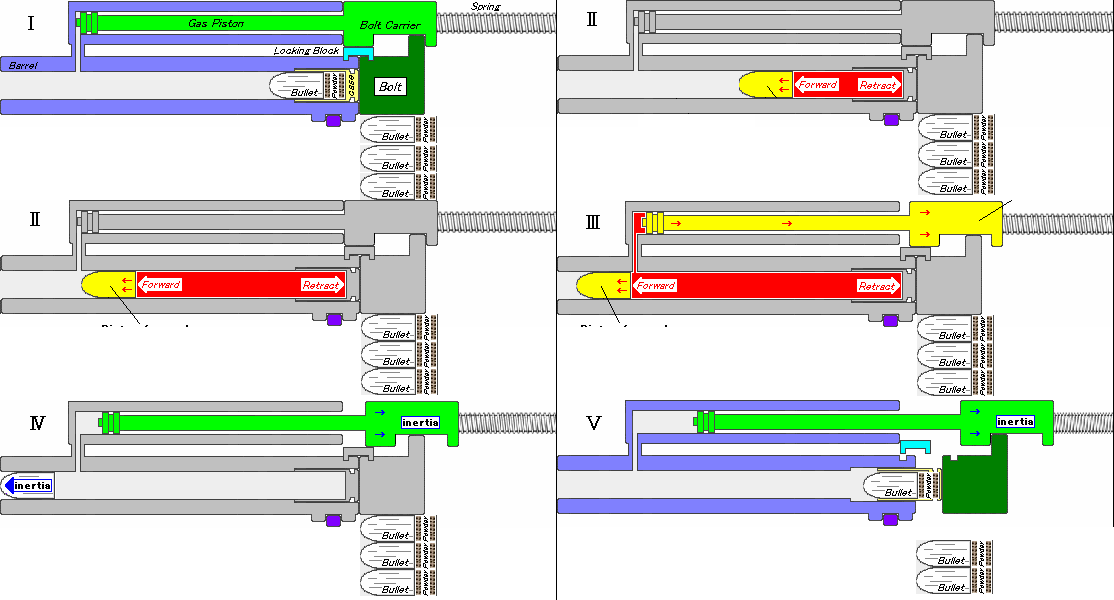
- Direct impingement (DI): gas is routed directly from the barrel into a chamber on the bolt carrier, where it expands and pushes the carrier rearward. This design is compact and lightweight but directs hot, dirty gas into the action.
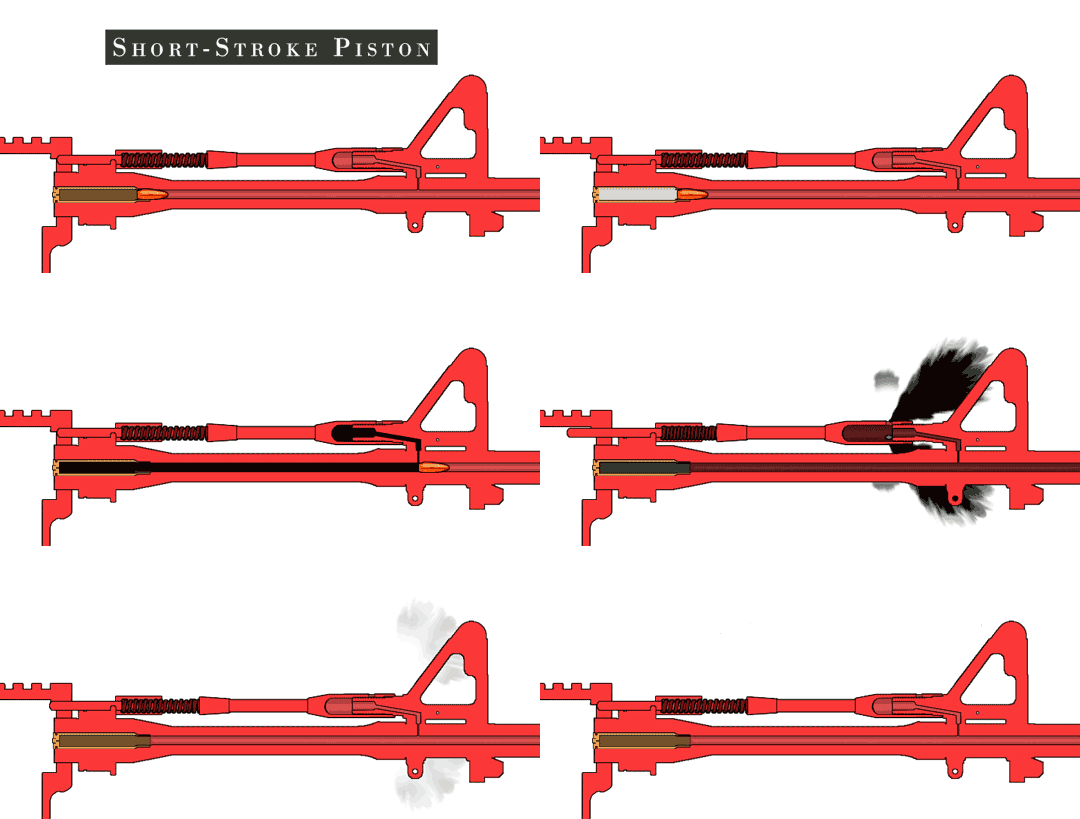
- Piston systems: a gas piston or piston head receives pressure from the gas and pushes a rod or the carrier to cycle the action. Variants include long-stroke and short-stroke pistons; these tend to keep most fouling out of the receiver while adding moving mass and sometimes complexity. Typical parts of such systems include a gas block, piston, and guide.
- Gas-trap and other historical variants: early designs attempted to capture gas at the muzzle or use elaborate traps; most have been superseded by ported barrels and simpler piston or DI systems.
These groups overlap in practice: some designs use hybrid approaches or adjustable gas blocks that let the shooter tune gas flow for suppressor use, different ammunition, or smoother operation.
History and development
Gas-operated mechanisms emerged as firearm designers sought reliable automatic and semi-automatic cycling without large external recoil assemblies. Over the 20th century the technology matured and diversified. Military service rifles and many commercial semi-automatic platforms adopted variations of gas operation because it can provide consistent, rapid cycling across successive shots when properly designed and maintained.
Uses, examples and trade-offs
Gas operation is widely used in rifles, carbines, and many semi-automatic shotguns. Well-known examples illustrate different approaches: the AR-15 family commonly uses a form of direct gas routing to the bolt carrier, while other service rifles employ piston-driven bolt carriers. Advantages of gas systems include reliable self-loading action and adaptability to different rates of fire. Drawbacks can include increased heat and carbon in the receiver (especially with DI), additional parts and weight (with piston systems), and a need for regular maintenance. Adjustable gas systems help mitigate these issues by allowing control of how much gas is used to cycle the action.
Maintenance and operational considerations
- Regular cleaning of gas ports, tubes, or piston heads prevents timing problems and malfunctions.
- Excessive fouling or a clogged port reduces gas flow and can cause failures to cycle; excessive gas can increase recoil and component wear.
- When using suppressors, subsonic ammunition, or different cartridges, adjustable gas blocks or tuned pistons are frequently employed to maintain reliable operation.
For readers seeking technical overviews or deeper comparisons, articles on autoloading firearms, general firearms mechanics, and designs of the gas piston can provide more diagrams and component-level detail.
Questions and answers
Q: What is gas-operation?
A: Gas-operation is a system of operation used to provide energy to operate autoloading firearms.
Q: How does gas operation work?
A: In gas operation, a portion of high-pressure gas from the cartridge being fired is used to power a mechanism that extracts the spent case and inserts a new cartridge into the chamber. Energy from the gas is harnessed through either a port in the barrel or a trap at the muzzle. This high-pressure gas impinges on a surface such as a piston head to provide motion for unlocking of the action, extraction of the spent case, ejection, cocking of the hammer or striker, chambering of a fresh cartridge, and locking of the action.
Q: Where does high pressure gas come from?
A: The high pressure gas comes from the cartridge being fired.
Q: How is energy from the gas harnessed?
A: Energy from the gas is harnessed through either a port in the barrel or a trap at the muzzle.
Q: What type of motion does this energy provide?
A: This energy provides motion for unlocking of the action, extraction of the spent case, ejection, cocking of hammer or striker, chambering of fresh cartridge and locking up action.
Q: Is there any other use for this system besides autoloading firearms?
A: Not that I am aware off.
Related articles
Author
AlegsaOnline.com Gas operation (firearms) Leandro Alegsa
URL: https://en.alegsaonline.com/art/37667