
Garden fork: uses, types, construction and care
Overview of the garden (spading) fork: design, types, common uses, differences from spades and pitchforks, and practical care and technique for gardeners.
Overview
A garden fork, also called a spading fork or digging fork, is a hand tool designed to loosen, lift and turn soil in garden beds and small-scale farming. It serves many of the same purposes as a spade but behaves differently when confronted with compacted earth, stones or roots: its tines penetrate without shearing, making it easier to pry and aerate soil without slicing through root systems. Many gardeners prefer the fork for working compost, breaking up clumps and preparing planting holes.
Image gallery
2 Images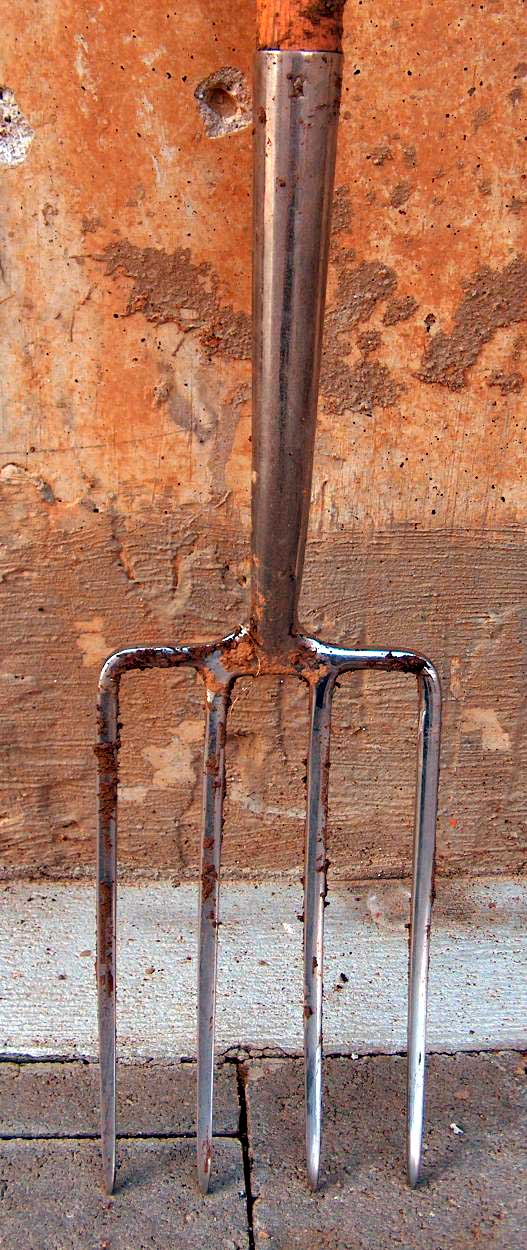

Parts and construction
A typical garden fork has a sturdy handle, a socket or head to join handle and tines, and usually four tines that are thicker and shorter than those of a hay or pitchfork. Handles are commonly made of ash, hickory or fiberglass for strength and shock absorption, while heads and tines are forged or cast from steel for durability. Some modern designs combine alloy steels and heat-treatment to resist bending and wear.
Common types and sizes
- Digging fork: heavier tines for breaking new ground and turning heavy soil.
- Border or digging fork: narrower head for working between plants and beds.
- Compost fork: lighter, often with more widely spaced tines to move loose material.
Uses and technique
Garden forks are used to loosen compacted soil, lift root-bound plants, turn compost and remove stones. To use one effectively, push the tines into the soil by foot, rock the handle to lever the soil, then lift and drop to break clods. Because the tines do not cut like a spade, a fork is preferred near desirable roots and bulbs. See guidance on loosening soil and on choosing between a spade or a fork for specific tasks.
Care and distinguishing facts
Keep the head clean and dry, sharpen or straighten tines if bent, and store the tool indoors to avoid corrosion. Modern heads are usually steel; learn more about material choices and treatments at materials resources. A garden fork is different from a pitchfork: the latter has longer, thinner, more widely spaced tines intended for lifting hay and loose organic matter; compare designs at pitchfork comparison.
Well-selected and maintained forks can last many seasons and remain an economical, versatile tool in kitchen gardens, allotments and small farms.
Related articles
Author
AlegsaOnline.com Garden fork: uses, types, construction and care Leandro Alegsa
URL: https://en.alegsaonline.com/art/37538