
Gaelic games
Traditional Irish team and field sports governed by the Gaelic Athletic Association, including Gaelic football, hurling, camogie, handball and rounders; central to Irish cultural life and community sport.
Overview
Gaelic games are a group of traditional Irish sports that combine field play, ball skills and local community competition. They are most strongly associated with Ireland but are played by diaspora communities worldwide. The principal sports are Gaelic football and hurling, which share organizational structures, seasonal competitions and a distinctive amateur ethos.
Image gallery
3 Images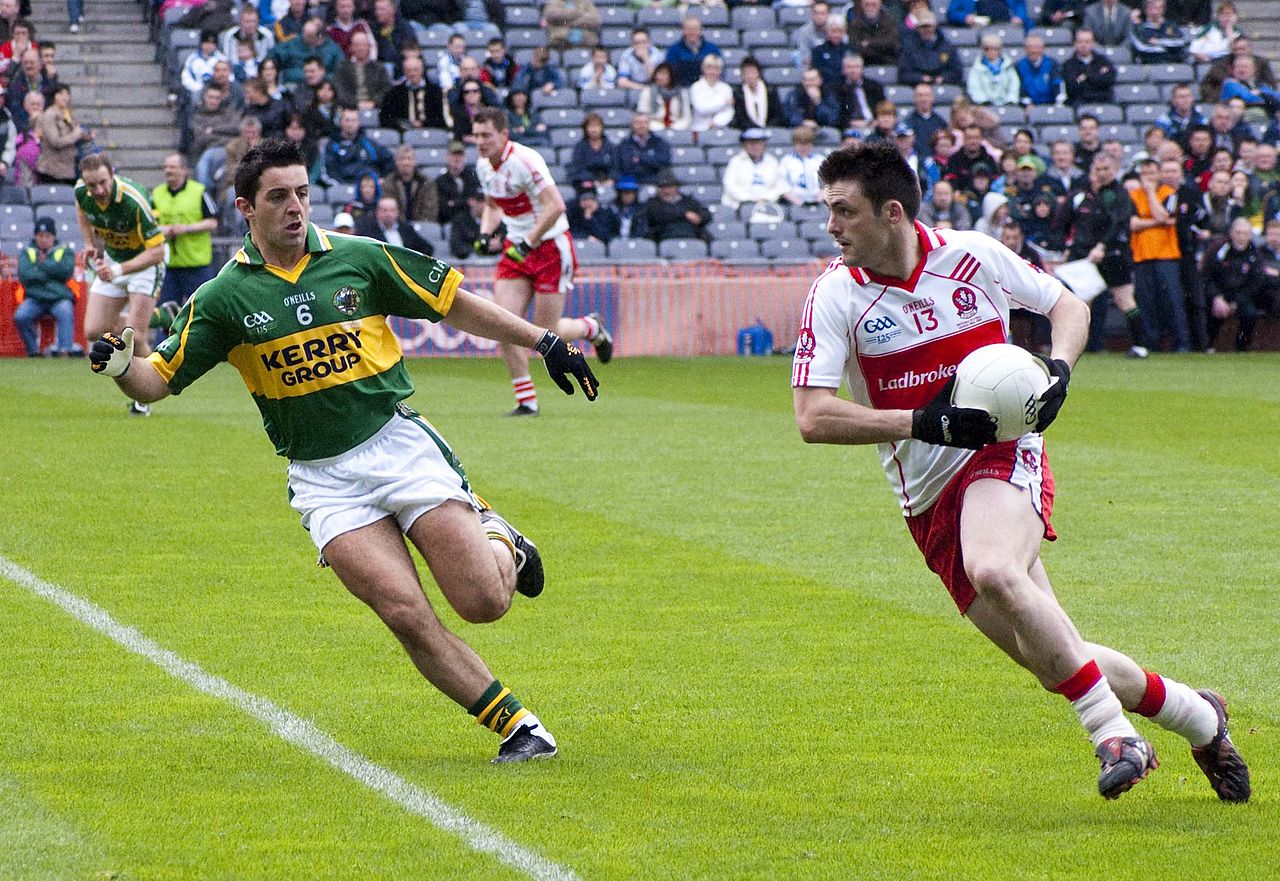


Main games and characteristics
Key features of Gaelic games include large rectangular pitches, teams representing clubs and counties, and a focus on speed, physicality and skill. Briefly:
- Gaelic football mixes handling and kicking a round ball; scoring involves goals and points.
- Hurling is played with a wooden stick (hurley) and a small ball (sliotar); it is one of the fastest field sports.
- Camogie is the female equivalent of hurling with similar rules and equipment; it is organized independently in some respects but closely linked in tradition.
- Gaelic handball and rounders are other traditional games administered alongside the field sports.
Each game has its own rules, protective equipment where needed, and scoring systems that give them distinct tactical profiles.
Organization and competitions
The sports are largely administered under the umbrella of the Gaelic Athletic Association, which coordinates club competitions, inter‑county championships and youth development. The calendar includes league play, provincial contests and national championships that culminate in widely followed finals each season.
History and cultural importance
Many Gaelic games trace elements of their play to ancient Ireland, though their modern codification dates from the late 19th century, driven by a revival of Irish language and culture. The formation of formal bodies and standardized rules helped reverse earlier decline and established the games as central to community life, identity and local pride. Clubs often act as social hubs and contribute to volunteer-led coaching and facilities.
Variants, notable facts and global reach
Camogie, camogie, differs slightly in rules from hurling and highlights women's participation. Rounders and Gaelic handball preserve other strands of traditional play. Although principally amateur, top players can attain celebrity status and matches can draw large, enthusiastic crowds. Outside Ireland, Gaelic clubs support cultural ties and help spread awareness of the games.
For practical introductions to each sport, local clubs and county boards provide coaching, fixtures and beginner resources for new players and spectators.
Related articles
Author
AlegsaOnline.com Gaelic games Leandro Alegsa
URL: https://en.alegsaonline.com/art/37189
Sources
- gaa.ie : "GAA attendance figures"