
Gaelic football
Gaelic football is an Irish team sport combining kicking and handling of a round ball; played by 15-a-side teams, administered by the GAA and central to Irish sporting culture.
Overview
Gaelic football (Irish names include Peil, Peil Ghaelach or Caid) is a field sport originating in Ireland that mixes elements of kicking, catching and carrying a round ball. Commonly called "Gaelic" or simply "football" within Ireland, it is one of the country's most widely followed spectator sports alongside hurling. The game is organized and promoted by the Gaelic Athletic Association; its competitions and county rivalries are an important part of Irish cultural life.
Image gallery
9 Images
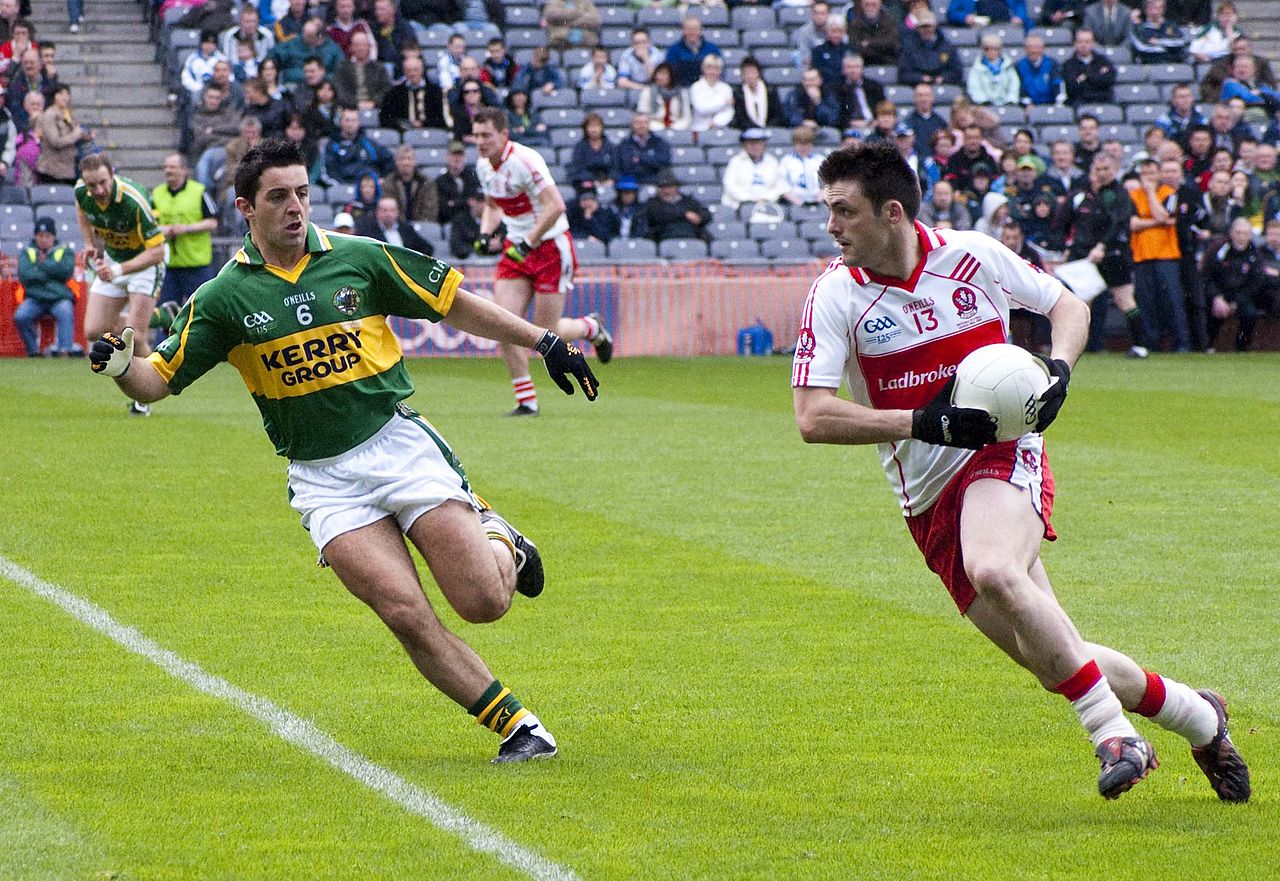

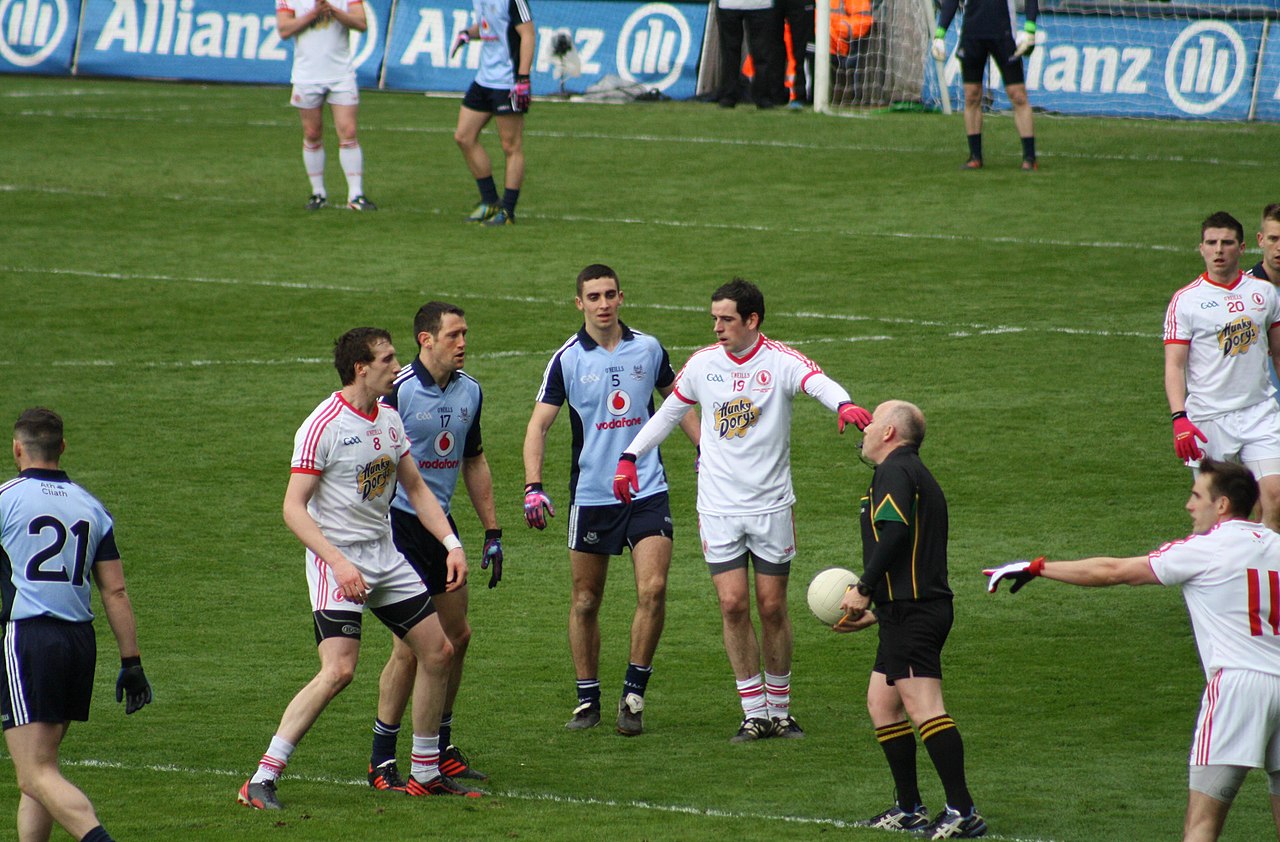


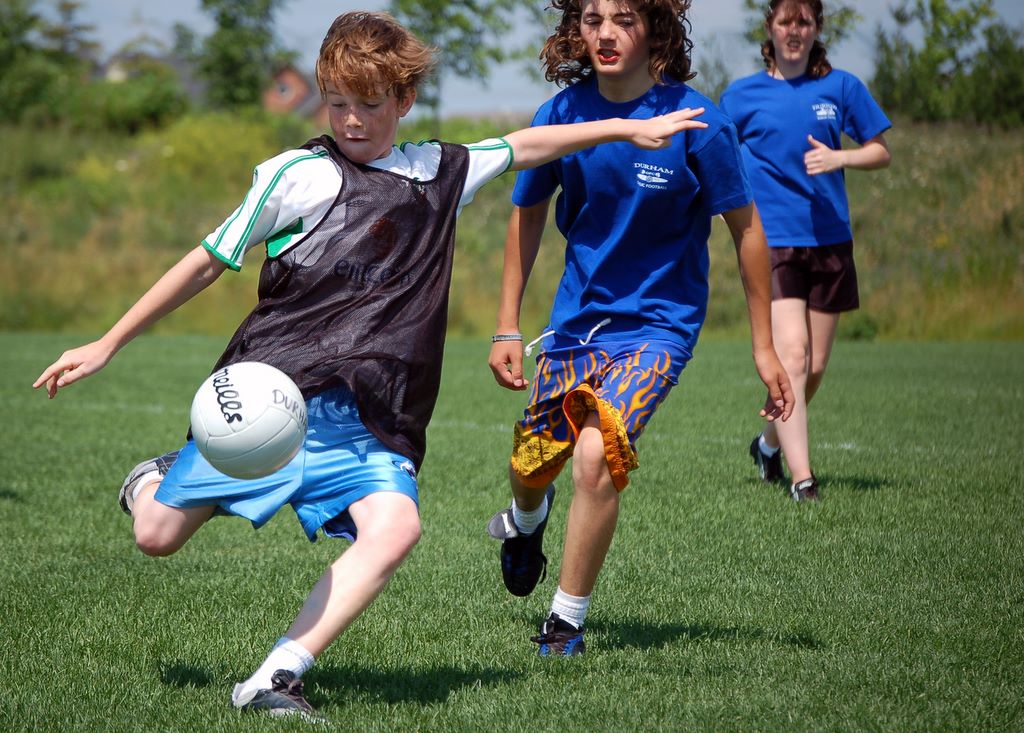


How it is played
Matches are contested by two teams of 15 players on a rectangular grass pitch with H-shaped goals at each end. Play involves a combination of running while controlling the ball, passing by hand, and kicking. A distinctive skill is the "solo": dropping the ball onto the foot and toe-kicking it back into the hands while on the move. Players can also bounce the ball, kick it long, or use a hand-pass (a striking action with the hand) to retain possession.
Scoring is through the goalposts: sending the ball over the crossbar between the uprights scores one point, while getting the ball under the crossbar into the net scores a goal, which is worth three points. Teams try to balance defensive marking with quick transitions through midfield and forward positions to create scoring chances.
Rules, positions and match format
- Team layout: typical roles include goalkeeper, defenders, midfielders and forwards, with tactical systems varying by team.
- Ball control: the rules permit carrying, soloing, bouncing and kicking but restrict how the ball may be handled to keep play fluid.
- Match length: adult inter-county games are longer than many club matches; formats and durations are set by competition rules.
Governing body, competitions and amateur status
The sport is governed by the Gaelic Athletic Association (GAA), the main body for the group of traditional Irish games known collectively as the Gaelic Games. The GAA also runs the county-based inter-county championships, most notably the All-Ireland Senior Football Championship, which traces its modern origins to the late 19th century. The association maintains an amateur ethos: players typically do not receive professional salaries, although there are debates and modern arrangements around expenses and sponsorship.
Major competitions are complemented by a National League season and provincial championships, and the inter-county championship culminates each year in provincial finals and the All-Ireland series, attracting large stadium attendances and television audiences. The sport is also played at club level across Ireland and by Irish communities abroad.
History and origins
Gaelic football draws on older forms of Irish football historically referred to as caid, with folk variations recorded in rural communities for centuries. The GAA was founded in the 1880s to preserve and promote native sports and culture; formal rules for the modern game were established in that period and competitions organized soon afterwards. Over time the game evolved in technique, fitness and tactics but remained rooted in community-based clubs and county identity.
Distinctive features and international links
Compared with soccer and rugby, Gaelic football allows both extensive ball handling and kicking, and its scoring system combines goals and points. Physical contact is permitted but constrained by rules that differ from rugby’s tackling. The sport has also led to cross-code events: hybrid matches against Australian teams are played under a compromise set of rules known as International Rules football, reflecting commonalities with Australian rules football.
Importance and cultural role
Beyond competition, Gaelic football functions as a focal point for local pride and identity across Irish towns and counties. County rivalries, club loyalties and the amateur ethos help maintain strong volunteer networks and community involvement. The GAA’s structure supports youth development, schools competitions and a worldwide network of clubs, ensuring the sport’s continued prominence inside and outside Ireland.
For further context on terminology and rules see football resources, historical background at scoring and rules guides, organizational information at the GAA, discussions of amateurism at player status pages, and comparative notes on Irish names and traditional forms at caid histories.
Questions and answers
Q: What is Gaelic Football?
A: Gaelic Football is a form of football played mainly in Ireland.
Q: How many players are on a Gaelic Football team?
A: There are 15 players on a Gaelic Football team.
Q: What is the objective of Gaelic Football?
A: The objective of Gaelic Football is to score by kicking/striking the ball with your hand and getting it through the goals.
Q: How do players advance the ball up the field in Gaelic Football?
A: Players advance the ball up the field with a combination of carrying, soloing, kicking, and hand-passing to their team-mates.
Q: Which organization runs Gaelic Football and other Gaelic Games in Ireland?
A: Gaelic Football and other Gaelic Games in Ireland are run by the Gaelic Athletic Association.
Q: How old is the ancient form of Irish football that Gaelic Football is believed to have originated from?
A: The ancient form of Irish football known as caid that Gaelic Football is believed to have originated from dates back to 1537.
Q: When did the modern game of Gaelic Football take shape?
A: The modern game of Gaelic Football took shape in 1887.
Related articles
Author
AlegsaOnline.com Gaelic football Leandro Alegsa
URL: https://en.alegsaonline.com/art/37188
Sources
- gaa.ie : "GAA attendance figures"
- news.bbc.co.uk : "GAA pitch size"