
Gaelic handball
Gaelic handball is an Irish wall game in which players use their hands to strike a ball against a wall. It exists in several court styles and is closely related to American handball and other wall-ball sports.
Overview
Gaelic handball is a traditional Irish sport in which one or two players use the open hand to hit a small, hard ball against a front wall so that the opponent cannot return it. Matches may be singles or doubles and are played indoors or outdoors. The game is closely related to other wall-ball codes, notably American handball, and players from the two traditions sometimes compete and exchange rules and techniques. More information is available from governing bodies and historical summaries.
Image gallery
4 Images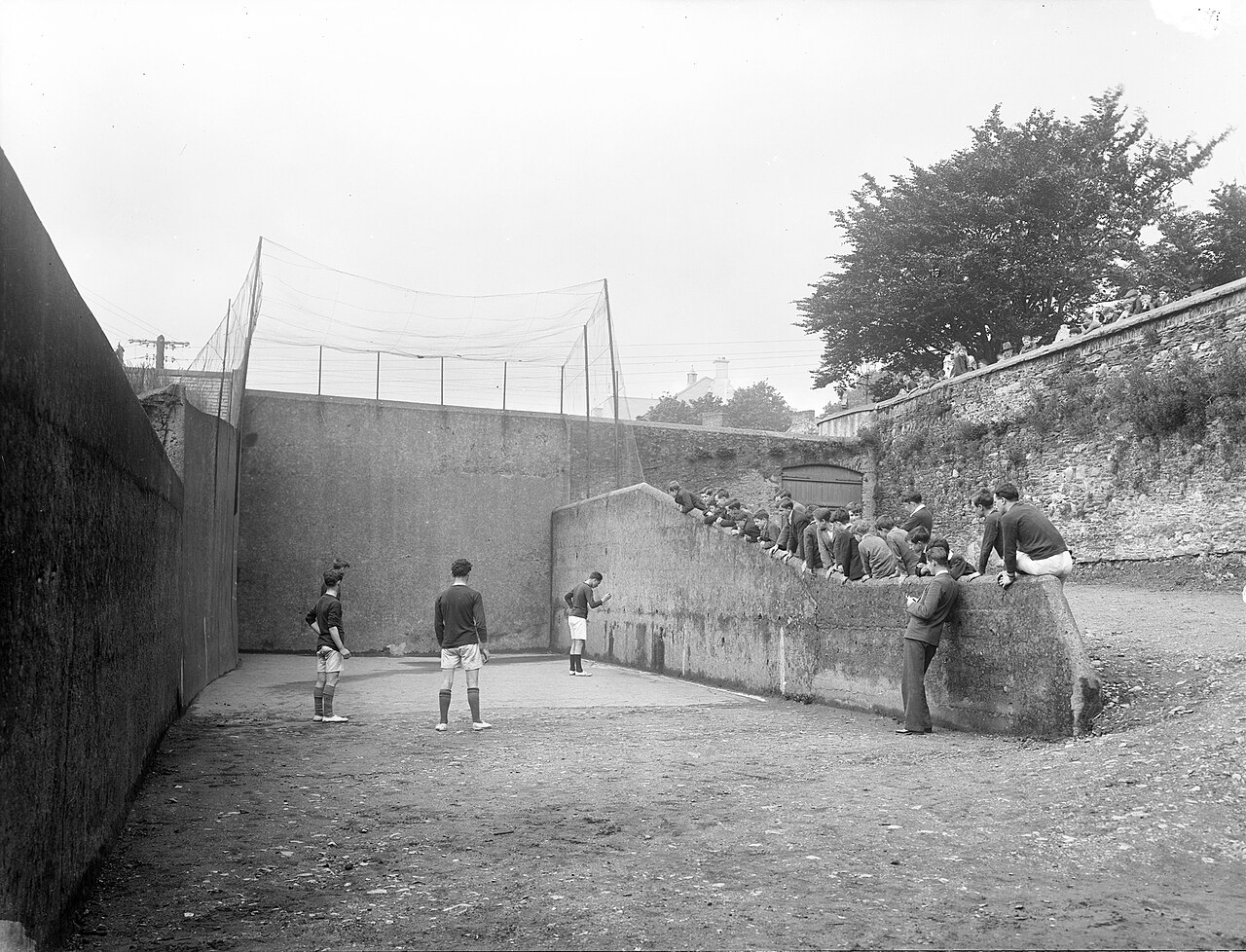


Court, ball and equipment
There are several recognised court types, commonly referred to by their dimensions such as the 40x20 court and the larger 60x30 alley. Some competitions use a single-wall court, which has contributed to international growth. Players usually wear a protective glove or tape on the striking hand; footwear and eyewear are also common safety items. The ball varies in hardness and bounce depending on the code.
Basic play and rules
Play consists of serving the ball to the front wall and then rallying so that the opponent cannot legally return it before it bounces twice or otherwise becomes unplayable. Points are won by winning rallies, and matches are decided by reaching a target number of points or winning sets, depending on the competition. Rules governing service, lets and scoring differ slightly between codes.
History and development
Handball-type games have deep roots in many cultures; in Ireland the game developed into an organised sport over the 19th and 20th centuries and has been managed by national bodies since then. The modern sport has both local amateur traditions and organised national leagues and championships. Exchange with similar sports abroad has influenced equipment and court standards.
Variations and competitive play
- Four-wall and small-court codes, often played indoors.
- Large-court (60x30) contests, traditionally popular in rural areas.
- One-wall handball, which is simple to set up and has promoted international play.
International competition and club leagues coexist with strong grassroots participation in schools and communities. Elite players may cross between Gaelic and American handball formats in international events. Related sport profile.
Distinctions and notable facts
Gaelic handball is distinct in its Irish organizational history and in the range of court types that remain widely used. Its simplicity—needing only a wall and a ball—has helped sustain the sport in both urban and rural settings. While sharing a family resemblance with other wall games, local customs, ball types and scoring variations give Gaelic handball its own character within the broader world of racketless wall sports.
Related articles
Author
AlegsaOnline.com Gaelic handball Leandro Alegsa
URL: https://en.alegsaonline.com/art/37190