
From Russia with Love (1963 film)
1963 spy film, the second Eon Productions James Bond movie starring Sean Connery; a Cold War thriller adapted from Ian Fleming's novel that established many series conventions and earned enduring acclaim.
Overview
From Russia with Love is the second James Bond feature produced by Eon Productions. Released in 1963, it continues the screen characterization of James Bond, again played by Sean Connery, and is widely regarded as one of the earliest definitive spy films. The picture combines Cold War espionage, international locations and the organised criminal syndicate SPECTRE to create a tense and more realistic tone than many earlier thrillers. Contemporary review aggregators still rate it highly; for example, Rotten Tomatoes lists strong positive reviews.
Image gallery
3 Images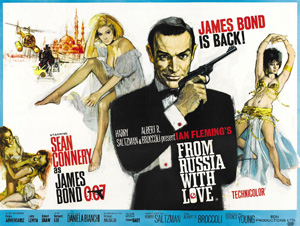


Plot and themes
The story follows Bond as he becomes involved in a plot to escort Soviet clerk Tatiana Romanova out of the USSR, drawing him to Istanbul and beyond. The film balances procedural spycraft—surveillance, concealment, and deception—with action set pieces. It explores Cold War paranoia and the use of double-crosses, emphasizing clever planning and character-driven peril over gadget spectacle.
Production and principal cast
Directed by Terence Young, the production was overseen by producers Albert R. Broccoli and Harry Saltzman; Broccoli is referenced here as Albert R. Broccoli. The screenplay adapts Ian Fleming's 1957 novel of the same name; Fleming's work and the novel itself are often cited when discussing the film's source material (novel, Ian Fleming). Principal photography used both location shooting around Istanbul in Turkey and studio stages, creating memorable sequences such as train and street confrontations.
- Sean Connery as James Bond (actor page)
- Daniela Bianchi as Tatiana Romanova (character)
- Lotte Lenya as Rosa Klebb
- Robert Shaw as Donald "Red" Grant
- Pedro Armendáriz as Kerim Bey
- Desmond Llewelyn makes an early appearance as the gadget-providing Quartermaster, known as Q.
Music and technical elements
The score, arranged by John Barry, helped shape the sonic identity of the series. The title tune, written by Lionel Bart and popularized in performances associated with the movie, contributed to the film's atmosphere. Cinematography, editing and production design emphasized realism and a restrained colour palette, which contrasted with later, more lavish entries in the franchise.
Reception and legacy
At release the film was praised for tightening the Bond formula—balancing wit, charm, and credible threat—and it remains influential in the spy genre. It cemented recurring elements such as international locations, an organized crime conspiracy, and a recurring lead actor returning to the role. It also followed on the success of Dr. No, helping to ensure the longevity of the series. Critics and historians often point to this installment when discussing how Bond evolved from literary thriller to long-running cinematic franchise; see further commentary and archival material via film records and legacy studies (MI6 lore).
For those interested in adapting Cold War fiction to screen, or in the development of long-running film series, this picture is a frequently cited reference point; many retrospective pieces and databases provide additional context and analysis (production history, character studies, producer biographies, author archives).
Questions and answers
Q: What is From Russia with Love?
A: From Russia with Love is the second James Bond movie made by Eon Productions, based on the 1957 novel of the same name written by Ian Fleming.
Q: Who stars as James Bond in From Russia with Love?
A: Sean Connery stars as the fictional MI6 agent James Bond in From Russia with Love.
Q: When was From Russia with Love released?
A: From Russia with Love was released in 1963.
Q: Who produced From Russia with Love?
A: Albert R. Broccoli and Harry Saltzman produced From Russia with Love.
Q: Who directed From Russia with Love?
A: Terence Young directed From Russia with Love.
Q: What is the plot of From Russia with Love?
A: In the movie, James Bond is sent to assist in the defection of Soviet consulate clerk Tatiana Romanova in Turkey, where SPECTRE plans to avenge Bond's killing of Dr. No.
Q: What rating did From Russia with Love receive on Rotten Tomatoes?
A: From Russia with Love received a 96% rating on Rotten Tomatoes.
Related articles
Author
AlegsaOnline.com From Russia with Love (1963 film) Leandro Alegsa
URL: https://en.alegsaonline.com/art/36810
Sources
- nytimes.com : "From Russia With Love (1963)"
- rottentomatoes.com : "From Russia with Love (1964)"