
Full Metal Jacket
1987 war drama film by Stanley Kubrick, adapted from Gustav Hasford's The Short-Timers. Noted for its two-part structure — boot camp and combat in Vietnam — and its critique of military training and war.
Overview
Full Metal Jacket is a 1987 British–American war drama film directed by Stanley Kubrick. It adapts elements of Gustav Hasford's novel The Short-Timers and takes its title from full-metal jacketed bullets, a type of ammunition associated with modern military forces. The screenplay and performances examine the transformation of ordinary recruits into combatants and the personal costs of that process during the Vietnam War.
Image gallery
3 Images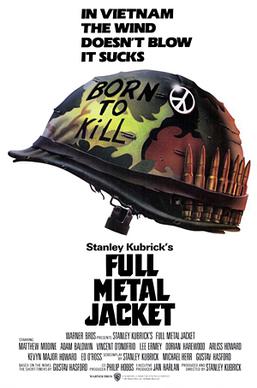


Structure and themes
The film is commonly described as having two distinct halves: an opening section set in recruit training, and a later section that follows combat operations in an urban Vietnamese environment. Kubrick uses this division to contrast institutionalized training methods with the chaos of frontline warfare. Recurring themes include dehumanization through training, the effects of authority and peer pressure, the banality and brutality of combat, and the ambiguous role of media and morality in war.
Cast and key scenes
Performances anchor the film: a demanding drill instructor shapes the recruits, while several central characters move from training to combat. Notable moments emphasize psychological pressure during basic training and tense, often unsparing depictions of urban fighting. Critics and viewers have highlighted the film's precise staging and its memorable, sometimes disturbing, character encounters.
Production and style
Produced as a British–American collaboration, the movie reflects Kubrick's meticulous visual control and careful sound design. Cinematic choices favor a stark, documentary-like aesthetic in many sequences, while dialogue and black humor convey satire and critique. The film’s technical craft — from framing to the use of location and set design — supports the narrative’s emotional and moral tensions.
Reception and legacy
On release the film drew both praise for its performances, direction, and realism, and criticism for its portrayal of violence and the complexities of the conflict it represents. Over time it has become a frequent subject in film studies and discussions about war cinema, notable for its structural boldness and for raising questions about training, obedience, and the psychological effects of modern warfare.
- Genre: war drama
- Director: directed by Stanley Kubrick
- Source: based on The Short-Timers
Related articles
Author
AlegsaOnline.com Full Metal Jacket Leandro Alegsa
URL: https://en.alegsaonline.com/art/36969