
Colloid: Definition, Types, Properties, and Applications
A colloid is a mixture in which tiny particles of one substance are dispersed throughout another. This article explains characteristics, common types, history, uses, and distinguishing phenomena.
A colloid is a heterogeneous mixture in which one substance is finely distributed as small particles or droplets throughout another continuous substance. In everyday and scientific use the two components are called the dispersed phase (the small particles or droplets) and the dispersion medium (the surrounding material). Colloids bridge the gap between true solutions and coarse suspensions: their dispersed particles are too small to settle rapidly but large enough to scatter light. Different writers describe their size limits slightly differently; typical descriptions place dispersed particles in the nanometre to submicrometre range (size estimates). A colloid may combine two different states of matter: for example, solid particles in a liquid or liquid droplets in a gas (phases) or (states of matter).
Image gallery
10 Images
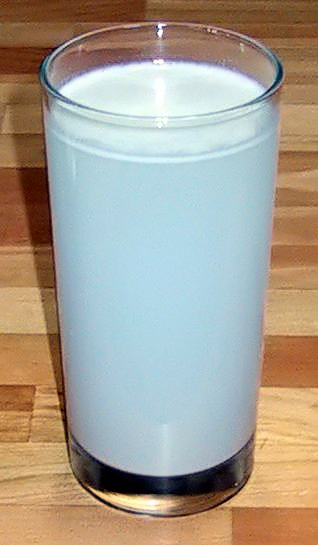


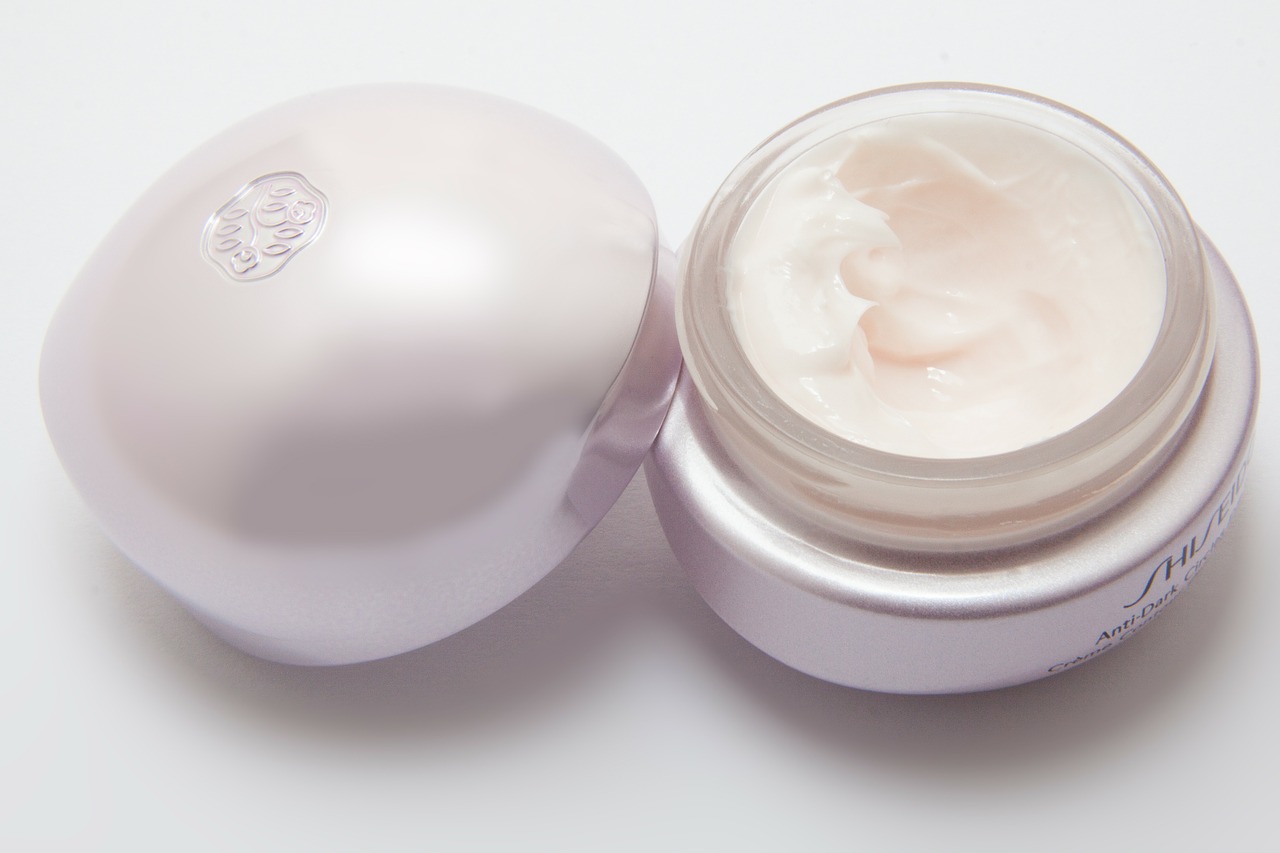

Key components and physical characteristics
Two names are commonly used for the components: the dispersion medium (the continuous phase) and the dispersed phase (the internal phase). Typical dispersion media include liquids such as water (water) or gases like air (gas). The dispersed phase may be tiny solid particles or droplets of a liquid (droplets) and is often described simply as particles (particles). Common observable properties of colloids include the Tyndall effect (light scattering by the dispersed particles), Brownian motion of particles, and variable stability that can be modified with surfactants or electrolytes.
Types and everyday examples
- Sol: solid particles dispersed in a liquid (e.g., paint, some inks).
- Gel: a network of dispersed phase that gives a semi-solid consistency (e.g., gelatin, many hydrogels).
- Emulsion: liquid droplets dispersed in another liquid immiscible liquid (e.g., milk, mayonnaise).
- Aerosol: liquid droplets or solid particles dispersed in a gas (e.g., fog, smoke).
- Foam: gas bubbles dispersed in a liquid or solid (e.g., whipped cream, polyurethane foam).
Historical background and scientific study
Interest in colloidal materials grew in the 19th century as chemists examined differences between easily crystallized salts and substances that would not crystallize. Early investigators such as Thomas Graham and contemporaries developed methods and terminology that led to modern colloid science. Since then, the field has expanded to include physical chemistry, materials science and biophysics. Experimental techniques such as dynamic light scattering, electron microscopy and ultracentrifugation are commonly used to characterise colloids.
Applications and practical importance
Colloids have broad technological and biological relevance. In medicine they appear in drug delivery systems and diagnostic suspensions; in food science they underlie the texture and stability of many foods and beverages; in industry they inform formulations of paints, inks, cosmetics and detergents. Environmental processes such as pollutant transport and cloud formation also involve colloidal behavior. Control of colloid stability—through pH, ionic strength or surfactants—is central to many applications.
Distinguishing facts and practical notes
Colloids are distinct from true solutions because their particles scatter light, and from coarse suspensions because their particles do not settle quickly. Stability may be kinetic rather than thermodynamic: a colloid that appears stable can change over time by aggregation or phase separation. Practical control of colloidal systems often depends on surface chemistry, including the use of stabilizers and emulsifiers to prevent coalescence or flocculation.
For further reading on basic definitions, experimental methods and examples, see introductory resources on mixtures and dispersion phenomena: mixture overview, phase relationships, states of matter, water as medium, gaseous dispersions, solid dispersions, particle behaviour, liquid droplets, size criteria.
Questions and answers
Q: What is a colloid?
A: A colloid is a mixture of one substance spread out evenly inside another substance.
Q: How many phases or states of matter can colloids be in?
A: Colloids can be in two different phases or states of matter.
Q: What is the dispersion medium in a colloid?
A: The dispersion medium in a colloid is one substance, such as water or gas.
Q: What is the dispersed medium in a colloid?
A: The dispersed medium in a colloid is usually tiny solid particles. Otherwise, if the dispersion medium is a gas, then the internal phase can be either tiny particles or tiny droplets of a liquid.
Q: What is the definition of a colloid?
A: The definition of a colloid is a substance microscopically dispersed evenly throughout another substance.
Q: What is the diameter range of dispersed-phase particles in a colloid?
A: The diameter range of dispersed-phase particles in a colloid is between about 5 and 200 nanometers.
Q: Can you give an example of a colloid?
A: Examples of colloids include milk, fog, and paint.
Related articles
Author
AlegsaOnline.com Colloid: Definition, Types, Properties, and Applications Leandro Alegsa
URL: https://en.alegsaonline.com/art/21661
Sources
- britannica.com : "Colloid"