
Flesh-footed Shearwater (Puffinus carneipes)
A medium-sized southern shearwater with distinctive pale pink feet; breeds on islands around Australia and New Zealand and faces threats from fisheries, plastics and introduced predators.
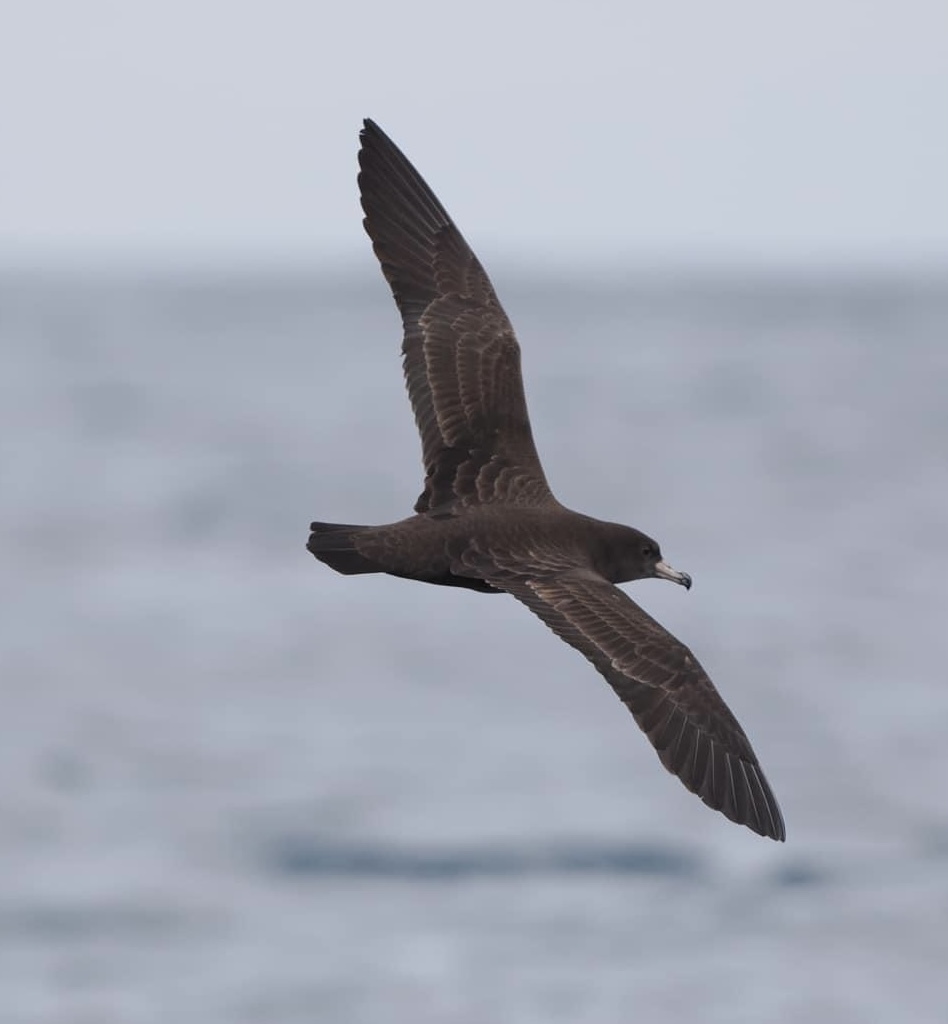
The flesh-footed shearwater (Puffinus carneipes) is a medium-sized pelagic seabird in the shearwater group. It is named for the pale pink to flesh-coloured skin of its feet, a useful field mark when birds are seen closely. At sea the species appears dark and sooty overall, with uniformly dark upper- and underparts and long, narrow wings adapted for dynamic soaring over open water.
Image gallery
3 Images

Identification and characteristics
Adults show a mainly dark brown to black plumage, with a relatively pale bill that often contrasts slightly with a darker tip. The legs and feet are noticeably pale pinkish, and the body shape—stout with long wings and a short tail—matches that of other small Puffinus shearwaters. Juveniles resemble adults but may appear slightly duller.
Distribution, habitat and movements
The species breeds on offshore islands in the southern hemisphere, chiefly around Australia and New Zealand, and on nearby island groups. Outside the breeding season it spends almost all of its time at sea, ranging widely across temperate and subtropical waters. Tracking studies and observations show that individuals may travel long distances from colonies while foraging and during non-breeding periods.
Breeding and behaviour
Flesh-footed shearwaters nest in colonies on islands, typically in burrows or shallow scrapes among vegetation or under tussocks. They are mostly nocturnal at colonies, which helps reduce predation. Pairs are long-lived and return to breeding sites seasonally. Chicks are fed by both parents using regurgitated food and are dependent on adults until they fledge.
Diet and feeding
The diet consists mainly of fish, squid and other marine organisms taken at or near the surface. Foraging methods include surface-seizing, shallow plunge-diving and following fishing vessels to take discarded offal. This association with fisheries increases the chance of bycatch and encounters with floating debris.
Conservation and research
The flesh-footed shearwater faces threats from bycatch in longline and trawl fisheries, ingestion of plastic debris, oil pollution and disturbance or habitat loss at breeding sites, particularly where introduced predators such as rats and cats are present. Regional declines have led to increased monitoring, research and conservation actions, including predator control on breeding islands and efforts to reduce seabird bycatch. Continued tracking and population studies help guide local and international conservation measures.
Related articles
Author
AlegsaOnline.com Flesh-footed Shearwater (Puffinus carneipes) Leandro Alegsa
URL: https://en.alegsaonline.com/art/35094