
Fishing hook
A fishing hook is a small, pointed device used to secure and land fish. Designs vary by shape, size and material to suit different species, baits and fishing methods; barbed and barbless variants affect handling and conservation.
A fishing hook is a small tool designed to impale and hold a fish so it can be landed. Historically fashioned from bone and metal, modern hooks are produced in dozens of specialized shapes and sizes to match species, presentation and fishing style. Anglers commonly encounter hooks when they catch fish or rig baits and lures, and manufacturers balance strength, sharpness and corrosion resistance for reliable performance.
Image gallery
10 Images




Basic parts and characteristics
- Eye — the loop or hole where line or a knot is secured.
- Shank — the straight section extending from the eye to the bend; shank length affects bait presentation.
- Bend — the curved portion that helps retain the fish.
- Point — the sharp tip that penetrates the fish's mouth; points may be chemically sharpened.
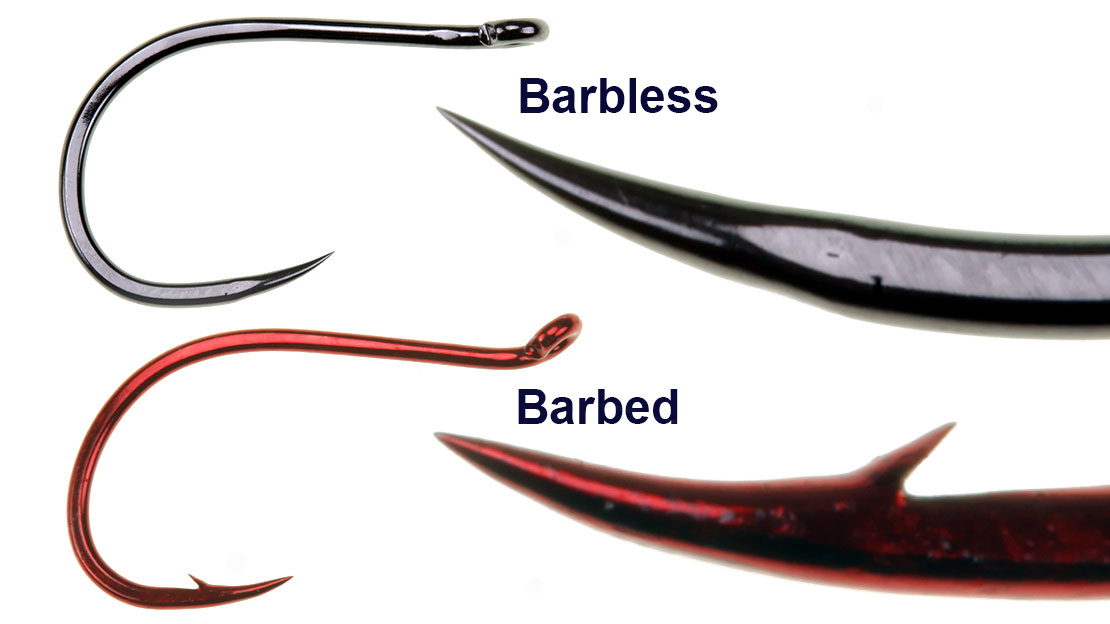
- Barb — a backward-facing projection near the point that helps keep the hook seated; many anglers remove or choose barbless hooks for easier release.
- Gap (or gape) — the distance between the point and the shank, important for matching mouth size.
Common types and uses
Hook geometry is tailored to application. Examples include J-hooks for general bait fishing, circle hooks that tend to hook fish in the jaw and are favored for catch-and-release, treble hooks used on many lures, and specialized hooks such as fly-tying hooks, worm hooks, and Aberdeen hooks for live bait. The choice depends on bait style, target species and legal or conservation considerations.
Sizes, materials and manufacture
Hook size is indicated by a numbering convention: simple numeric sizes and "aught" sizes (for example, 1/0, 2/0) are common; larger aught numbers generally denote larger hooks. Materials include carbon steel, stainless steel and alloys; many hooks receive surface treatments, plating or chemical sharpening to improve durability and penetration. Manufacturers also produce different wire gauges for added strength when fishing for heavy species.
Handling, conservation and safety
Anglers should match hook style and size to the fish and use techniques that reduce deep hooking. Circle hooks and barbless designs reduce injury and make live release easier. Local regulations sometimes restrict barbed hooks or mandate specific sizes for conservation. For safety, use pliers or hook removers to extract hooks, especially treble hooks, and keep hooks dry and stored to limit corrosion and accidental injury.
Notable facts and distinctions
Different hook profiles change how a bait sits or how a fish is hooked: an offset point may increase hookups with soft-bait presentations, while a long-shank hook makes removing certain baits easier. Anglers often select hooks to balance hooking efficiency with fish welfare and legal requirements. For more on techniques and regional regulations, consult local guidance or manufacturers' recommendations, and see general references on how to tie and use hooks.
Related articles
Author
AlegsaOnline.com Fishing hook Leandro Alegsa
URL: https://en.alegsaonline.com/art/34639