
Faneuil Hall: Boston landmark, marketplace, and meeting place
Historic 1742 marketplace and meeting hall in Boston, Massachusetts — known as the Cradle of Liberty. Site of revolutionary speeches, later expanded, now part of Boston National Historical Park and the Freedom Trail.
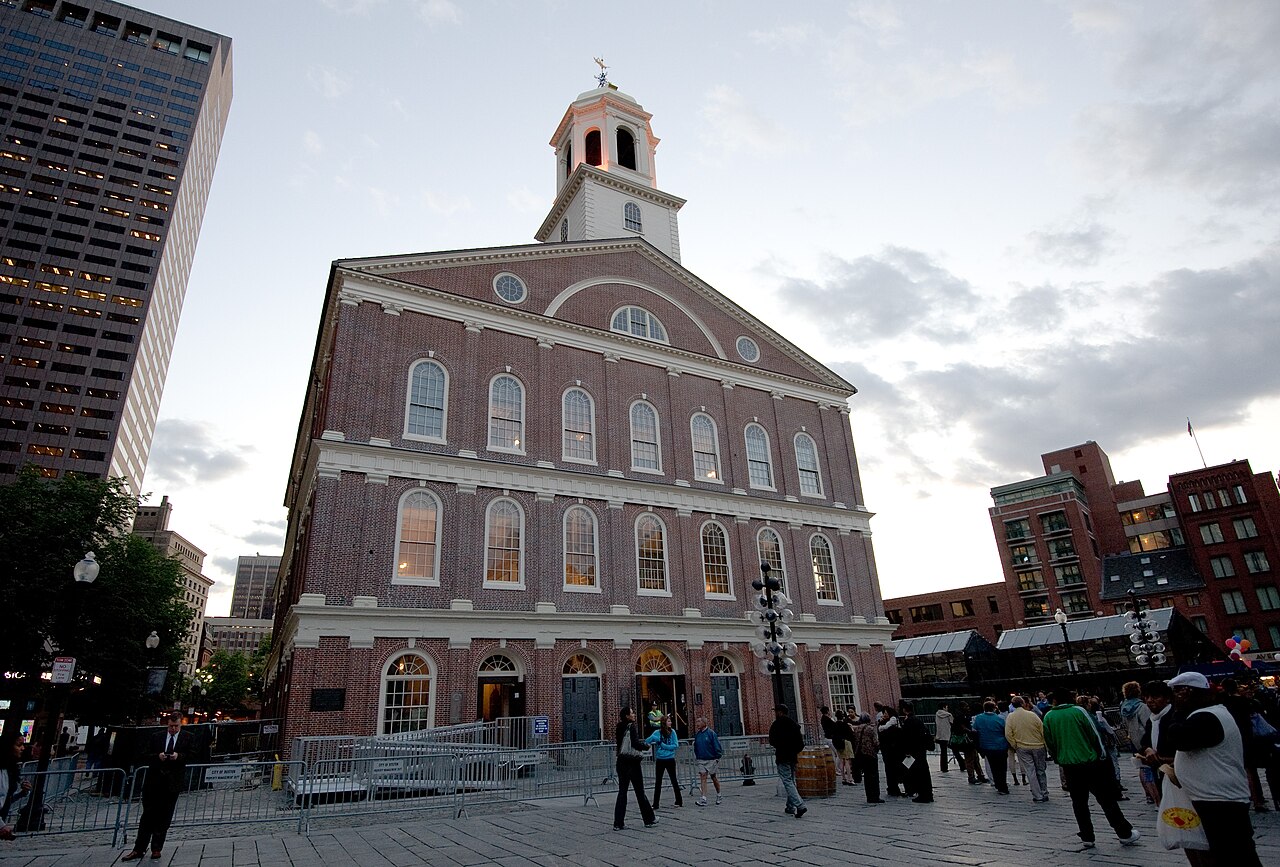
Faneuil Hall stands near the waterfront at the heart of downtown Boston, Massachusetts. Built in 1742 and presented to the town by merchant Peter Faneuil, it has served for centuries as both a public marketplace and a forum for civic debate. Its association with colonial-era protests and patriotic rhetoric has given it the enduring nickname the Cradle of Liberty.
Image gallery
10 Images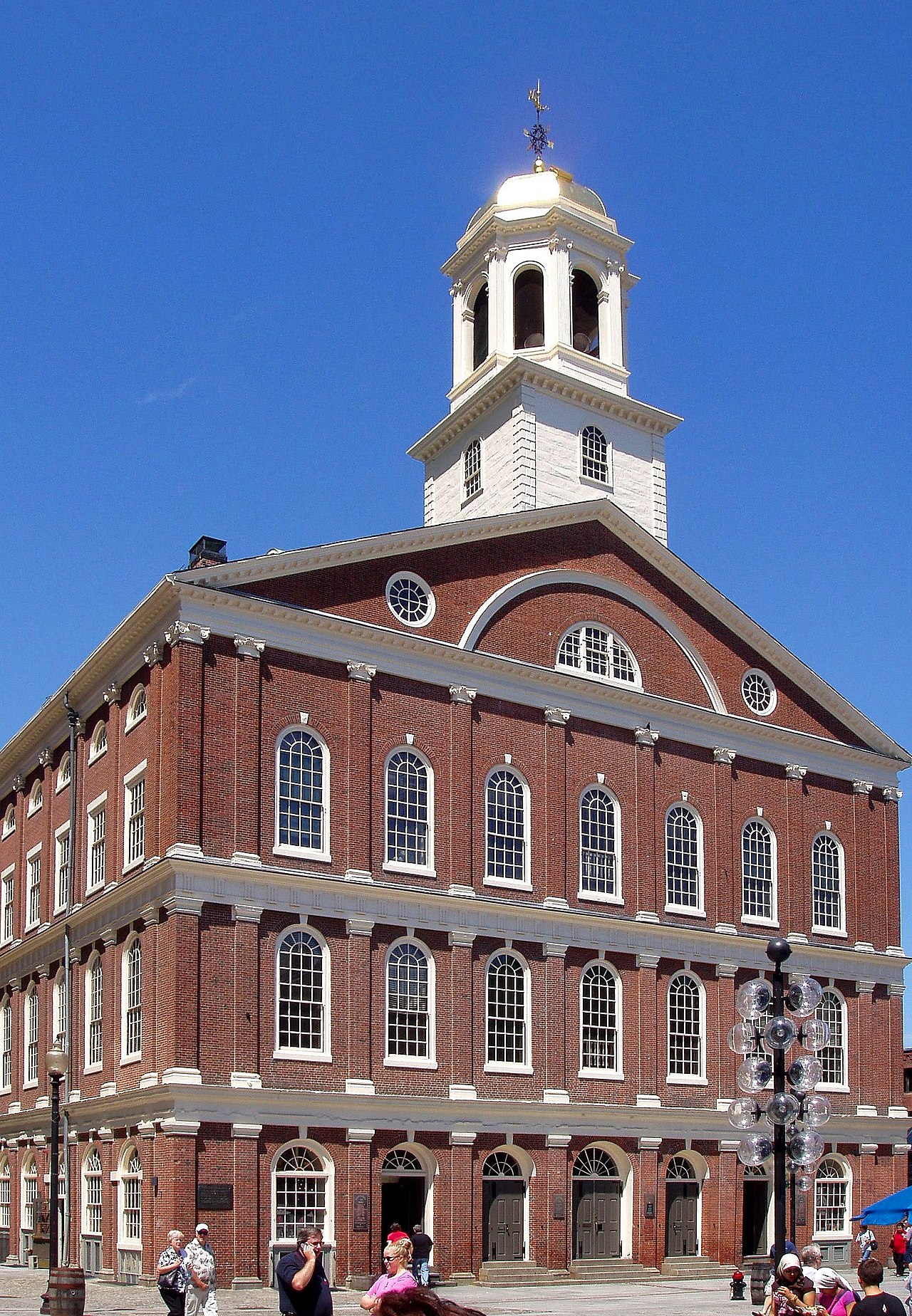




Architecture and layout
The original 18th-century structure was a two-story hall above a ground-floor market. In the early 19th century the building was enlarged and refaced, a project traditionally associated with architect Charles Bulfinch, giving the exterior some Federal-style details while preserving its role as a commercial and civic space. The complex sits adjacent to the later Quincy Market and remains visually linked to Boston's historic port area.
Role in American history
Faneuil Hall became a center for public meetings during the years leading up to the American Revolution. Local leaders, including Samuel Adams (Samuel Adams), used the hall to address citizens on matters of taxation, representation, and resistance to British policy. Those gatherings helped shape public opinion and made the hall a symbol of colonial dissent and grassroots political activity.
Uses and public life
Over time the building has continued to combine commerce and civic functions. Typical uses include:
- a ground-floor market space with stalls and shops;
- a second-floor meeting hall for public speeches, town meetings, and ceremonies;
- a frequent stop for visitors exploring Boston's historical sites.
Its mix of retail and public programming illustrates how urban marketplaces have long doubled as venues for community exchange and political discourse.
Preservation and modern significance
Faneuil Hall is part of the Boston National Historical Park and is a marked stop along the city's Freedom Trail. It is preserved as both an architectural artifact and a symbol of civic engagement. The building remains publicly accessible, housing shops, exhibitions, and continuing to host events that recall its role in American history. For official visitor information see the park and trail references (Boston National Historical Park, Freedom Trail).
Notable distinctions
- Often called the Cradle of Liberty for its revolutionary-era meetings.
- Combines marketplace traditions with public assembly functions.
- Serves as a focal point for historical tours and civic remembrance.
Today, Faneuil Hall remains an active landmark where commerce, tourism, and history intersect, inviting visitors to reflect on its layered past while it continues to serve the community.
Related articles
Author
AlegsaOnline.com Faneuil Hall: Boston landmark, marketplace, and meeting place Leandro Alegsa
URL: https://en.alegsaonline.com/art/33467
Sources
- nrhp.focus.nps.gov : "National Register Information System"
- celebrateboston.com : Faneuil Hall Boston, the Cradle of Liberty
- commons.wikimedia.org : Faneuil Hall