
Farina, South Australia: history, decline and heritage of an outback rail town
Farina is an abandoned settlement in arid northern South Australia. Founded 1878 as a farming and railway railhead, it declined into a ghost town; ruins, an elevated water tank and interpretive signs remain.
Overview
Farina is a former settlement in the far north of South Australia, located on the margin of inland desert country. Established in 1878, it grew as an agricultural experiment and as a service town on the northbound railway that later became associated with the Ghan. The locality is semi‑arid with highly variable rainfall (the long‑term average is often quoted around 160 mm per year) and a landscape of saltbush plains and gibber country.
Image gallery
5 Images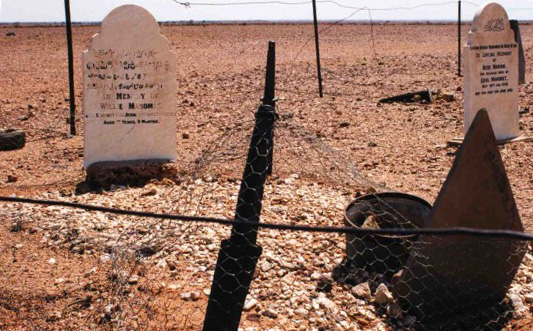



Founding and early growth
Before European settlement the place was known as The Gums or Government Gums, a named waterhole important to travellers and pastoralists. In 1878 land was surveyed and sold to settlers who hoped cultivation would encourage better rainfall; the town was named Farina from the Latin word for "flour" to reflect hopes of grain production. For several years the township served as the railhead until the line was extended to Marree and beyond, changing its role in regional transport and trade.
Economy and infrastructure
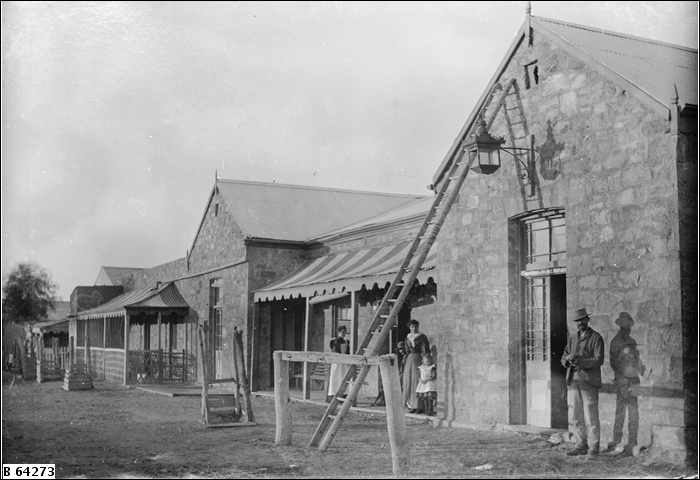
During the comparatively wet 1880s Farina expanded quickly. Blocks were laid out for cropping and pastoral support and small mining ventures opened to exploit silver and copper deposits in the nearby ranges. The town supported a wide range of services for a remote settlement: hotels, an underground bakery (built to provide cool and stable temperatures), a bank, breweries, a general store, an Anglican church, a school and a number of tradespeople.
- Local industry: attempts at dryland cropping (wheat and barley), pastoralism and small‑scale mining.
- Community facilities (historical): hotels, bakery, bank, breweries, church, school and assorted businesses.
Peak population and social life
At its height in the late nineteenth century Farina is reported to have supported several hundred residents and a lively social scene for such a remote place. Contemporary descriptions mention multiple hotels, blacksmiths and other services that catered to travellers, railway workers and local pastoralists. Social and commercial life declined again as droughts returned and the railway moved people and freight on different routes.
Scientific and historic notes
A notable discovery in the district was a large iron meteorite found north‑east of the town in 1909; contemporary records give its mass as over a tonne. Such finds are reported in regional histories and add to Farina's significance for collectors and researchers interested in meteorites, pastoral frontier history and early mining ventures.
Decline and abandonment
Repeated dry seasons, unreliable rainfall for cropping and changes in transport reduced the town's viability. The railhead status moved on in 1884 and, over decades, services closed; the post office shut in the mid‑20th century and the railway line serving the town was discontinued in the 1980s. By late 20th century the township was widely described as a ghost town and many buildings fell into ruin.
Present‑day remains and heritage work
Today Farina survives as a ruinous historic site: stone walls, building foundations and the raised railway water tank mark the township footprint. Volunteers and property owners have stabilised and partially repaired features such as the underground bakery and erected interpretive signs to explain the town's story to visitors. The surrounding properties continue pastoral activity; a small population has been recorded in the broader district in recent censuses but no permanent community occupies the original town layout.
Access, camping and visitor information
The owners of Farina Station, a pastoral property west of the town site, operate a bush camping area and provide basic visitor information. Farina's remoteness means visitors should plan carefully: carry sufficient water, a reliable vehicle, and inform others of travel plans. Interpretive information on site and local histories are useful for those researching early outback settlement, railway development and frontier mining.
Further reading and links
For contextual material and regional background see resources on nearby centres and routes (regional centres). For the agricultural ideas that inspired settlers, read general histories about attempts to grow wheat and barley in marginal environments. Social and commercial life in small towns is reflected in studies of local industries such as breweries (breweries) and in accounts that note colourful aspects of frontier towns, including references to the town's red‑light district in period sources (brothel references).
Researchers and visitors are encouraged to consult local archives, state heritage listings and railway histories for detailed primary sources and maps before visiting or citing Farina in academic work.
Questions and answers
Q: What is Farina?
A: Farina is a ghost town in South Australia located on the edge of the desert.
Q: How much rain does Farina receive annually?
A: Farina receives an unpredictable annual rainfall of 163.6 mm.
Q: What was Farina called before 1878?
A: Before 1878, Farina was called The Gums or Government Gums.
Q: Why did people settle in Farina in 1878?
A: People settled in Farina in 1878 because they believed that if they ploughed the land and planted crops it would bring rain.
Q: What were some of the businesses located in the town during its peak population?
A: During its peak population, there were two hotels (the Transcontinental and the Exchange), an underground bakery, a bank, two breweries, a general store, an Anglican church, five blacksmiths, a school and a brothel located in the town.
Q: When did the post office close down?
A: The post office closed down in 1960s.
Q: Where do people live near to today's version of Farina?
A: Today people live at Farina station which is a farm west of the town.
Related articles
Author
AlegsaOnline.com Farina, South Australia: history, decline and heritage of an outback rail town Leandro Alegsa
URL: https://en.alegsaonline.com/art/33539
Sources
- censusdata.abs.gov.au : "Farina (State Suburb)"
- bom.gov.au : "Monthly climate statistics: Summary statistics MARREE (FARINA) (nearest station)"
- maps.sa.gov.au : "Search result for "Farina (LOCB)" (Record no SA0023589) with the following layers selected - "Suburbs and Localities" and "Place names (gazetter)""
- australiangeographic.com.au : australiangeographic.com.au
- farinarestoration.com : Farina railway - boom and bust
- abc.net.au : "Grey nomad volunteers are dusting off an outback ghost town"
- postcards.sa.com.au : Postcards television show about South Australia