
Eye colour: causes, variation, evolution and cultural significance
An overview of the biological basis, variation, genetics, evolution, medical relevance and cultural aspects of human eye colour, and how it differs from other primates.
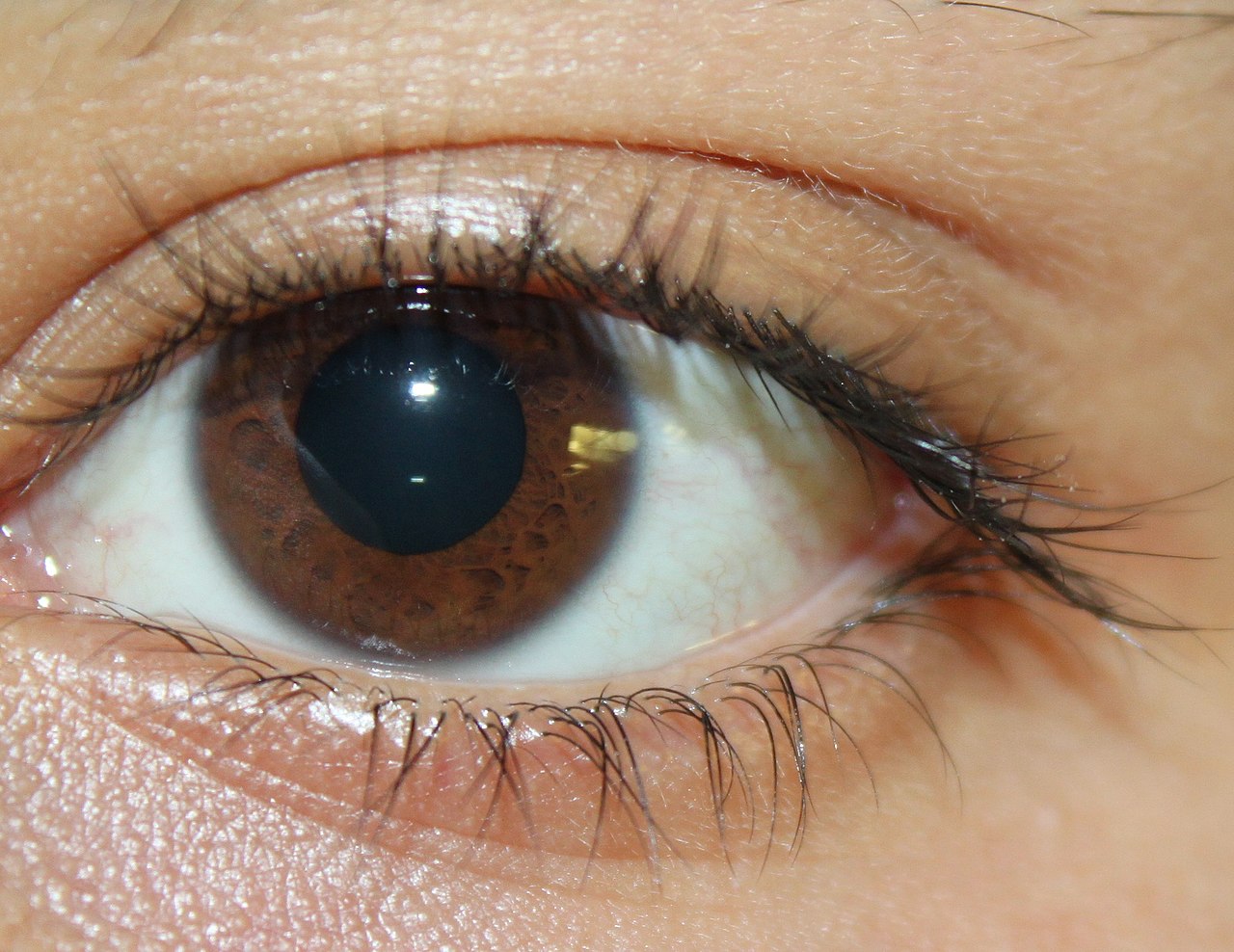
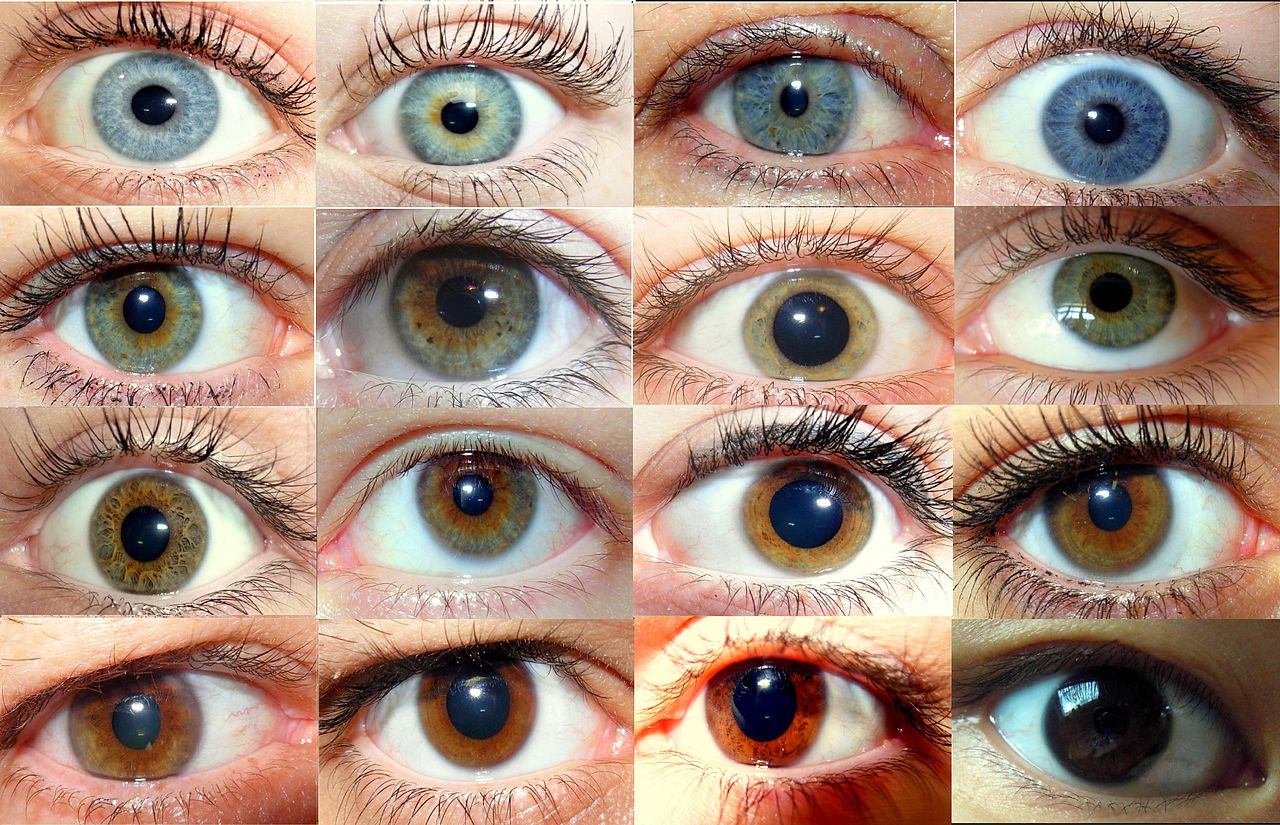
Eye colour is the visible hue of a person's iris and arises from two main factors: the amount and distribution of pigment within the iris and the way light is scattered by microscopic structures in the iris stroma. Most human eye tones—brown, blue, green, gray and hazel—result from differing levels of melanin and the optical effects of light interacting with connective tissue. Brown eyes contain more melanin in the anterior layers of the iris; blue and gray colours are largely produced by light scattering rather than pigment. Common descriptive names are convenient but do not capture the continuous nature of variation.
Image gallery
10 Images






Structure and causes
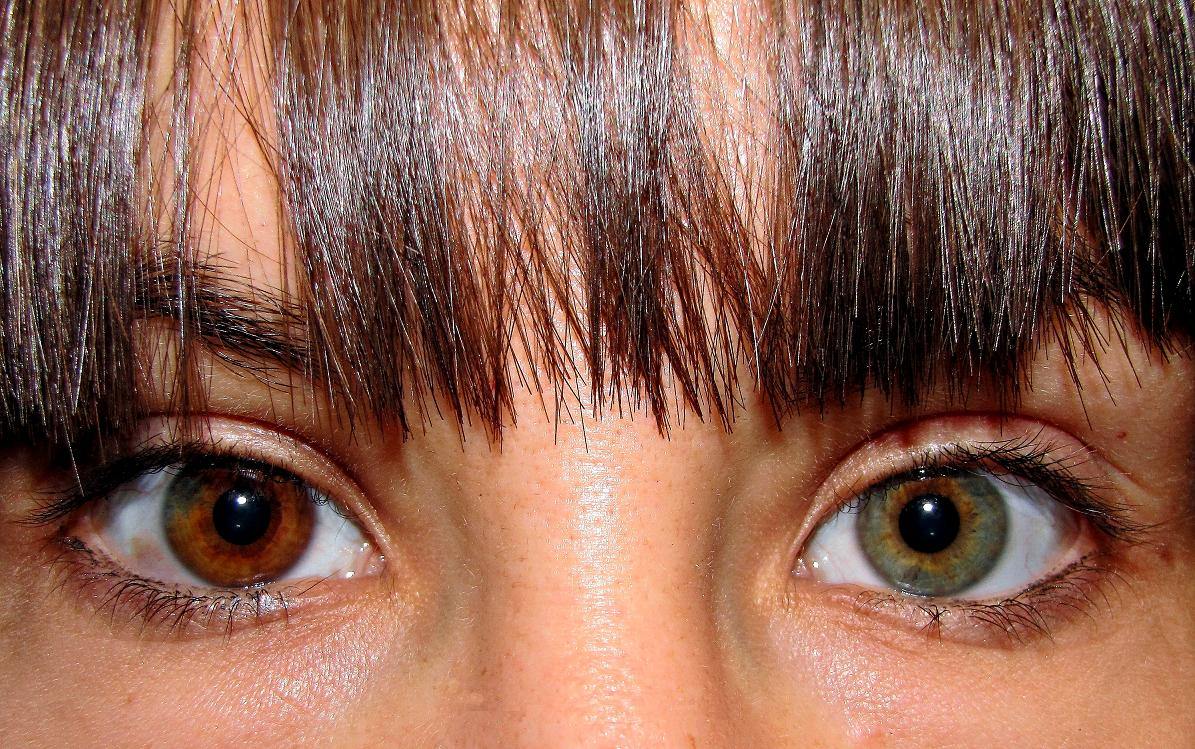
The iris is a circular, muscular structure divided into layers. The front layer (stroma) contains collagen fibers and variable pigment; a posterior pigment epithelium usually contains dark pigment that is not visible when anterior melanin is present. When anterior melanin is low, shorter wavelengths of light are scattered by the stroma (a phenomenon analogous to why the sky looks blue), producing blue or gray appearance. Greater melanin absorbs more light and makes eyes appear brown to black. Other effects such as central heterochromia or sectoral differences come from localized variation in pigment or structure.
Genetics and development
Eye colour is a polygenic trait: many genes contribute to the final shade by influencing melanin production, transport and deposition in iris cells. Certain genes have a strong influence on common differences, but no single gene determines colour in all cases. Infants are often born with lighter eyes because melanin accumulates after birth; eye colour can change during early childhood. Disturbances in pigment production, such as albinism, or injuries and inflammation can alter iris pigmentation later in life.
Evolutionary and comparative notes
Human eye appearance differs from many other primates in two notable ways: the range of iris hues across populations and the visible white sclera surrounding the iris. Some researchers suggest that a pale sclera enhances gaze signalling and social communication, although multiple hypotheses exist and the subject is actively discussed. By contrast, related species such as the chimpanzee typically have darker sclerae and more uniform brown irises. Field primatologists like Jane Goodall have described differences in gaze behaviour among apes, which may relate to eye appearance and social signalling.
Clinical, cultural and practical significance
Eye colour has modest clinical relevance: certain colours or changes can signal ocular conditions (inflammation, pigment dispersion, albinism) and rare presentations such as heterochromia may prompt medical evaluation. Culturally, eye colour has featured in aesthetics, art and social stereotypes across societies. Forensic and identification uses of eye colour are limited compared with fingerprints or DNA, but pigmentation is sometimes noted in descriptive records.
Key distinctions and notable facts
- Brown eyes result from higher melanin in the iris; blue and gray are largely optical effects of scattering.
- Eye colour is polygenic and can change during infancy; adult changes are uncommon and may require medical review.
- Heterochromia is the presence of two different colours in one person and can be congenital or acquired.
- Human variation in iris colour and a visible white sclera differ from many nonhuman primates and may have social or evolutionary implications.
For more detailed discussions of iris anatomy, pigment biology and comparative primate eyes, see resources on pigmentation, the structure of the iris, and general accounts of the human eye. Additional reading on primate vision and field observations appears in literature linked through specialist portals and collections (chimpanzee studies and conservation reports) and biographical accounts by researchers such as Jane Goodall.
Related articles
Author
AlegsaOnline.com Eye colour: causes, variation, evolution and cultural significance Leandro Alegsa
URL: https://en.alegsaonline.com/art/33061
Sources
- doi.org : 10.1111/j.1600-0749.2005.00268.x
- pubmed.ncbi.nlm.nih.gov : 16280011
- doi.org : 10.1006/exer.1998.0518
- pubmed.ncbi.nlm.nih.gov : 9778410
- books.google.com : Biochromy: natural coloration of living things
- citeseerx.ist.psu.edu : "Separating reflections in human iris images for illumination estimation"
- doi.org : 10.1109/ICCV.2005.215
- doi.org : 10.1021/j150239a007
- doi.org : 10.1111/j.1600-0749.1987.tb00401.x
- pubmed.ncbi.nlm.nih.gov : 3507666
- sciencedaily.com : No single gene for eye color, researchers prove
- nature.com : "Genotype–phenotype associations and human eye color"
- doi.org : 10.1038/jhg.2010.126
- pubmed.ncbi.nlm.nih.gov : 20944644
- ncbi.nlm.nih.gov : "A three-[[single-nucleotide polymorphism]] [[haplotype]] in intron 1 of OCA2 explains most human eye-color variation"