
Eutely: the biological phenomenon of a fixed somatic cell number
Eutely is a developmental pattern in which individuals of a species reach maturity with a fixed number of somatic cells. It occurs mainly in small invertebrates and has special value for developmental research.
Overview
Eutely is a biological condition in which adult organisms of a species possess a characteristic, essentially fixed number of somatic (non‑reproductive) cells. Growth to maturity proceeds by a defined set of cell divisions; once the adult complement is reached further size increase occurs largely by enlargement of existing cells rather than by adding new somatic cells. The phenomenon highlights a close link between development, body plan and cell lineage.
Image gallery
1 Image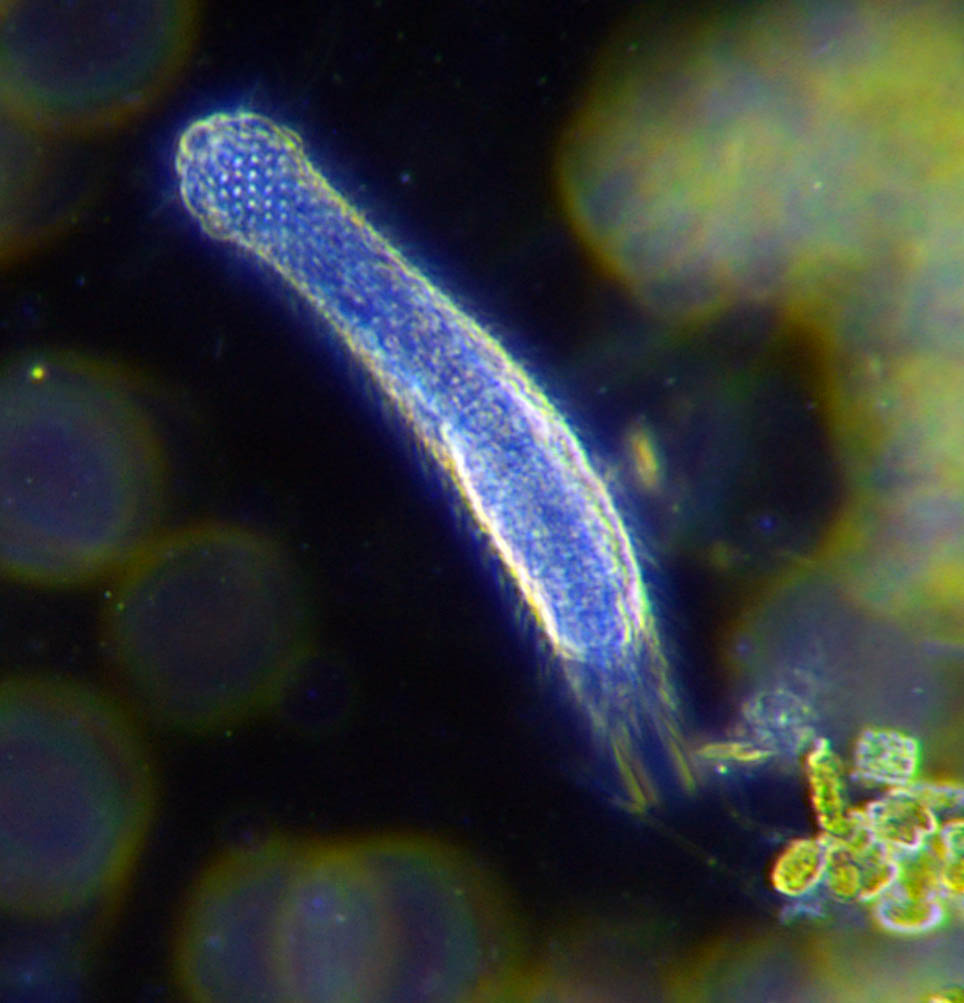
Key characteristics
Typical features of eutely include a species‑specific somatic cell count, highly stereotyped cell division patterns during embryogenesis, and a separation between limited somatic cell proliferation and continued germ‑cell division in some species. For a concise reference to the idea of a fixed somatic cell complement see introductory treatments in developmental biology. The constancy of the number is often treated as a diagnostic trait and is usually described as species‑specific.
Developmental pattern and mechanisms
During early development eutelic species follow an invariant program of cell divisions and cell fate assignments. This determinative or mosaic style of development makes it possible to map complete cell lineages: each embryonic division and its descendants can be followed to the adult cell. The overall process—cell division until maturity followed by growth through cell enlargement—has been discussed in reviews of cell proliferation and differentiation (developmental cell division).
Taxonomic distribution and examples
Eutely is most common among very small or microscopic animals. Well‑known groups that display eutelic traits include several nematodes (for example some parasitic and free‑living roundworms such as ascarids) and microscopic phyla such as gastrotrichs and rotifers. Representative links for these groups: nematodes, gastrotrichs and rotifers. Other eutelic taxa include certain tardigrades and mesozoan lineages; the distribution suggests that small body size and compact body plans favour rigid, cell‑counted development.
Importance and limitations
Eutely has been important to developmental and evolutionary biology because invariant cell lineages simplify the study of differentiation, neural wiring and aging. Model organisms with eutelic features make it possible to trace every cell from zygote to adult. At the same time, strict cell number limitation often goes along with limited capacity for somatic regeneration and with developmental rigidity, which can constrain morphological plasticity.
Notable distinctions
Not every animal with a small body is eutelic, and degrees of constancy vary: some species show almost invariant counts while others permit minor variation under environmental stress. Distinguishing eutelic development from more flexible, regulative development is useful for understanding how different organisms achieve their adult forms and how their cells contribute to growth and repair.
Related articles
Author
AlegsaOnline.com Eutely: the biological phenomenon of a fixed somatic cell number Leandro Alegsa
URL: https://en.alegsaonline.com/art/32684