
Ethnic groups of the United States
Overview of the major ethnic groups in the United States, how race and ethnicity are defined, historical migration waves, census categories, and cultural impact.
The United States is home to a wide variety of ethnic groups whose origins span the globe. Most Americans trace some or all of their ancestry to peoples who arrived from other regions, though some families identify simply as "American," especially in areas with very long local histories. Discussions of diversity typically distinguish between race, a set of socially constructed categories, and ethnicity, which refers to shared culture, language, or national origin.
Image gallery
10 Images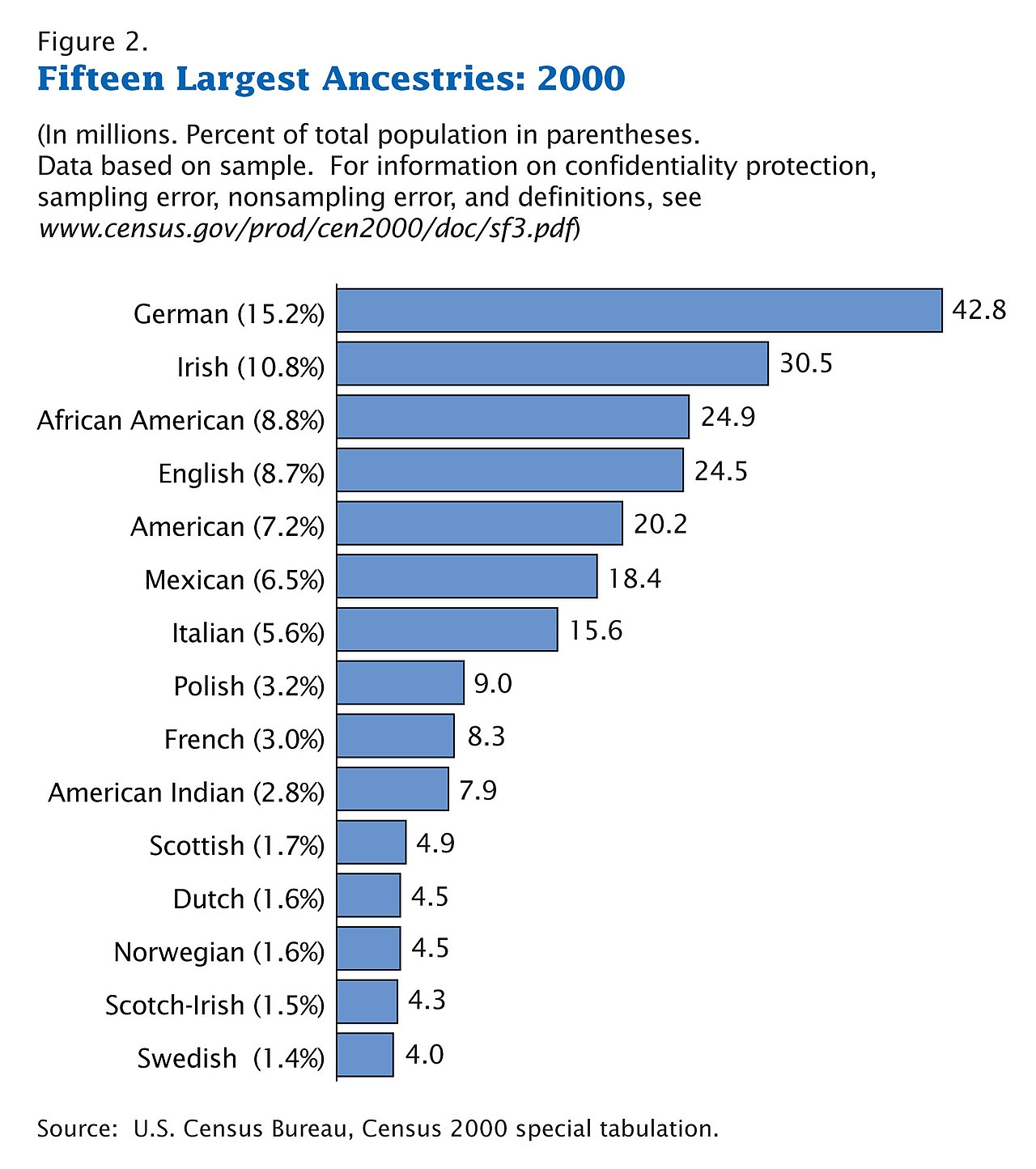




Principal categories and examples
U.S. population classifications include several broad groups that encompass many distinct ethnicities. These categories are used in public discourse and official statistics, but they mask internal diversity.
- White — commonly refers to people with ancestry from Europe, the Middle East, or North Africa, and includes ethnicities such as Irish, Italian, German, Arab, and others.
- Black or African American — people whose family origins trace to Africa; this group includes long-established communities and recent immigrants from Africa and the Caribbean.
- Asian — people with origins in East, Southeast, or South Asia, for example communities with roots in China, Japan, India, Korea, Vietnam, and the Philippines.
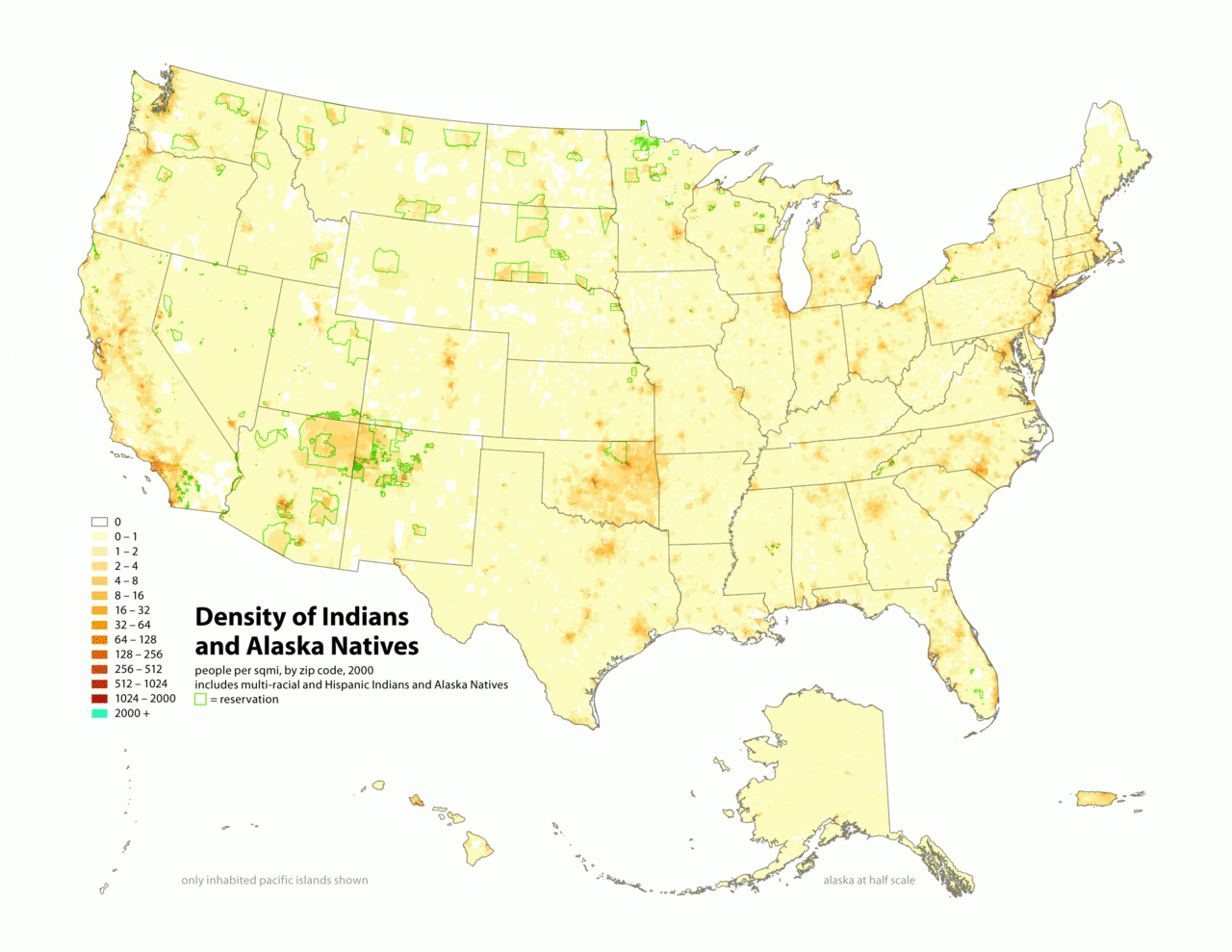
- Native American and Alaska Native — the Indigenous peoples who lived in the lands now within the United States prior to European arrival; this encompasses many tribes and nations with distinct cultures and histories. See also Native American groups.
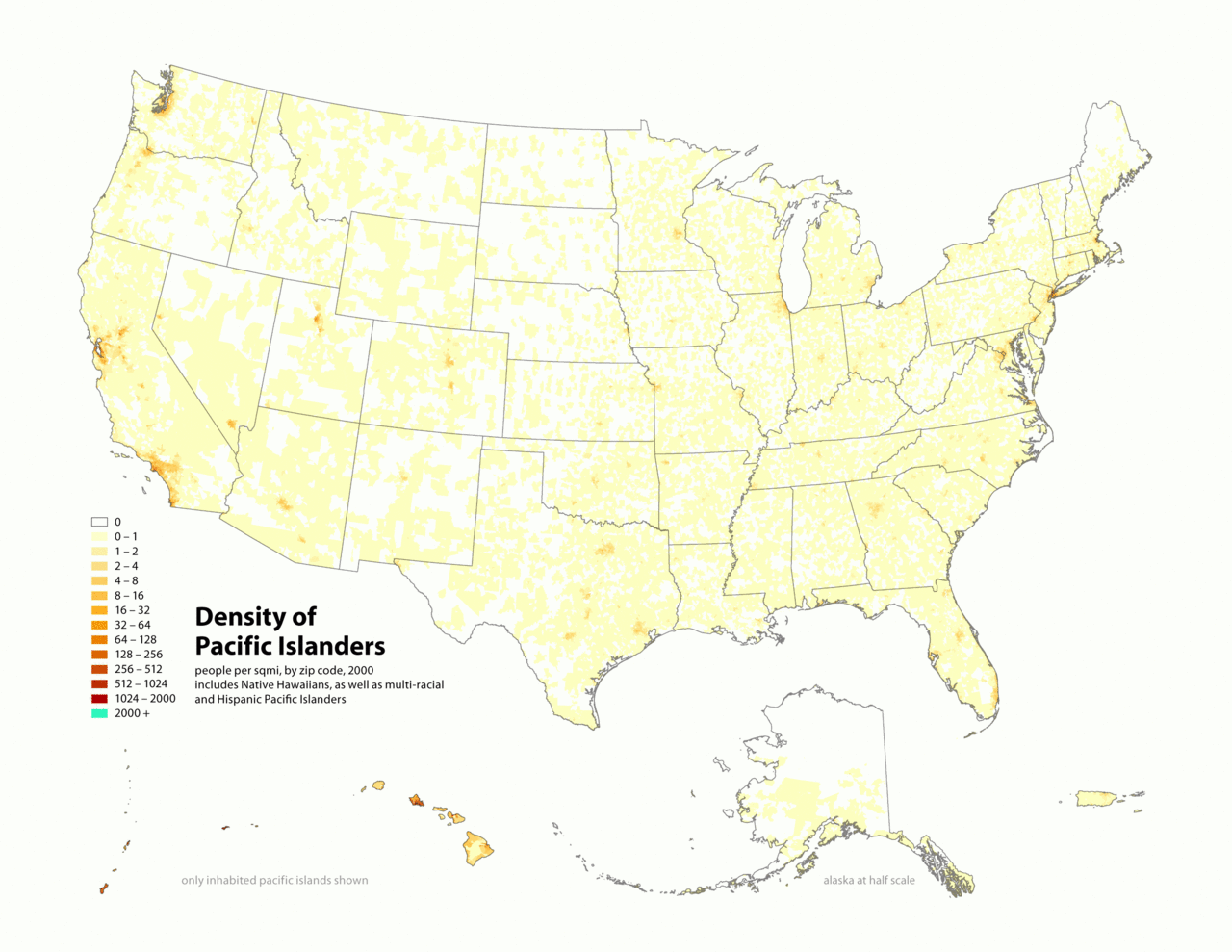
- Native Hawaiian and Other Pacific Islander — people originating from Hawaii, Guam, Samoa, and other Pacific islands.
- Hispanic or Latino — an ethnic category that covers people with cultural or ancestral ties to Spanish-speaking countries, especially in Latin America; Hispanics may be of any race.
- Multiracial and Other — increasing numbers of people identify with more than one race or belong to smaller, less widely recognized ethnic groups.
History and waves of migration
The composition of ethnic groups in the U.S. reflects centuries of migration. Early European colonization, the forced movement of Africans through the transatlantic slave trade, and the long presence of Indigenous nations laid early foundations. Later periods saw large-scale European immigration in the 19th and early 20th centuries, internal migrations such as the movement of African Americans from the rural South to urban centers, and after mid-20th century policy changes (notably the 1965 immigration reforms) a marked rise in immigrants from Asia and Latin America.
Census, identity, and classification
Federal surveys and the decennial census ask separate questions about Hispanic origin and race and allow respondents to select multiple races. These practices acknowledge complexity but also create debates about how best to represent identity. Self-identification, family history, language, religion, and cultural practices all shape how people understand their ethnicity.
Cultural impact and contemporary issues
Ethnic groups contribute to the social, economic, and cultural life of the country through language, cuisine, religion, arts, and political organization. Topics that frequently arise in discussions of ethnicity include assimilation and multiculturalism, disparities in health and income, representation, and the preservation of Indigenous rights and languages. Public policy, education, and community institutions continually adapt to the nation’s changing ethnocultural landscape.
For further reading and statistical summaries, consult resources on demographic classifications and migration history. You can explore official and educational pages about U.S. ethnic groups via links to general resources on ethnic groups and the United States.
Questions and answers
Q: What is the most common race in the United States?
A: White is the most common race in the United States. It usually refers to people from Europe or the Middle East (such as Germany, England, and Italy).
Q: What does "Black or African-American" refer to?
A: Black or African-American refers to people from most parts of Africa.
Q: What does "Asian" refer to?
A: Asian refers to people from countries in Asia (such as China, Japan, South Asia, or the Philippines).
Q: Who are Native Americans?
A: Native American or American Indian refers to people who are part of Native American groups that have lived for thousands of years in the lands now controlled by the U.S. These are the only people who did not come to the United States during or after Europe learned of the Americas.
Q: How do Hispanic Americans fit into this classification system?
A: Hispanic Americans, such as Mexican, are often classified under this category. Hispanics can also be any other of the other races listed above. Hispanic is an ethnicity, not a race.
Q: What is meant by "Other"?
A: Other refers to people who are an unlisted ethnic group such as Serbian People. The race is not necessarily same as ethnicity however.
Q: What are some examples of top three ethnic groups in America? A: Since many Asian and Hispanic people are classified differently, most of these groups listed would be white; examples include German, English and Italian ancestry
Related articles
Author
AlegsaOnline.com Ethnic groups of the United States Leandro Alegsa
URL: https://en.alegsaonline.com/art/32395
Sources
- census.gov : census.gov