
Ethnocentrism: judging other cultures from one’s own cultural standpoint
Ethnocentrism is the tendency to evaluate other peoples’ languages, customs, religions and behaviours by the standards of one’s own culture, often implying superiority.
Ethnocentrism is the tendency to interpret and evaluate the practices, beliefs and institutions of other groups through the standards of one’s own culture. It involves using one’s familiar norms and values as the reference point or point of view for judging unfamiliar behaviour. Ethnocentric judgments commonly focus on features such as language, custom, religion and forms of social behaviour, and they can range from mild preference to strong condemnation.
Image gallery
3 Images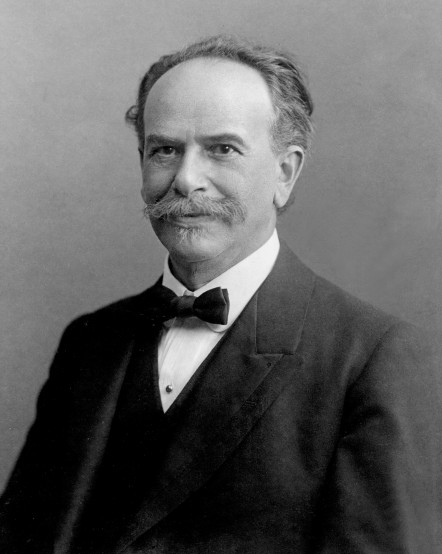


Typical characteristics
- Perceived superiority: belief that one’s own culture is more correct, moral, or advanced than others.
- Normative evaluation: treating difference as wrong, strange, or inferior rather than simply different.
- Stereotyping and generalization: attributing uniform traits to whole groups based on limited observation.
- Social exclusion: preferring in‑group members for resources or power and resisting cultural pluralism.
- Resistance to change: expecting others to assimilate or reorganize their practices to fit the dominant cultural model.
Origins and academic use
The term was popularized by the American sociologist William G. Sumner, who described it as a way of seeing one’s own group as the center and judging others by that standard. Social scientists have used the concept to explain patterns of prejudice, colonial attitudes and nationalistic rhetoric. Ethnocentrism is a descriptive concept that helps account for why people often favour familiar cultural markers and mistrust or devalue difference.
Consequences and examples
At an individual level, ethnocentrism can produce cultural misunderstandings, interpersonal conflict and biased evaluations of competence or morality. In public life it can shape immigration policy, educational curricula and diplomatic relations by privileging one set of practices. Historical examples include missionary efforts that aimed to replace indigenous lifeways, or legal systems that refused to recognise customary practices. Even everyday moments—mocking an unfamiliar dress style, insisting a foreign language is "wrong," or assuming another religion is inferior—reflect ethnocentric habits.
Alternatives and responses
Scholars and practitioners offer several strategies to reduce ethnocentrism. Cultural relativism encourages assessing practices in their own social and historical contexts rather than by external standards. Intercultural education and sustained contact between groups can counteract stereotypes, while institutional measures (anti‑bias training, inclusive policy design) lessen systemic advantages. Recognising the distinction between critique and superiority—being able to evaluate without claiming categorical dominance—is an important skill in globalized societies.
Notable distinctions
- Ethnocentrism vs. racism: they overlap but are distinct; ethnocentrism centers cultural norms, while racism adds hierarchies tied to perceived biological traits.
- Ethnocentrism vs. cultural relativism: the latter is a methodological stance aimed at understanding difference rather than ranking it.
- Degrees and contexts matter: mild forms may be compatible with curiosity and openness, but strong forms correlate with exclusionary politics and discrimination.
Understanding ethnocentrism helps explain many social tensions and offers routes for greater intercultural competence. For further reading on terms, examples and interventions, see resources on culture, cross‑cultural communication (perspectives), language and identity (language), customary law (custom), religious diversity (religion), behavioural norms (behaviour) and the original sociological discussions by Sumner.
Questions and answers
Q: What is ethnocentrism?
A: Ethnocentrism is when a person judges the culture of others based on their own culture.
Q: What are the things that ethnocentrism can look at?
A: Ethnocentrism can look at things such as language, custom, religion, and behavior.
Q: How does an ethnocentric person judge other cultures?
A: An ethnocentric person uses their own culture as the basis for judging other cultures.
Q: What does an ethnocentric person believe about their own culture and other cultures?
A: An ethnocentric person believes that their own culture is the best and that other cultures should change to be more like theirs.
Q: Who coined the term "ethnocentrism"?
A: Sociologist William G Sumner first used the term "ethnocentrism".
Q: How did William G Sumner define "ethnocentrism"?
A: William G Sumner defined "ethnocentrism" as "the technical name for the view of things in which one's own group is the center of everything, and all others are scaled and rated with reference to it".
Q: Is ethnocentrism similar to racism?
A: Yes, ethnocentrism is a more exclusive term for "racist".
Related articles
Author
AlegsaOnline.com Ethnocentrism: judging other cultures from one’s own cultural standpoint Leandro Alegsa
URL: https://en.alegsaonline.com/art/32397