
Espoo, Finland
Espoo is the second-largest city in Finland, part of Greater Helsinki. A technology and education hub, it combines urban districts, green spaces including Nuuksio, and a bilingual Finnish–Swedish heritage.
Overview
Espoo (Swedish name Esbo) is a major Finnish city in the coastal region of Uusimaa. It is widely described as the second-largest city in the country and forms an integral part of the Helsinki metropolitan area in Finland. The municipality combines dense urban centres and extensive natural areas; it has grown rapidly since the mid-20th century and is home to well over a quarter of a million residents.
Image gallery
3 Images

Geography and districts
Espoo stretches west of Helsinki along the Gulf of Finland. It contains several distinct districts and suburban centres, each with its own character and services. Notable districts include Tapiola, Otaniemi, Leppävaara, Matinkylä and Keilaniemi.
- Tapiola — a planned garden-city neighbourhood known for modernist architecture.
- Otaniemi — an innovation district centered on higher education and research.
- Keilaniemi — a business area with corporate headquarters and office towers.
Neighbours and connections
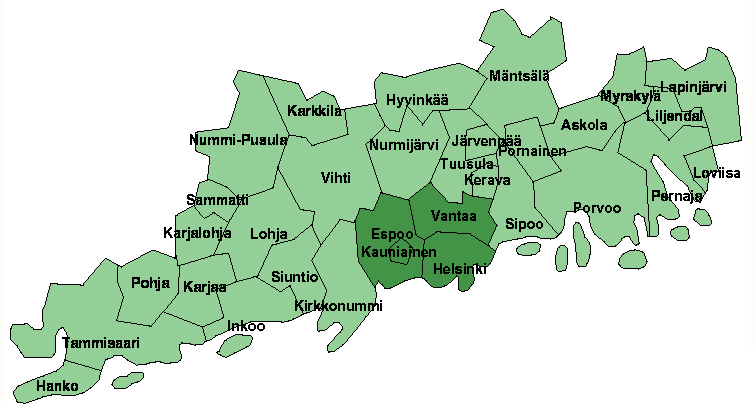
Espoo shares municipal borders with several neighbouring communities:
- Kauniainen
- Vantaa
- Kirkkonummi
- Nurmijärvi
- Vihti
History and development
Originally a rural municipality of farms and coastal villages, Espoo experienced rapid suburbanization after World War II as Helsinki expanded. Planning choices created multiple local centres rather than a single historic core, leading to a polycentric urban form. Over recent decades the city has emphasized technology, education and sustainable planning.
Economy, education and culture
Espoo is notable for its concentration of technology companies, research facilities and campuses. The Otaniemi campus hosts prominent higher-education and research institutions, attracting students and professionals. The city supports museums, theatres and cultural events; green areas such as Nuuksio and coastal archipelagos are important for recreation and biodiversity.
Transport and notable facts
Well-connected by regional rail, roads and metro extensions into suburban centres, Espoo functions as both a commuter base and an employment centre. It is officially bilingual (Finnish and Swedish) and combines urban services with large protected natural areas, making it an example of a modern Nordic suburban city balancing growth and nature.
Related articles
Author
AlegsaOnline.com Espoo, Finland Leandro Alegsa
URL: https://en.alegsaonline.com/art/32217