
Epidemic typhus
A louse‑borne infectious disease caused by Rickettsia prowazekii; historically associated with war, famine and crowding; treatable with antibiotics and preventable by delousing and hygiene.
Epidemic typhus is an acute infectious disease caused by the bacterium Rickettsia prowazekii. It is distinct from endemic (murine) typhus and from typhoid fever, which are caused by different organisms; confusion between these illnesses is common in non‑specialist accounts. For a concise etiology reference see Rickettsia prowazekii, and for clarification about similarly named conditions see typhoid fever.
Image gallery
3 Images
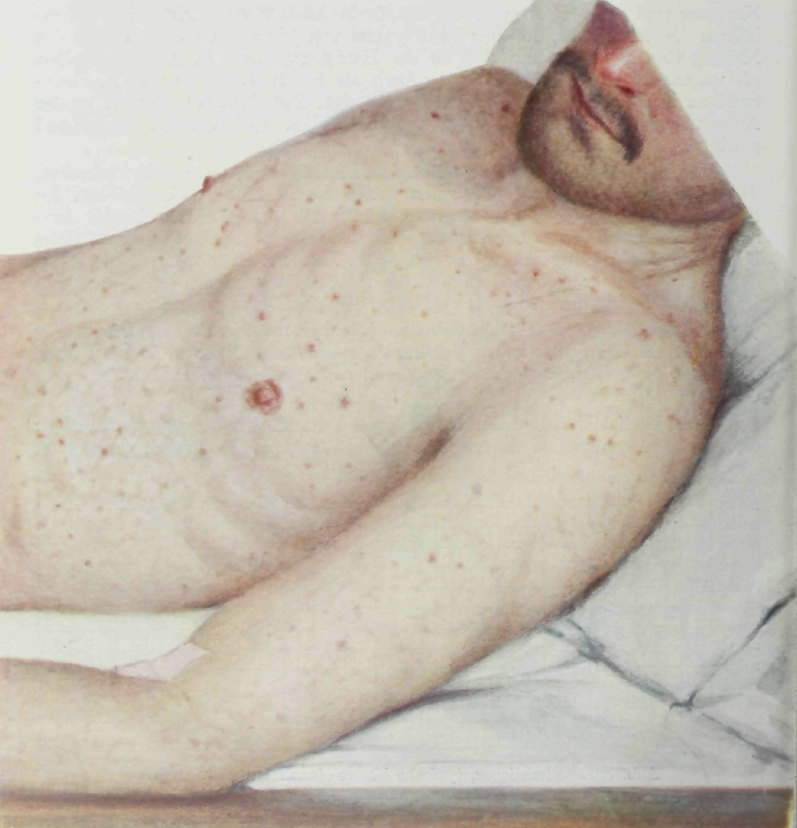
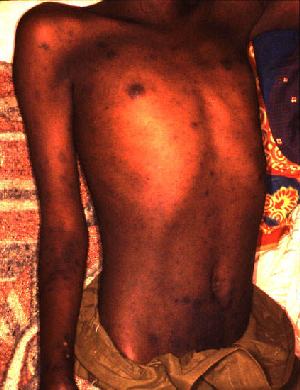
Clinical features and transmission
Typical onset includes sudden high fever, severe headache, muscle pain and often a rash that appears several days after fever begins. In untreated or vulnerable populations—such as the elderly, malnourished, or those living in crowded, unhygienic conditions—mortality can be substantial. The primary vector is the human body louse (Pediculus humanus corporis); the bacterium is transmitted when louse feces or crushed lice contaminate skin abrasions or mucous membranes. For information about arthropod vectors and prevention, see vector control resources.
Diagnosis, treatment and prevention
Diagnosis is suggested by the clinical picture and exposure history and confirmed by laboratory tests such as serology or molecular assays. Historically crude tests were used for screening, but modern laboratories use more specific methods. Effective treatment is available: tetracycline‑class antibiotics (for example doxycycline) are the drugs of choice; alternative agents may be used when doxycycline is contraindicated. Prevention rests on reducing lice infestation through improved personal hygiene, laundering or replacing clothing, use of insecticides for delousing when needed, and public‑health measures in displacement and emergency settings.
History and public‑health impact
Epidemic typhus has been associated with large outbreaks during wars, famines and mass migrations, when crowding and poor sanitation favour spread. Notable historical episodes include epidemics that accompanied military campaigns and refugee movements in Europe and elsewhere from the 18th to the 20th century. The disease has declined in many places with better living standards and vector control, but it remains a concern in humanitarian emergencies.
Related concepts and notable facts
- Brill–Zinsser disease is a late recrudescence of infection occurring years after the initial illness; it can seed new outbreaks if lice exposure recurs.
- Epidemic typhus is distinct from endemic (murine) typhus, which is usually flea‑borne and caused by a different Rickettsia species.
- Public‑health control focuses on surveillance, rapid treatment of cases, and measures to prevent lice transmission in at‑risk populations.
Understanding epidemic typhus requires attention to microbiology, clinical management and the social conditions that permit outbreaks. While rare in many modern settings, the disease remains an important example of how infectious agents exploit crowding and poor sanitation, and why integrated medical and public‑health responses are essential during crises.
Related articles
Author
AlegsaOnline.com Epidemic typhus Leandro Alegsa
URL: https://en.alegsaonline.com/art/31704
Sources
- ncbi.nlm.nih.gov : "Typhus - PubMed Health"