
Equilibrioception — the Sense of Balance
Equilibrioception is the sensory system that monitors head and body orientation and motion. It combines inner ear signals with vision and proprioception to stabilize posture, gaze, and movement.
Equilibrioception, commonly called the sense of balance, is the set of sensory processes that tell an organism where its body and head are in space and how they are moving. It prevents falls, allows coordinated walking and running, and helps stabilize vision during head movements. The system is not a single organ but a coordination of multiple sensors and brain circuits.
Image gallery
8 Images


Mechanisms and components
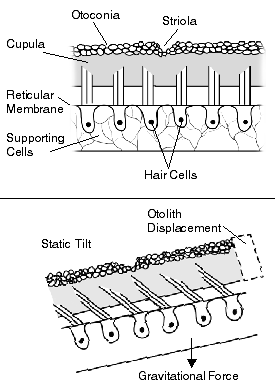
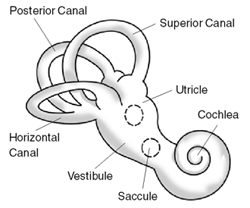
The principal peripheral apparatus in humans is the inner ear's vestibular apparatus, which includes three semicircular canals that detect angular acceleration and two otolith organs (the utricle and saccule) that sense linear acceleration and head position relative to gravity. Signals travel via the vestibular nerve to brainstem nuclei and the cerebellum, where they are integrated with visual input and proprioceptive feedback from muscles and joints.
- Semicircular canals: detect rotational movements.
- Otolith organs: sense linear motion and tilt.
- Visual system: provides a reference frame for orientation and motion.
- Proprioception: informs limb position and supports posture.
Functions and everyday examples
Equilibrioception supports posture control, balance during locomotion, and the vestibulo-ocular reflex (VOR), which keeps images steady on the retina while the head moves. Everyday activities that rely on it include walking on uneven ground, turning quickly, riding a bicycle, and tasks requiring fine balance such as tightrope walking or dancing. Infants develop balance gradually as sensory systems and motor control mature.
Disorders, testing, and rehabilitation
When equilibrioception is impaired people may experience dizziness, vertigo, unsteadiness, or falls. Common causes include inner ear inflammation, benign paroxysmal positional vertigo (BPPV), Meniere-like conditions, age-related decline, and neurological disease. Clinicians use bedside exams and specialized tests—such as the Romberg test, caloric stimulation, rotary chair, and video head impulse testing—to assess vestibular function. Vestibular rehabilitation therapy can reduce symptoms by improving compensation and sensory reweighting.
- Symptoms: vertigo, nausea, imbalance.
- Diagnostic tools: Romberg, caloric test, VEMP, vHIT.
- Treatment: repositioning maneuvers for BPPV, physiotherapy, medication in some cases.
History, comparative biology, and notable facts
Recognition of the inner ear's role in balance evolved over centuries; anatomical and physiological studies in the 18th–19th centuries clarified the vestibular contributions to orientation. Many animals possess analogous organs—fish and amphibians have inner ear structures, while some invertebrates use statocysts—to detect gravity and motion. Notable modern observations include the sensory conflicts experienced by pilots and astronauts when familiar gravity cues are altered, illustrating how equilibrioception depends on multisensory integration.
For further general reading on the anatomy and function of the balance apparatus see the vestibular system overview and for information on common conditions consult resources about balance disorders. Understanding equilibrioception is important for medicine, sports, rehabilitation, and basic neuroscience because it underpins safe, coordinated movement and spatial awareness.
Related articles
Author
AlegsaOnline.com Equilibrioception — the Sense of Balance Leandro Alegsa
URL: https://en.alegsaonline.com/art/31825
Sources
- commons.wikimedia.org : Challenges to physical balance
- doi.org : 10.1080/14038190701757656