
Ephesus: Ancient Ionian City and Major Archaeological Site in Anatolia
Ephesus was a major Greek and Roman city on Anatolia’s Aegean coast, famed for the Library of Celsus, the grand theatre and Artemis cult. Its extensive ruins illuminate urban life, religion and trade across centuries.
Ephesus occupies a prominent place among ancient cities of the Aegean and western Anatolia. Founded in the first millennium BCE as an Ionian settlement, it developed into a cosmopolitan port and regional administrative centre under Hellenistic and Roman rule before a long decline in the Byzantine period. The archaeological site lies in modern western Turkey and is commonly associated with the nearby modern town and visitor facilities often labelled Efes. Its long occupation and dense preservation make Ephesus a key reference for studies of ancient urbanism, religious practice and commercial networks in Anatolia and for cultural heritage tourism in Turkey.
Excavations have exposed a rich sequence of streets, public buildings and sanctuaries. Curetes Street (also spelled Curettes) forms the principal processional axis of the classical and Roman city, paved in marble and lined with shops, statues and civic monuments that testify to the city’s wealth and tastes. A monumental fountain dedicated to Emperor Trajan demonstrates how imperial patronage was displayed in public space and serves as an example of decorative urban waterworks (Trajan fountain). Civic life included smaller, well-crafted structures such as an odeon used as a council chamber and concert hall and communal latrines that illustrate Roman engineering and concern for hygiene.
The Temple of Hadrian, a richly decorated second-century shrine, shows the high quality of local sculptural workshops and the adoption of imperial iconography in provincial cities (Temple of Hadrian). The temple’s reliefs and architectural detail are frequently cited in studies of Roman provincial art. Another sanctified locus for ancient devotion and pilgrimage was the great sanctuary associated with the cult of Artemis, long famed in antiquity; the economic and social importance of that cult is one reason Ephesus figures prominently in literary and archaeological accounts (Artemis).
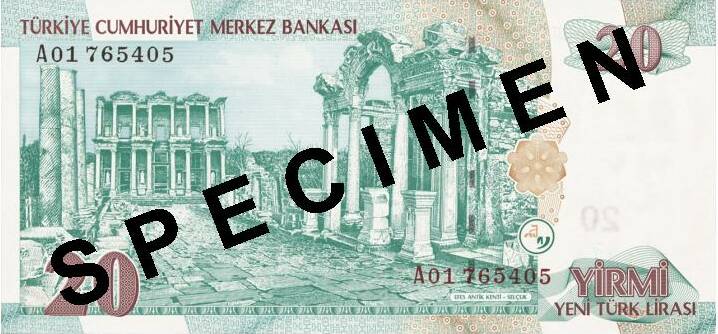
The Library of Celsus, whose ornate façade faces one of the city’s main thoroughfares, remains one of Ephesus’s most photographed monuments. Built in the early second century CE as a tomb and depository for books, the library has a carefully composed sculptural program and is often compared with other great ancient libraries such as those at Alexandria and Pergamon (Celsus and associated libraries). The contrast between the library’s façade and the taller interior is a notable architectural feature that communicated civic pride and elite benefaction.
Dominating the cityscape is the great theatre carved into the hillside. Capable of holding large crowds, it served for dramatic performances, public assemblies and spectacles; in antiquity the theatre was also the setting for contests and, at times, violent entertainments including gladiatorial bouts (spectacles). Christian sources recount how the preaching of the Apostle Paul provoked a disturbance among craftsmen whose livelihood depended on religious tourism to the Artemis sanctuary; Paul’s stay and ministry in the city are significant for the history of early Christianity and are connected with letters and traditions preserved in the Christian corpus (Apostle Paul), including references to correspondence and community life (epistle) and the writings traditionally known as the Epistle to the Ephesians (Ephesians) and their place in the New Testament.
Image gallery
10 Images


Archaeology, conservation and public access
Systematic excavations at Ephesus began in the 19th century and continued through the 20th century into the present day, revealing domestic quarters, workshops, baths and monumental façades. Archaeological work has produced large corpora of inscriptions, sculptural fragments and architectural plans that inform chronological and social reconstructions of the city. Conservation and reconstruction efforts have stabilized key monuments for public interpretation, while scholarly publications and catalogues present the site’s finds and stratigraphy. Visitors can use on-site museums and interpretive trails that assemble material evidence and contemporary research into accessible narratives (visitor services at Efes) and regional guides (Anatolian sites).
Because Ephesus illustrates long-term processes—urban expansion, imperial patronage, religious change, economic reorientation and environmental transformation such as harbour silting—it remains central to debates about ancient economy, urban life and the transition from pagan antiquity to Christian and Byzantine forms. Scholarly attention ranges from the study of temple economies and craft production to epigraphic projects that map networks of patrons and civic benefactors. Digital archives and datasets now assist researchers in comparing architectural plans, inscriptions and artifact distributions across the site (datasets) and in publishing excavation reports and specialized studies (conservation reports).
Major features and points of interest
- Library of Celsus: monumental façade, funerary function and former book repository (library).
- Great Theatre: theatre of dramatic and civic events; site of disturbances recorded in ancient texts (theatre).
- Temple of Hadrian: exemplary provincial sculpture and architectural detail (Hadrian).
- Curetes Street and Fountain of Trajan: ceremonial axis and imperial commemoration (Trajan fountain).
- Odeon and public latrines: municipal functions, urban amenities and engineering (odeon).
Ephesus continues to attract scholars, students and the public because its material remains allow close study of how architecture, religion, commerce and community life intersected over more than a millennium. For those seeking further study, museum collections, excavation monographs and curated online catalogues provide reliable starting points for research into inscriptions, architectural history and the archaeology of religion (regional museums). Curated guides and academic bibliographies, often available through university libraries and heritage bodies, point readers to excavation reports and thematic studies that explore topics such as urban planning in Roman Asia, the archaeology of early Christian communities and the conservation of monumental façades (fieldwork) and interpretive resources (epigraphic) that compile primary evidence for further analysis (literary) and public outreach projects (education) related to the site.
Selected archival resources and official notes on conservation provide additional context for visits and research; regional heritage bodies and collaborative academic projects maintain access to records, plans and photographs that document the continuing study of Ephesus and its significance for Mediterranean history (Artemis context).
Related articles
Author
AlegsaOnline.com Ephesus: Ancient Ionian City and Major Archaeological Site in Anatolia Leandro Alegsa
URL: https://en.alegsaonline.com/art/31693