
Enver Pasha (İsmail Enver) — Ottoman military officer and Young Turk leader
Ottoman military officer (1881–1922), a leading figure of the Young Turk movement and the Committee of Union and Progress; Minister of War in World War I and a controversial figure in late Ottoman history.
Overview
İsmail Enver (commonly called Enver Pasha) was an influential Ottoman military officer and politician born in Constantinople on 22 November 1881 (Istanbul). He rose to prominence as a leader of the Young Turk Revolution and a leading member of the Committee of Union and Progress (CUP). During the 1910s he became one of the three dominant figures of the Ottoman government and served as Minister of War from 1914 to 1918, a period that included the Balkan Wars and the First World War (World War I).
Image gallery
10 Images


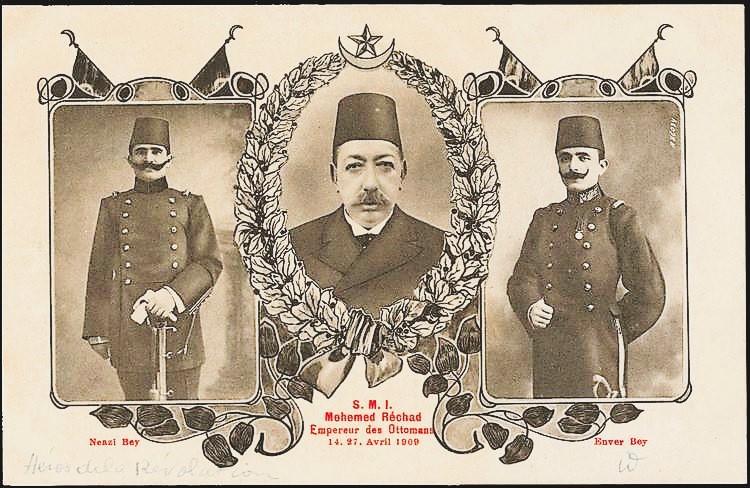

Early life and rise
Enver trained at Ottoman military academies and entered the officer corps, where he gained a reputation for energy and nationalist commitment. He belonged to a generation of reform-minded officers who supported constitutional government and modernization. As part of the Young Turk movement he played a visible role in the 1908 restoration of the constitution and the political changes that followed; he was sometimes addressed by the Ottoman title Enver Bey.
Military career and wartime leadership
After the 1913 coup that concentrated power in the hands of the Committee of Union and Progress, Enver emerged as one of the empire’s chief decision-makers. As Minister of War he advocated close ties with Germany and an assertive military stance. He personally led the 1914–15 campaign against the Russian Caucasus front; that offensive culminated in a major defeat at Sarikamish and heavy losses among Ottoman troops. His tenure as war minister coincided with the Ottoman entry into the global conflict and with emergency policies that reshaped the empire.
Controversies and historical assessments
Enver Pasha’s legacy is contested. He is praised in some accounts for his early role in the constitutional movement but widely criticized for strategic miscalculation and authoritarian governance. Historians hold the wartime Ottoman leadership collectively accountable for policies that produced the deaths and displacement of large numbers of civilians, including Armenian populations; many scholars describe these events as a genocide and identify members of the wartime government, including Enver, as central figures in decisions that led to deportations and mass violence (Armenian deportations and killings).
Exile, final campaign and death
After the armistice and the political collapse of the CUP, Enver left the remaining Ottoman territories. He spent time in Germany and later traveled to Central Asia, where he sought to organize volunteer and anti-Bolshevik forces during the turbulence of the Russian Civil War. Contemporary reports place his death on 4 August 1922 in what is now Tajikistan; accounts record that he was killed while engaged in combat operations and suggest he fell to enemy fire, including machine-gun rounds (Tajikistan, machine-gun).
Significance and legacy
Enver Pasha remains a polarizing historical figure. He is remembered as a symbol of the Young Turk drive for reform and national revival and, at the same time, as a controversial wartime leader whose decisions had catastrophic consequences for the Ottoman state and many of its peoples. His life illustrates the turbulent transition of the late Ottoman world, the dangers of ambitious military adventurism, and the political ruptures that preceded the republics and states formed after the empire’s collapse (Ottoman Empire, Ottoman).
- Born: 22 November 1881, Constantinople (Istanbul)
- Roles: Ottoman officer, Young Turk leader, Minister of War (1914–1918)
- Wars: Balkan Wars, World War I, later Central Asian campaigns amid the Russian Civil War
- Died: 4 August 1922, in eastern Central Asia (Tajikistan)
For further reading consult scholarly treatments and primary-source collections that examine the CUP’s wartime decisions, Ottoman military strategy, and postwar reckonings with responsibility and memory (birthplace, titles, name variants, national context, imperial setting, global war, civilian catastrophe, revolutionary aftermath, circumstances of death).
Related articles
Author
AlegsaOnline.com Enver Pasha (İsmail Enver) — Ottoman military officer and Young Turk leader Leandro Alegsa
URL: https://en.alegsaonline.com/art/31637