
Emperor of India: title, usage and historical context
Overview of the title 'Emperor of India', its linguistic forms, historical uses by Mughal and British rulers, symbolic functions, and its legacy after Indian independence.
The phrase "Emperor of India" names a formal sovereign style that has appeared in several historical contexts. In Persian and Hindustani renderings it was commonly expressed as Shahanshah -e- Hind. The label functions as a title rather than a narrow constitutional office, and it has been applied both to late Mughal practice and to British monarchs who ruled over the subcontinent under the British Raj in what is now India.
Image gallery
10 Images

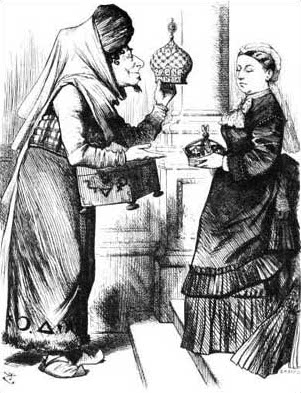


Origins and historical use
Early and medieval South Asian rulers were sometimes described by later historians as "emperors" because of the large territories they controlled. Famous premodern figures like Ashoka or the Mughal sovereign commonly called Akbar are often treated in that way in modern writing. That retrospective usage should not be confused with the specific, stylized phrase "Emperor of India," which emerged in different political settings and linguistic forms.
Mughal and late-imperial usage
The last Mughal ruler, Bahadur Shah II, and his predecessors used Persianate court styles reflecting claims to imperial rank within the subcontinent and to leadership of the Muslim community. Those honorifics were rooted in a long Indo-Persian bureaucratic and ceremonial tradition exemplified by the Mughal Empire, but they did not always correspond to uncontested rule across the entire peninsula.
British adoption and symbolism
In the nineteenth century the British Crown began to use the imperial style to express sovereignty over colonial India. The adoption of an "Emperor/Empress of India" title emphasized authority, ceremonial precedence and administrative supremacy in the imperial relationship. It appeared on coinage, proclamations and in multilingual royal styles used across the subcontinent.
Characteristics and functions
- Primarily ceremonial and representational: signaling supreme rank rather than daily administration.
- Multilingual forms: Persian, Hindustani and English styles coexisted to address diverse audiences.
- Public visibility: used on medals, coins, proclamations and official seals.
Enduring legacy and distinctions
After the end of British rule and the independence and partition of 1947 the imperial style ceased to be a practical political designation. Modern scholars still use the term "emperor" descriptively for powerful South Asian rulers of the past, but that usage is analytical rather than a direct continuation of any single title or legal claim. The distinction between historical emperorship and the formal colonial style highlights how titles can blend symbolic, linguistic and political meanings in different eras.
Questions and answers
Q: Who was the last Mughal emperor to use the title Emperor of India?
A: Bahadur Shah II was the last Mughal emperor to use the title Emperor of India.
Q: Who else used the title of Emperor of India during the British Raj?
A: The colonial British monarchs during the British Raj in India also used the title of Emperor of India.
Q: Did Ashoka the Great or Emperor Akbar of the Mughal empire claim the title of Emperor of India for themselves?
A: No, Ashoka the Great of the Maurya Dynasty and Emperor Akbar of the Mughal empire did not claim the title of Emperor of India for themselves, although they are sometimes referred to as Indian emperors.
Q: What does the term Shahanshah-e-Hind mean in Hindustani?
A: The term Shahanshah-e-Hind in Hindustani means Emperor/Empress of India.
Q: Did the Mughal emperors and the colonial British monarchs use the title Emperor of India at the same time?
A: No, the Mughal emperors used the title Emperor of India before the colonial British monarchs acquired India, and the British monarchs used the title during the British Raj.
Q: Who was the first Mughal emperor to rule India?
A: Babur, who established the Mughal Empire in 1526, was the first Mughal emperor to rule India.
Q: How did the Mughal Empire come to an end?
A: The Mughal Empire came to an end as a result of the Indian Rebellion of 1857, which led to the dissolution of the British East India Company and the transfer of power to the British Crown.
Related articles
Author
AlegsaOnline.com Emperor of India: title, usage and historical context Leandro Alegsa
URL: https://en.alegsaonline.com/art/31261
Sources
- britannica.com : "Aśoka – Britannica Online Encyclopedia"
- royal.gov.uk : History of the Monarchy, Victoria