
Aluminium chloride: properties, preparation, uses and safety
Aluminium chloride (AlCl3) is a hygroscopic, strongly Lewis-acidic inorganic compound used widely as a catalyst and reagent. This article summarizes its properties, preparation, applications and safety considerations.
Overview
Aluminium chloride, chemical formula AlCl3, is a common inorganic compound of aluminium and chlorine. Pure anhydrous AlCl3 is a pale, crystalline solid that reacts readily with moisture in air. It is best known for its role as a strong Lewis acid in laboratory and industrial chemistry, where it catalyses many electrophilic substitutions and related transformations. For concise authoritative data, see Aluminium chloride summary.
Image gallery
6 Images



Structure and physical properties
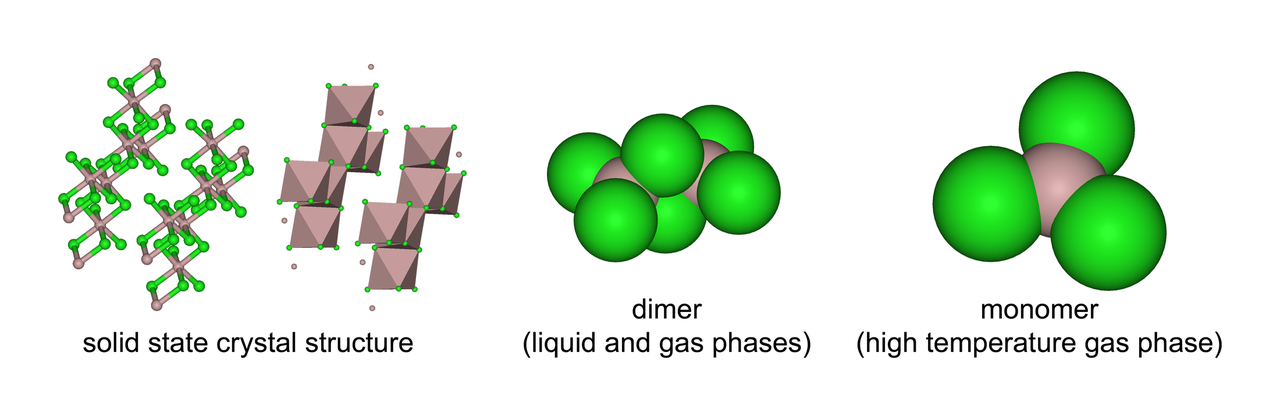
The anhydrous form differs from many ionic chlorides: it is largely covalent and can exist as dimeric Al2Cl6 units in the gas phase or as layered networks in the solid. Hydrated forms, such as the common hexahydrate, contain water of crystallization and behave more like ionic salts. The compound hydrolyses in water to give acidic solutions and hydrogen chloride; this sensitivity to moisture explains its tendency to fume in humid air. For technical specifications and safety data, consult a manufacturer's sheet: product information.
Preparation and chemical behaviour
Industrial and laboratory methods differ. Anhydrous aluminium chloride can be prepared by direct combination of aluminium metal and chlorine gas at elevated temperatures, whereas hydrated forms are commonly produced by treating aluminium oxide or basic aluminium compounds with hydrochloric acid. In organic chemistry it behaves as a powerful electrophile activator and forms complexes with ethers, aromatics and carbonyl compounds. Reactions with water and alcohols generate HCl and various hydrolysis products; further details are available at technical resources.
Uses and applications
- As a catalyst for Friedel–Crafts alkylation and acylation in the manufacture of pharmaceuticals, dyes and fragrances.
- In petrochemical and polymer industries for alkylation and isomerization processes.
- As a reagent in laboratory syntheses and for chlorination or dehydration reactions.
- Related aluminium chloride derivatives or hydrates are used in antiperspirant formulations; see regulatory and formulation notes at product safety.
Handling, hazards and environmental notes
Aluminium chloride is corrosive and can cause skin and eye irritation; it emits hydrogen chloride upon contact with water and can produce fumes in humid conditions. Proper personal protective equipment, dry storage and ventilation are essential. Waste and emissions require controls to avoid environmental release of chloride and acidic residues; guidance for safe handling and disposal can be found via material safety resources: safety guidance.
History and notable facts
The compound has a long history in chemical synthesis because of its exceptional Lewis acidity. Its discovery and early use paralleled the development of aromatic substitution chemistry in the 19th and early 20th centuries. Modern applications remain dominated by catalytic roles in industrial organic processes, while improved alternatives and catalyst supports are continuously developed to reduce corrosiveness and improve recyclability.
Related articles
Author
AlegsaOnline.com Aluminium chloride: properties, preparation, uses and safety Leandro Alegsa
URL: https://en.alegsaonline.com/art/3118
Sources
- chemister.ru : Aluminum chloride · web.archive.org
- doi.org : 10.1524/zkri.1935.90.1.237