
Elfstedentocht: the Dutch Eleven Cities ice skating tour
The Elfstedentocht is a long-distance ice skating tour across eleven Frisian towns. Held only in sufficiently cold winters, it is a national sporting and cultural event in the Netherlands.
Overview
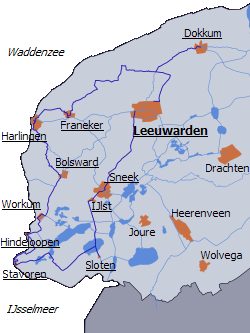
The Elfstedentocht (literally “Eleven Cities Tour”) is a long-distance ice skating event held on natural ice in the province of Friesland in the Netherlands. The name means “eleven cities,” and the route links a chain of towns using frozen lakes and historic canals. Skaters travel nearly 200 kilometres round-trip, beginning and ending in Leeuwarden. Because it depends on sufficiently thick natural ice, the race only takes place in winters cold enough to freeze waterways to a safe depth.
Image gallery
6 Images


Route, rules and characteristics
The course passes through all eleven designated towns of Friesland in a predetermined order and covers roughly 200 km. Organizers require an inspection of the ice before any edition can be approved; a common safety benchmark is an ice thickness of at least 15 centimetres in the main sections. Conditions on the ice vary from smooth canal stretches to rough open-water crossings and shaded sections where melting can create hazards. The event attracts both elite long‑distance skaters and large numbers of amateur participants, turning the route into a moving festival when conditions allow.
History and notable editions
The Elfstedentocht was first organised in the early 20th century and has occurred only in winters cold enough to meet safety standards. It has been staged a limited number of times because Dutch winters are often too mild; historically the race has been held intermittently and became a national phenomenon in years when the frost prevailed. One of the harshest editions came during a severe winter in the 1960s, when extreme weather and poor ice conditions led to very low finishing rates. Winners and finishers have received commemorative recognition over the years; the specific awarding practice has evolved with the event.
Cultural significance and modern context
The Elfstedentocht has a symbolic place in Dutch culture as an emblem of perseverance, community and winter sport. When it is announced that the ice is safe, the announcement itself becomes national news and spectators line the course to cheer participants. Because long-term climate trends have produced fewer suitable winters, the event has not taken place for decades at times, prompting public debate about climate change and the future of outdoor ice traditions. In response, annual alternatives inspired by the route have been organised so enthusiasts can continue the tradition in other forms.
Practical notes and related events
- Timing: the tour can take many hours; participants plan for weather, rest and support along the way.
- Safety: organisers monitor ice thickness and may postpone or cancel if conditions are unsafe.
- Alternatives: cycling and recreational events modelled on the Elfstedentocht are held more regularly; these allow people to experience the route in warmer seasons.
For general context on the name and activity, see entries about the term "Eleven Cities" and ice skating: translation and name, ice skating as sport, and the waterways that form the course: canals. Further local information is available from Frisian sources and municipal pages in Friesland and the national sporting archives in the Netherlands, with the municipal capital Leeuwarden serving as start and finish.
Questions and answers
Q: What is the Elfstedentocht?
A: The Elfstedentocht is a race for people on ice skates that takes place on canals in Friesland in the north of the Netherlands.
Q: How long is the route of the race?
A: The route of the race is nearly 200 kilometers long and goes through eleven towns in Friesland.
Q: When can the Elfstedentocht be held?
A: The Elfstedentocht can only be held in winters when it has been cold enough to freeze the canals to enough depth to make it safe for skating on.
Q: Where does the Elfstedentocht start and finish?
A: The Elfstedentocht starts and finishes in Leeuwarden, the capital city of Friesland.
Q: How many times has the Elfstedentocht been held?
A: The Elfstedentocht has been held 15 times, with the first year in 1909 and the most recent race on 4 January 1997.
Q: How thick does the ice on the canals have to be for the race to take place?
A: The ice on the canals has to be at least 15 centimeters thick for the race to take place.
Q: How tough is the Elfstedentocht?
A: The Elfstedentocht is a very tough race, although some years the race has been tougher than others, depending on the weather conditions. In 1963, an extremely cold winter, only one in 100 people who took part managed to finish the race. Medals are given to the first 11 men and the first 5 women.
Related articles
Author
AlegsaOnline.com Elfstedentocht: the Dutch Eleven Cities ice skating tour Leandro Alegsa
URL: https://en.alegsaonline.com/art/30807