
Electric arc
A sustained electrical discharge through a gas that forms a hot, luminous plasma. Electric arcs power welding, cutting, lighting and furnaces and are distinct from sparks and glow discharges.
An electric arc is a sustained electrical discharge that passes through a gas and creates a hot, conductive plasma. It begins when a sufficiently strong electric field causes a localized electrical breakdown of the gas between two electrodes. Once the gas becomes ionized, current flows continuously through the ionized channel, emitting intense light and heat.
Image gallery
9 Images
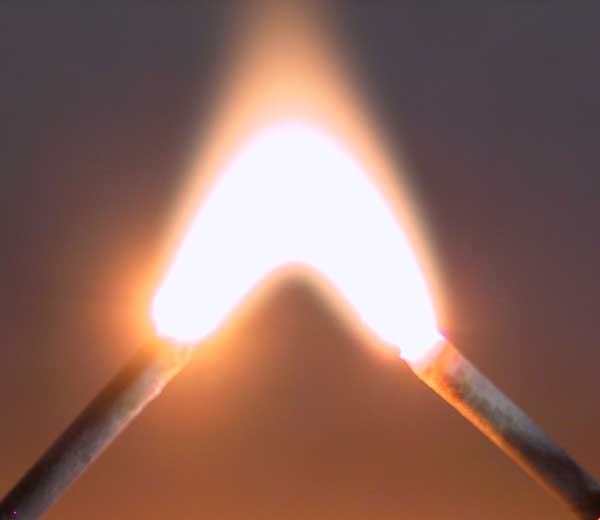
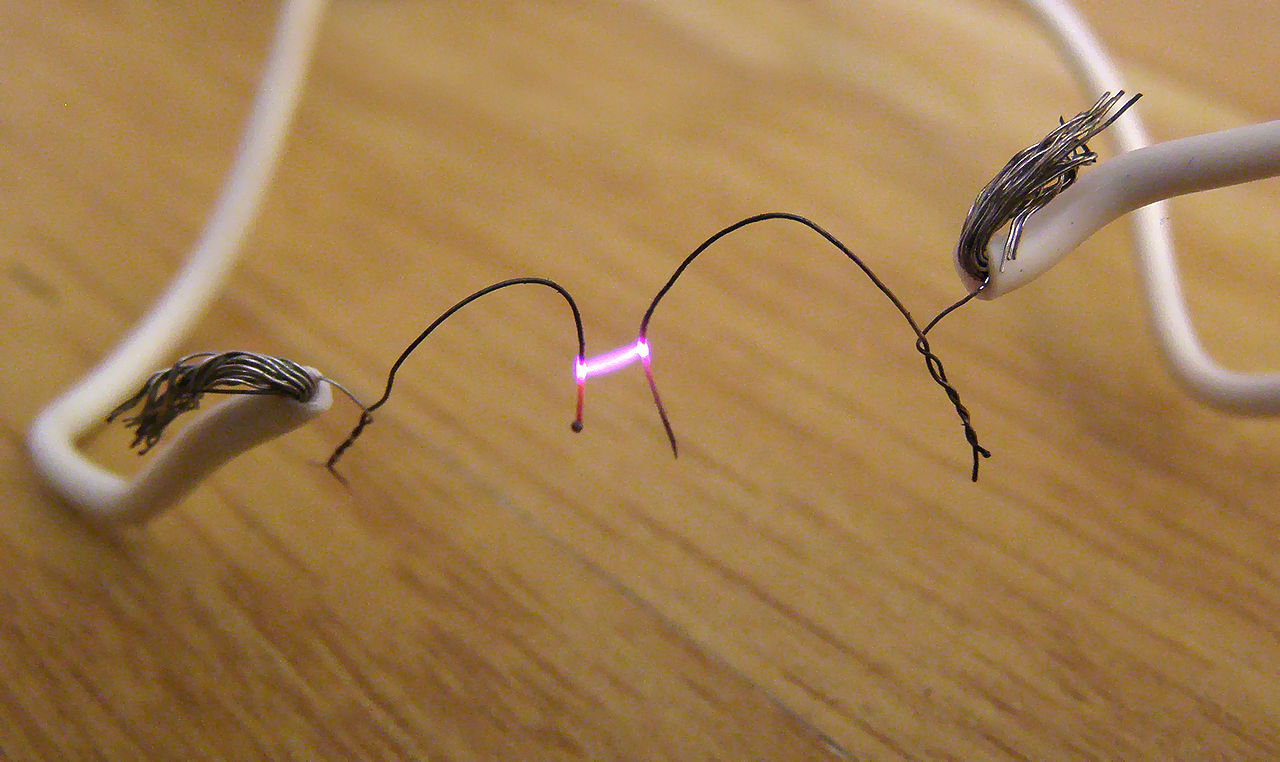


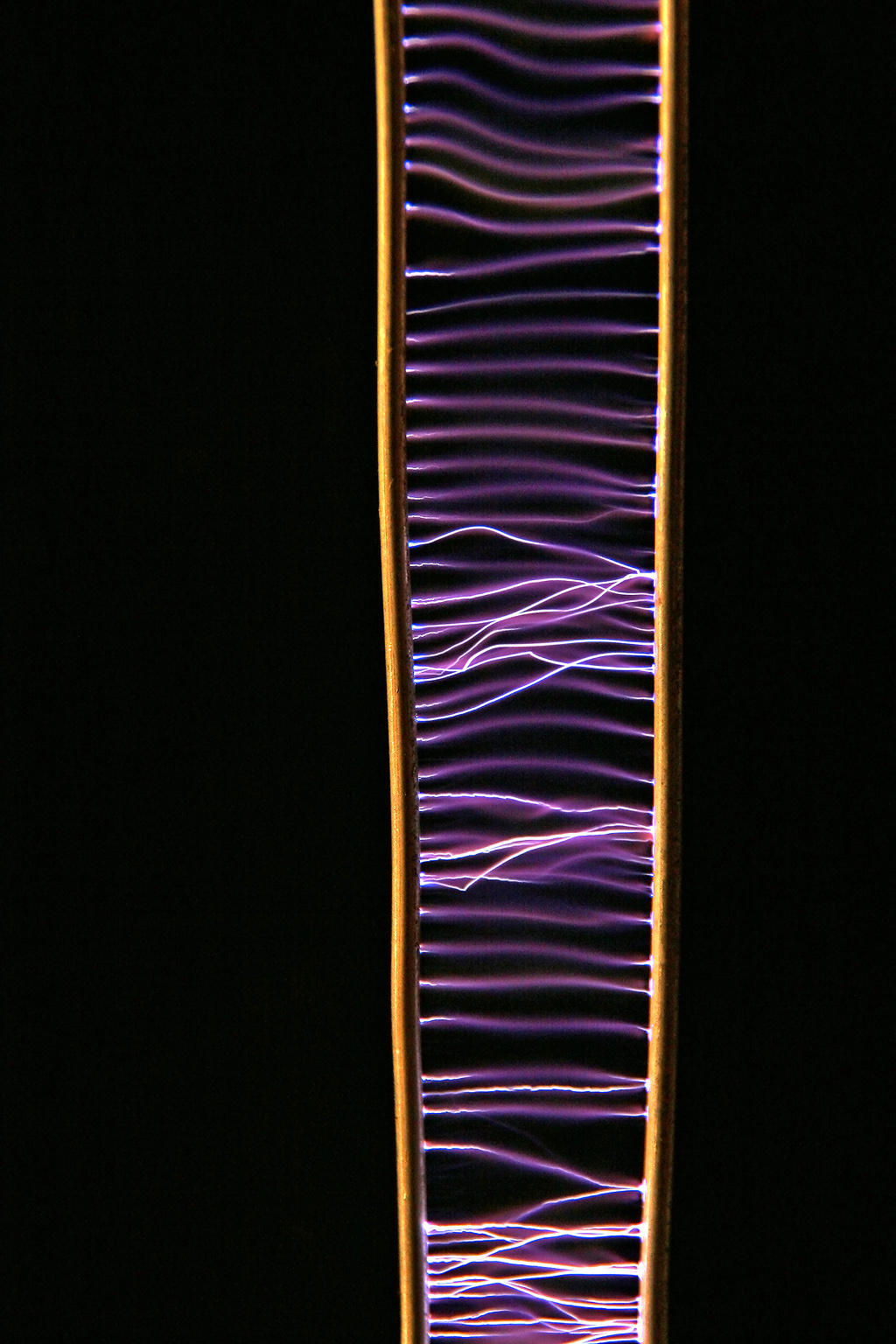

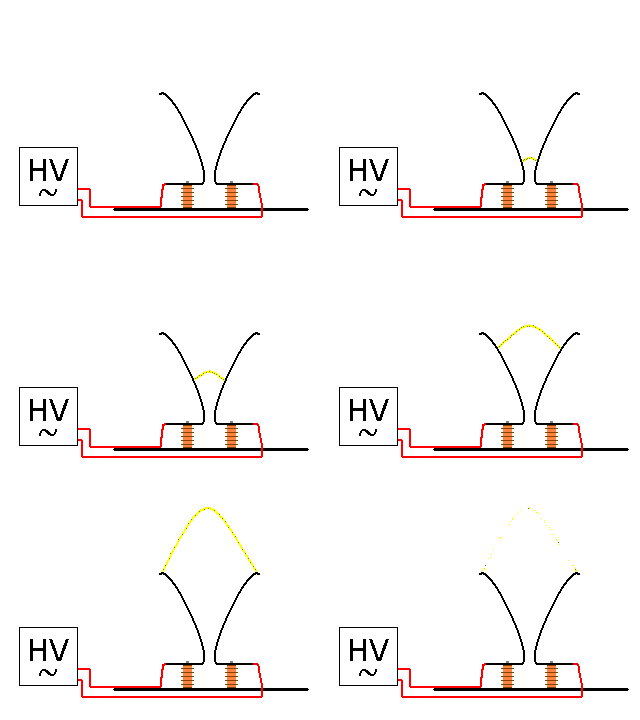
Physical characteristics
Arcs differ from other gas discharges by their high current density and relatively low voltage drop along the ionized column. Typical features include a bright luminous column, high temperatures (often thousands to tens of thousands of degrees Kelvins at the hottest regions), and pronounced electrode spots where the current enters and leaves the plasma. The ionized region is commonly referred to as a plasma; for more on that state of matter see plasma.
How an arc forms
An arc can be initiated by bringing two conductors close together and applying voltage, by a transient overvoltage, or by thermal ionization. Once established, the arc is maintained by the energy supplied by the electrical circuit and by processes that keep the gas ionized. Gas composition, pressure, electrode material and current all affect arc stability and appearance.
History and development
Electric arcs were first described in the early 19th century (often cited as 1801) and became technically important during the 19th and 20th centuries. Inventors and industries adapted arcs for public lighting (arc lamps) and later for joining metals and cutting, leading to a range of specialized arc technologies.
Applications
- Welding and metalworking: many joining methods rely on an arc between an electrode and workpiece; see basic topics in welding.
- Plasma cutting and thermal processing: arcs produce concentrated heat used to melt and remove material.
- Industrial furnaces: electric arc furnaces melt scrap steel and other materials in metallurgy.
- Lighting and special effects: carbon-arc and modern arc lamps have been used for stage, film, and searchlights.
Distinctions, hazards and control
Arcs are distinct from sparks (brief, transient discharges) and glow discharges (lower current, more diffuse light). They pose hazards including extreme ultraviolet radiation, intense visible light, high temperatures, molten spatter, toxic ozone and nitric oxides, and electrical shock. Industrial practice uses shielding gases, protective equipment, controlled circuits and arc suppression devices to manage risks. In power systems, uncontrolled arcing (faults) is a major safety and reliability concern and is mitigated by breakers and protective relays.
Today, improved electrode materials, power electronics and process controls have expanded safe and efficient arc applications across manufacturing, research and entertainment, while ongoing study of arc physics supports better protection and productivity.
Related articles
Author
AlegsaOnline.com Electric arc Leandro Alegsa
URL: https://en.alegsaonline.com/art/30662