
Eldiguzids (Ildegizids): The Atabeg Dynasty of Azerbaijan, 1136–1225
A medieval Turkic atabeg dynasty that governed large parts of the Caucasus and western Iran from 1136 to 1225, creating a semi-independent polity and shaping regional politics and culture.
Overview
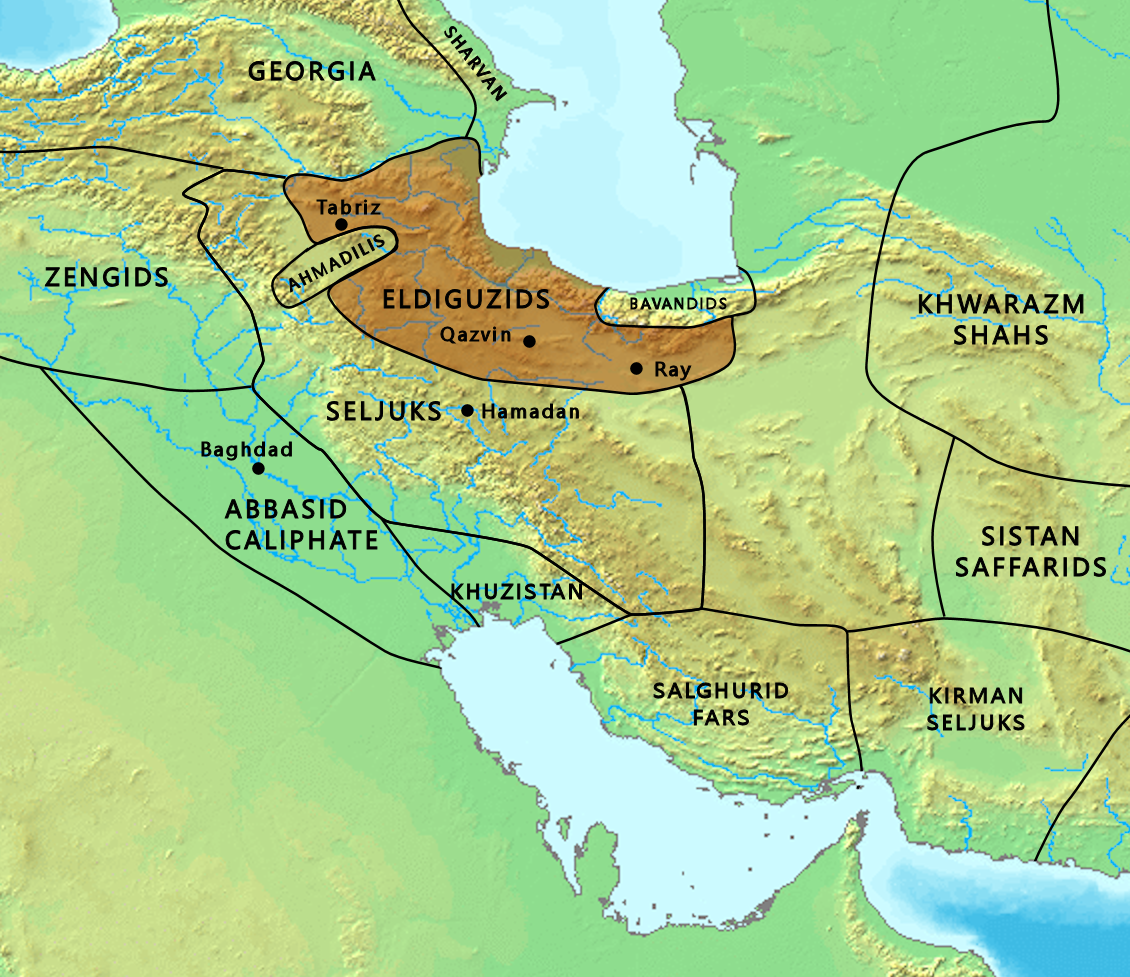
The Eldiguzids, also spelled Ildegizids or Ildenizids and commonly called the Atabegs of Azerbaijan, were a Turkic atabeg dynasty that held power in northwestern Persia and the southern Caucasus from 1136 to 1225. Their rule extended at various times over parts of Azerbaijan, eastern Anatolia, northern Iraq, Jibal and neighboring Iranian provinces. The dynasty is known for turning the office of atabeg—originally a guardian and tutor to Seljuk princes—into the basis for a durable regional state.
Image gallery
8 Images


Origins and rise
The dynasty was founded by a military leader of Turkic background who rose through the Seljuk court and assumed the title of atabeg. As atabegs were entrusted with the care of young Seljuk heirs, their holders acquired both military and administrative influence, which the Eldiguzid founders consolidated into practical sovereignty. Over several decades they placed Seljuk figureheads on thrones while exercising effective control over frontier provinces.
Territory, administration and rulers
The Eldiguzid domains centered on the Arran and Azerbaijan regions and included important urban centers and fortress towns. Their administration combined nomadic-military elements with urban bureaucratic practice inherited from the Seljuks. Prominent members of the dynasty are remembered for expanding authority, commanding armies, and issuing coinage that circulated locally.
- Notable rulers—founder Shams al-Din Eldiguz, his successors such as Muhammad Jahan Pahlavan and Qizil Arslan among others who shaped the polity's development.
Culture, economy and society
The Eldiguzids presided over a multiethnic region where Turkic military elites, Persian administrators, Armenian and Georgian neighbors, and various local groups interacted. Trade routes crossing their territory linked the Black Sea and Caspian corridors with inland Iran, and urban centers under their rule served as local markets and caravan stations. The dynasty also acted as a patron of architecture, learned culture, and the Persianate courtly traditions that were widespread in the region; Persian and Turkic languages both had important roles in administration and literature.
Relations and conflicts
Throughout their existence the Eldiguzids balanced alliances and rivalries with neighboring powers: the Seljuk rump-states, Georgian and Armenian principalities, and rising Khwarazmian and other Turkic forces. Their political model—military guardians exercising real power while maintaining nominal Seljuk legitimacy—was both a strength and a source of internal tension when succession disputes arose.
Decline and legacy
From the early 13th century the Eldiguzid realm came under increasing pressure from larger regional powers and from internal factionalism. By 1225 their independent authority had been eclipsed, and the territories they once controlled were absorbed by succeeding states. Historically, the Eldiguzids are significant for institutionalizing the atabeg role as a vehicle of state formation, for fostering cross-cultural exchange in the Caucasus and northwestern Iran, and for influencing the political landscape that preceded the Mongol era.
Names and language notes: the dynasty is recorded in Persian sources and in local traditions; variant forms appear in Azerbaijani and other regional literatures.
Related articles
Author
AlegsaOnline.com Eldiguzids (Ildegizids): The Atabeg Dynasty of Azerbaijan, 1136–1225 Leandro Alegsa
URL: https://en.alegsaonline.com/art/30634
Sources
- books.google.com : Encyclopedia of Islam
- books.google.com : The New Islamic Dynasties: A Chronological and Genealogical Manual
- books.google.com : The expansion of Islam in the middle periods Volume 1
- iranicaonline.org : "Atabakan-e Ādarbayjan"