
Eastern grey kangaroo
Large Australian marsupial (Macropus giganteus) found across eastern and southern mainland Australia; known for hopping locomotion, grazing diet, pouch-borne young and social 'mob' structure.
Overview
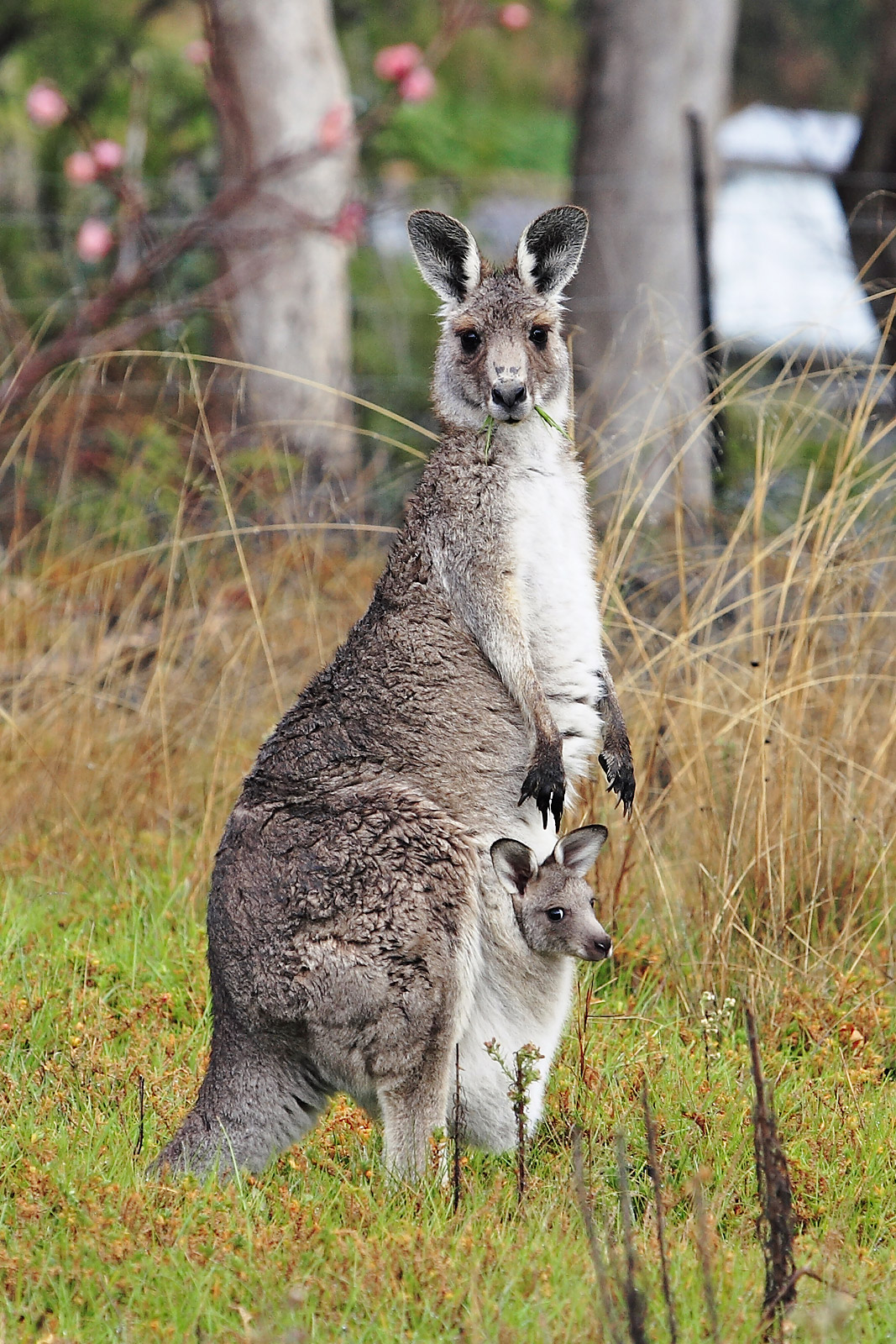
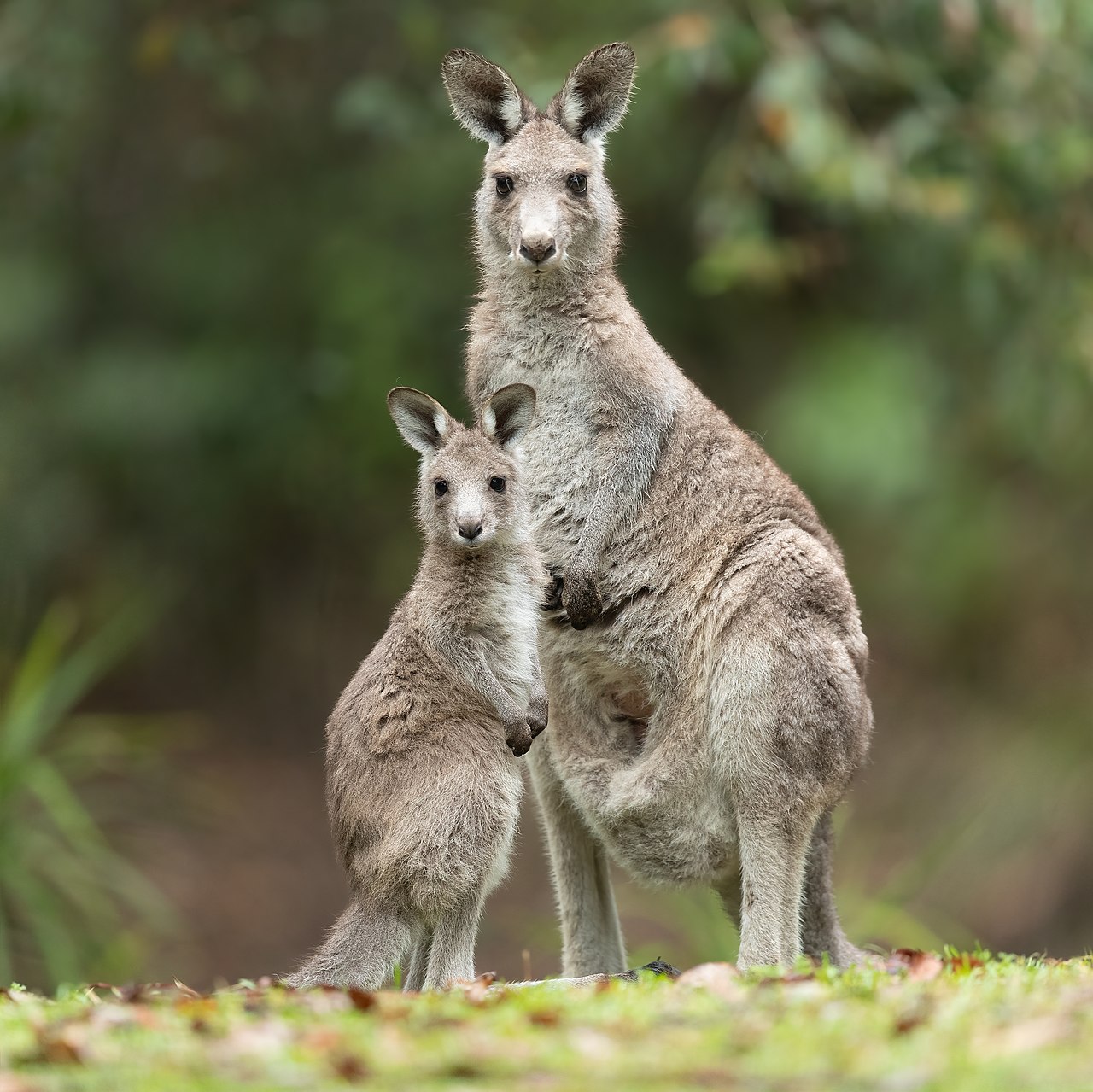
The eastern grey kangaroo (Macropus giganteus) is a large Australian marsupial noted for its powerful hind legs, long tail and upright posture. It is commonly called the eastern grey, great grey, or forester kangaroo. As a marsupial, females carry undeveloped young in a pouch until the joey is able to survive outside. The species is widespread across eastern and southern parts of mainland Australia and occupies a variety of open habitats; reports and introductions elsewhere, such as Tasmania, are less typical and should be regarded separately.
Image gallery
10 Images




Physical characteristics
Adult eastern greys are among the largest living marsupials. Males can reach about 66 kg (145 lb) and stand close to 2 m (roughly 7 ft) when upright. Fur tends to be soft and grey to brownish, lighter on the belly. Key adaptations include elongated hind limbs and elastic tendons that make hopping an energy-efficient means of travel, and a heavy, muscular tail used for balance and as a support while grazing.
Distribution and habitat
Eastern greys occupy grasslands, woodlands and open forests in much of eastern and southern mainland Australia. Their range and local densities are influenced by rainfall, plant productivity and human land use. For a general map and range notes see distribution sources and regional accounts; isolated or introduced populations are discussed in specific local studies such as those mentioning Tasmania.
Behavior, diet and reproduction
These kangaroos are primarily grazers, feeding on grasses and forbs. They are social, forming groups called mobs that provide protection and social structure. Activity peaks during cooler hours—dawn, dusk and night. Reproduction involves a short gestation followed by a prolonged pouch phase; young, called joeys, remain in the pouch while developing. The species demonstrates reproductive flexibility, including embryonic diapause under certain conditions.
Human interactions and notable facts
- Conservation: generally common and adaptable; not currently regarded as globally threatened.
- Economic and cultural role: valued in some regions as a resource, managed through regulation and sometimes culled to reduce agricultural impacts.
- Comparisons: the eastern grey is the second-largest extant marsupial after the red kangaroo (red kangaroo).
For further reading and species accounts consult field guides and regional wildlife references, or follow authoritative links on marsupial biology and Australian mammals (marsupial overview, distribution notes, regional reports).
Questions and answers
Q: What is an eastern grey kangaroo?
A: The eastern grey kangaroo is a marsupial that lives in south and east Australia, including Tasmania.
Q: What are some other names for the eastern grey kangaroo?
A: The eastern grey kangaroo is also called the great grey kangaroo and the forester kangaroo.
Q: How big is a male eastern grey kangaroo?
A: A male eastern grey kangaroo weighs about 66 kg (145 lb) and is almost 2 m (7 ft) tall.
Q: What does the scientific name Macropus giganteus mean?
A: The scientific name Macropus giganteus means gigantic (huge) large-foot.
Q: Is the eastern grey kangaroo the biggest marsupial on earth?
A: No, the eastern grey kangaroo is the second-biggest marsupial on earth. The red kangaroo is the largest.
Q: In what parts of Australia can the eastern grey kangaroo be found?
A: The eastern grey kangaroo can be found in south and east Australia, including Tasmania.
Q: What is unique about marsupials as a group of animals?
A: Marsupials are unique because they give birth to underdeveloped young, which then finish developing in a pouch on the mother's body.
Related articles
Author
AlegsaOnline.com Eastern grey kangaroo Leandro Alegsa
URL: https://en.alegsaonline.com/art/29759
Sources
- iucnredlist.org : "Macropus giganteus"
- bucknell.edu : Mammal Species of the World
- byronbaywildlifetours.com : "Australian Wildlife » Eastern grey kangaroo"
- geocities.com : "Eastern grey kangaroo, Macropus giganteus"
- museumvictoria.com.au : "Museum Victoria: Eastern Grey Kangaroo"
- catalogue.nla.gov.au : "Eastern grey kangaroo (Macropus giganteus) [picture] / [John Hunter]"
- bbc.co.uk : "BBC - Science & Nature - Wildfacts - Eastern grey kangaroo"
- billabongsanctuary.com.au : "Eastern Grey Kangaroo (Macropus giganteus), Billabong Sanctuary, Townsville"
- australiazoo.com.au : "Australia Zoo - Our Animals - Mammals - Kangaroos - Eastern grey kangaroo"
- msnbc.msn.com : "Kangaroo culling begins at Australian site - World environment- msnbc.com"
- news.bbc.co.uk : "BBC News | ASIA-PACIFIC | Kangaroo cull targets millions"
- parks.tas.gov.au : "Parks & Wildlife Service - Forester (eastern grey) kangaroo"
- canberratimes.com.au : "5000 roos dead amid Defence 'inaction' - Local News - News - General - The Canberra Times"
- species.wikimedia.org : Macropus giganteus
- commons.wikimedia.org : Macropus giganteus