
Eastern diamondback rattlesnake (Crotalus adamanteus)
Large venomous pit viper of the southeastern United States, known for its diamond pattern, stout build and distinctive rattle; an important predator facing regional declines from habitat loss and human conflict.
Overview
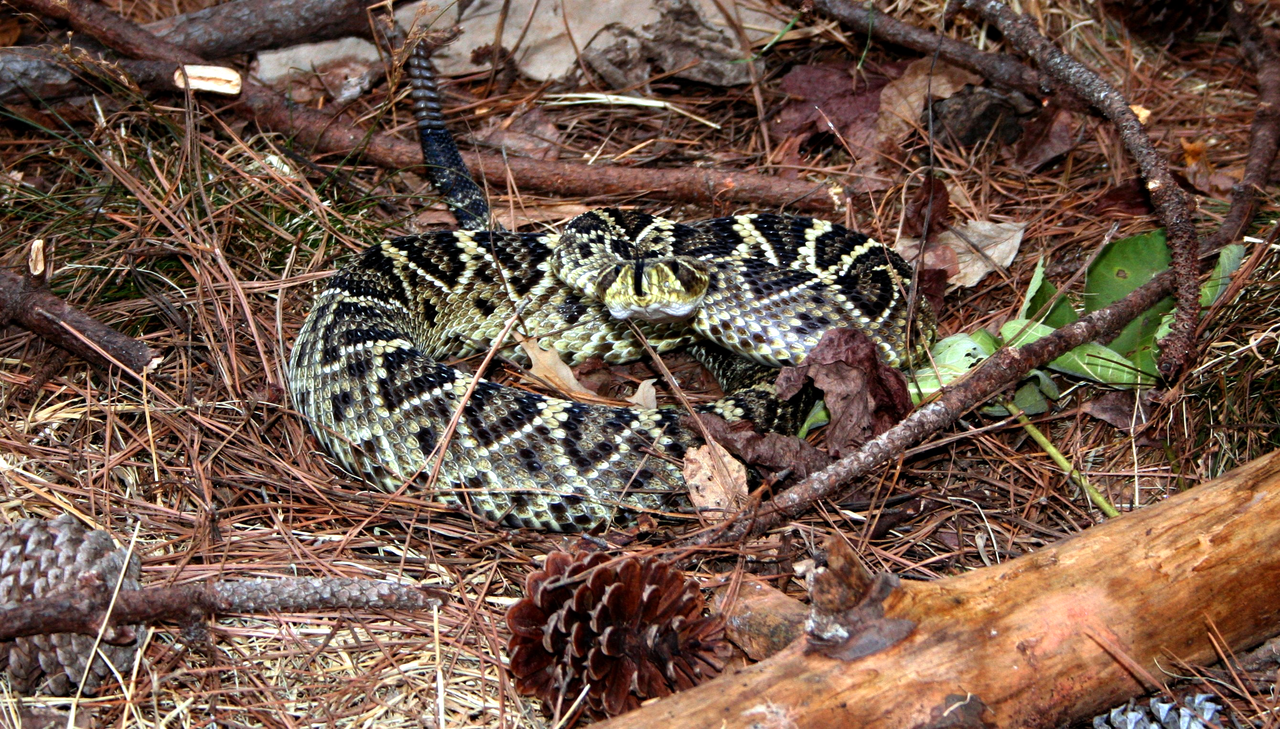
The eastern diamondback rattlesnake, Crotalus adamanteus, is a venomous pit viper native to the southeastern United States. It is widely recognized for a series of dark diamond-shaped dorsal markings edged with lighter scales and for its prominent terminal rattle. It is among the largest and heaviest rattlesnake species in North America; for compiled measurements and noteworthy records see size and records.
Image gallery
8 Images


Identification
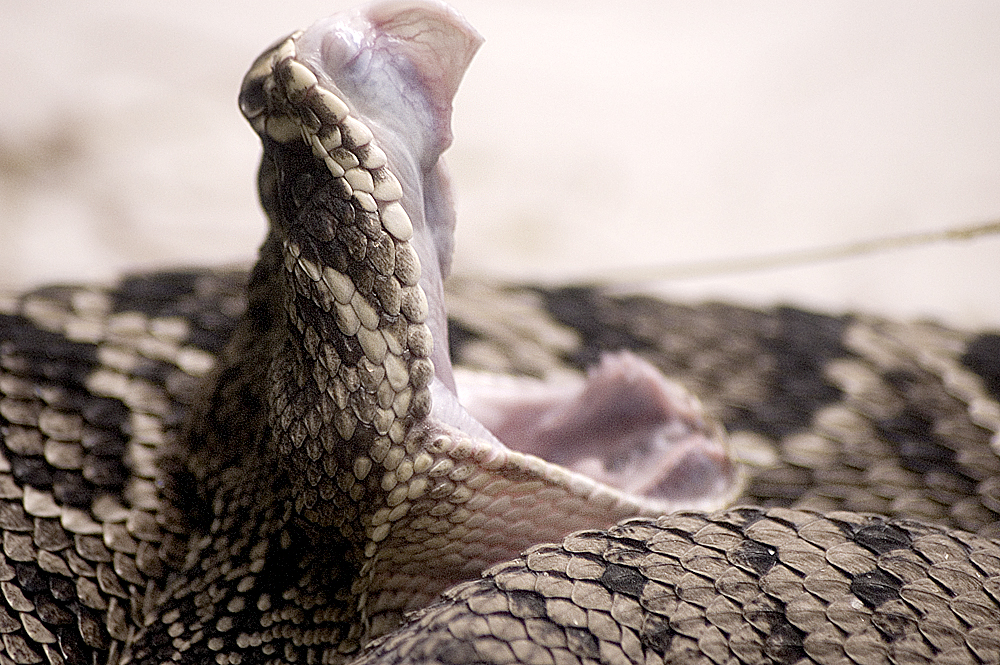
Adults have a heavy, muscular body, a broad triangular head and keeled scales that lend a rough texture. Key identification points include heat-sensing pits between the eyes and nostrils, vertically elliptical pupils and a tail ending in a segmented rattle. Coloration ranges from yellowish-tan to brown, with dark diamonds or lozenges outlined by lighter scales. Juveniles resemble adults but are smaller and may have brighter contrast.
Distribution and habitat
The species historically occupied coastal plains and near-coastal areas across parts of the southeastern United States. Preferred habitats include pine flatwoods, longleaf pine–wiregrass communities, palmetto thickets, sandy scrub and coastal dunes where dense ground cover and abundant small mammals occur. For maps and regional occurrence data consult distribution summaries at distribution resources.
Behavior and diet
Eastern diamondbacks are primarily ambush predators. They often use concealed positions at logs, vegetation edges or burrow entrances to await rodents and other small mammals. Their diet includes rats, mice, rabbits and ground-dwelling birds; larger individuals can take larger prey. Rattles are used as a warning display, and the species generally avoids humans but will defend itself if threatened.
Reproduction and lifespan
Like other rattlesnakes, they are ovoviviparous: embryos develop inside the mother and she gives birth to live young. Reproductive frequency may vary with environmental conditions and nutrition. In the wild, individuals may live for many years though life expectancy is often reduced by predation, disease and human impacts.
Venom and medical significance
The venom of C. adamanteus is a complex mixture of proteins and enzymes that can cause severe local tissue damage, pain, bleeding abnormalities and systemic effects. Bites are a medical emergency and require prompt professional care; antivenom and supportive treatment are used where indicated. For clinical guidance and safety information consult resources on venom and treatment.
Conservation and threats
Populations have declined in portions of the species' historic range. Principal threats include habitat loss and fragmentation from development, changes to fire-managed ecosystems, road mortality and intentional killing. Conservation measures focus on habitat protection, management of longleaf pine ecosystems, road crossing mitigation and public education. State-level protections and conservation assessments vary; see taxonomic and regional notes at taxonomic references.
Taxonomy and research
The eastern diamondback is placed in the genus Crotalus. Current taxonomic treatments recognize the species without subspecies in some authorities, though research into population structure, genetics and ecology continues. Ongoing studies refine understanding of its evolutionary relationships, distribution limits and responses to habitat change.
Human interactions and safety
- Avoidance: give snakes space and do not attempt to handle wild individuals.
- Prevention: reduce rodent attractants near homes and maintain clear paths to limit accidental encounters.
- Response to bites: seek immediate medical attention; do not attempt ineffective or harmful first-aid measures.
As a top predator of small mammals, the eastern diamondback plays a valuable ecological role. Conservation balanced with public safety measures and education can reduce conflicts and help sustain populations where they remain.
Questions and answers
Q: What is the eastern diamondback rattlesnake?
A: The eastern diamondback rattlesnake is a species of venomous pit vipers.
Q: Where is the eastern diamondback rattlesnake found?
A: The eastern diamondback rattlesnake is found in the southeastern United States of America.
Q: What is the size of the eastern diamondback rattlesnake?
A: The eastern diamondback rattlesnake is the largest rattlesnake and is also the longest and the heaviest venomous snake in the Americas.
Q: Are there any subspecies of the eastern diamondback rattlesnake?
A: There are currently no subspecies of the eastern diamondback rattlesnake found.
Q: Is the eastern diamondback rattlesnake venomous?
A: Yes, the eastern diamondback rattlesnake is a venomous snake.
Q: Why is the eastern diamondback rattlesnake significant?
A: The eastern diamondback rattlesnake is significant due to its large size and venomous nature.
Q: Can humans be killed by the eastern diamondback rattlesnake?
A: Yes, if a person is bitten by the eastern diamondback rattlesnake and left untreated, it can cause death.
Related articles
Author
AlegsaOnline.com Eastern diamondback rattlesnake (Crotalus adamanteus) Leandro Alegsa
URL: https://en.alegsaonline.com/art/29750