
Drivetrain: parts, function, losses and variations in vehicles
The drivetrain transmits motive power from a vehicle's engine or motor to its wheels. This article explains components, how losses occur, historical development, common layouts and why drivetrain design matters.
Overview
The drivetrain is the collection of mechanical assemblies that deliver torque from a vehicle's propulsion source to the wheels that contact the road. It is distinct from the engine or motor that generates power: the broader powertrain includes both the power source and the drivetrain. In everyday usage the drivetrain refers to the transmission of power through gearboxes, shafts and differentials until it reaches the wheels.
Image gallery
6 Images


Principal components
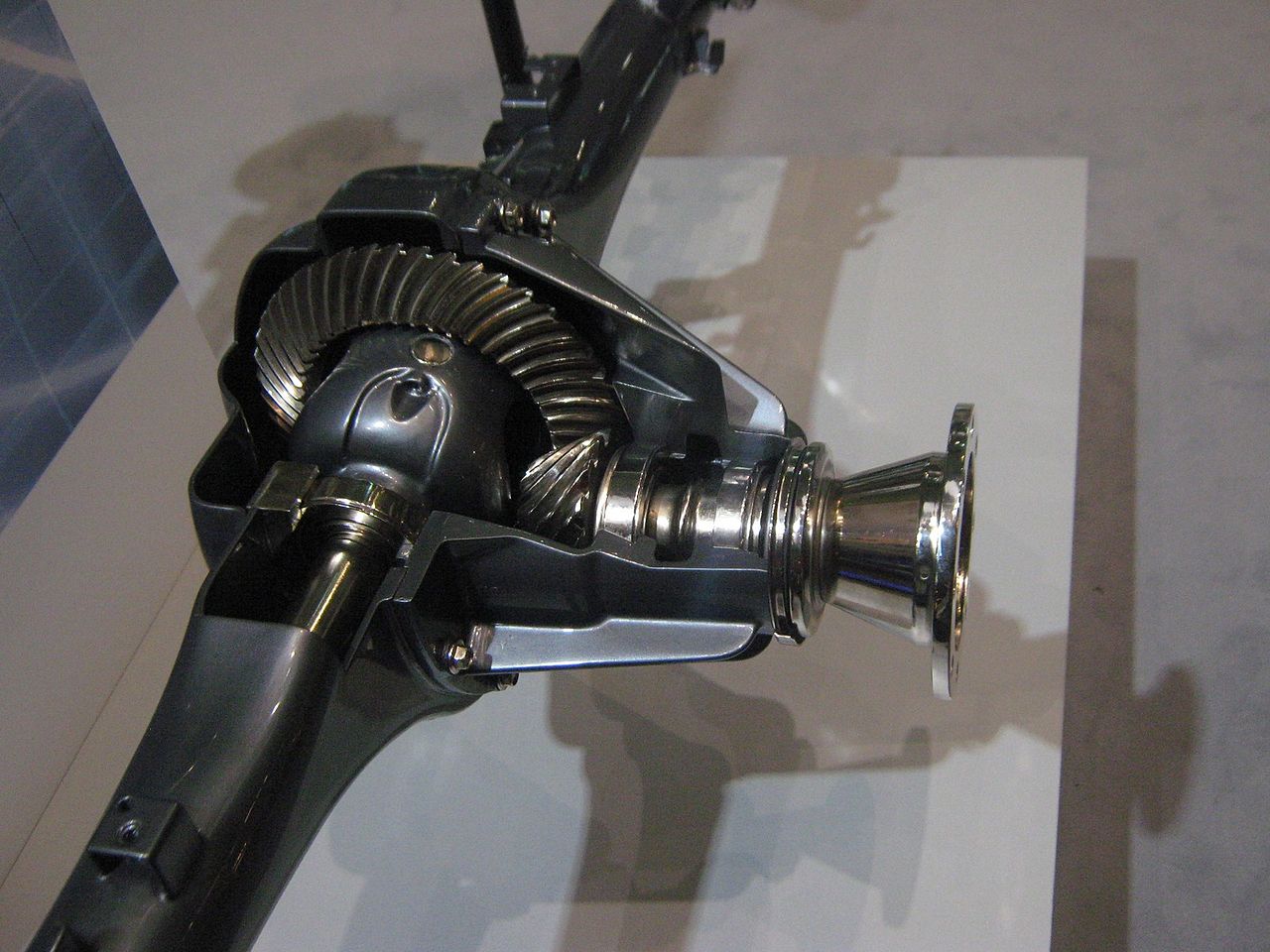
Typical parts grouped under the drivetrain are the gearbox or transaxle, the intermediate shafts, the rear or front differentials and the axle assemblies. Other items interface with this system and may be described alongside it.
- Driveshafts (propeller shafts or half-shafts) carry torque between gearbox, transfer case and axles.
- Differentials allow wheels on the same axle to turn at different speeds while sharing torque.
- Axles transmit torque to the wheels and support vehicle weight.
- Transmissions, transaxles, clutches, torque converters and final-drive gears set speed and torque ratios.
How losses occur and why they matter
Not all power generated by the engine or motor reaches the road. The difference between engine output and wheel output is commonly called drivetrain loss. It is measured by comparing crankshaft power with wheel power, often expressed in horsepower at the wheels. Losses arise from several physical effects:
- Rotational resistance and component inertia, which absorb energy when accelerating rotating masses.
- Fluid shear, hydraulic slip and viscous drag inside torque converters and gearboxes contributing to drag.
- Gear meshing, bearing and seal resistance—mechanical friction that converts useful energy into heat.
History and development
Early vehicles used simple chain or shaft drives. As automotive design progressed, dedicated gearboxes, enclosed driveshafts and differentials became standard to improve reliability and controllability. The rise of front-wheel-drive layouts favored integrated transaxles; all-wheel-drive systems and electronic torque vectoring further complicated drivetrain architectures. In recent decades electrification began to change the paradigm: electric motors can be mounted near or at wheels, reducing the number of intermediate mechanical parts.
Variations, examples and notable distinctions
Common layouts include front-wheel drive (FWD), rear-wheel drive (RWD), and all-wheel or four-wheel drive (AWD/4WD). Each layout affects packaging, handling and typical drivetrain losses: more driven axles and extra gearing usually increase parasitic losses, while shorter transmission paths often reduce them. Manual transmissions historically showed lower mechanical loss than early automatic gearboxes; modern automatics and dual-clutch units have narrowed or reversed that gap in many designs.
Measurement, maintenance and practical importance
Automotive engineers and tuners use chassis dynamometers to quantify wheel power and infer drivetrain loss by comparison with engine dynamometer measurements. Understanding drivetrain behavior influences fuel economy, performance and component durability. Routine maintenance—proper lubricants, healthy seals and well-aligned joints—reduces avoidable losses and prolongs service life. In electric vehicles, simpler drivetrains and regenerative systems change which losses dominate, but the fundamental goal remains the same: deliver usable torque to the road as efficiently as possible.
Related articles
Author
AlegsaOnline.com Drivetrain: parts, function, losses and variations in vehicles Leandro Alegsa
URL: https://en.alegsaonline.com/art/28962
Sources
- mistertransmission.com : "What is a Drivetrain?"
- hotrod.com : "Drivetrain Power Loss - The Brutal Truth"
- superstreetonline.com : "Drivetrain Power Loss - The 15% "Rule""