
Douglas B-66 Destroyer: USAF bomber, reconnaissance and electronic warfare aircraft
Twin‑jet American medium bomber adapted from the A‑3 Skywarrior. Served 1956–1975 with roles in nuclear deterrence, reconnaissance and electronic warfare during the Cold War and Vietnam.
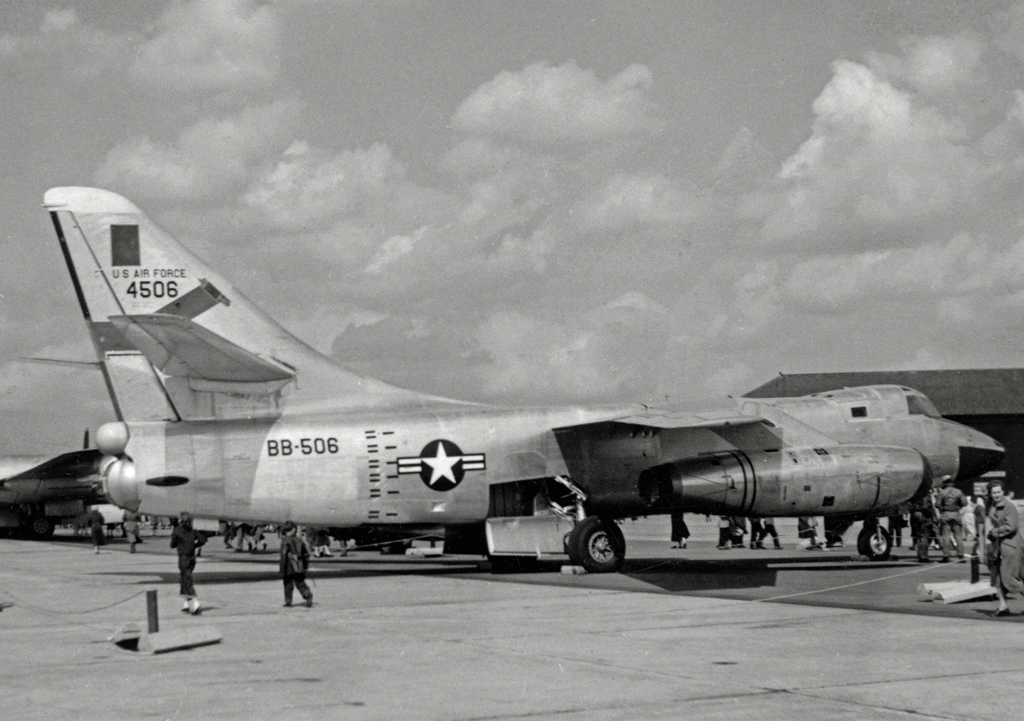
The Douglas B-66 Destroyer was a United States Air Force medium bomber developed in the 1950s and adapted from the carrier-capable A-3 Skywarrior. Built by Douglas Aircraft, the B-66 combined a large internal bay for ordnance with a twin-jet layout and multi‑crew cockpit, and was intended for strategic and tactical missions. It entered service in the mid-1950s and remained in use into the 1970s as a flexible airframe for a range of roles. Overview and type and general information about the aircraft describe it as a medium bomber altered for USAF needs.
Image gallery
6 Images


Design and characteristics
The Destroyer retained the broad, slab-sided fuselage of its naval predecessor but featured modifications that reflected Air Force missions rather than carrier operations. It was powered by two turbojet engines, had a crew that typically included flight and mission specialists, and offered an internal weapons bay that could accommodate conventional or nuclear payloads. Structural and systems changes improved range, avionics and mission flexibility compared with the original Navy design. For more technical context see design notes and aircraft specifications.
History and development
The B-66 arose from a Cold War requirement for a medium bomber capable of delivering nuclear weapons and supporting NATO operations. Douglas produced the type under an Air Force contract that modified the Navy A-3 for land-based use. Production ran during the 1950s and the type began operational service in 1956. Over the following decades the airframe was progressively adapted to fulfill reconnaissance and electronic warfare needs as strategic priorities evolved. See historical summaries at development history and program timeline.
Operational use included deterrent roles in Europe and active deployments during the Vietnam War, where specially equipped variants performed electronic countermeasure and reconnaissance missions to support strike packages and intelligence collection. The B-66’s ability to carry specialized sensors and jamming gear made it valuable in contested airspace. Military records and mission accounts are discussed in sources like operational records and Vietnam-era service.
Variants and roles
- RB-66: photographic and electronic reconnaissance versions fitted with cameras and sensors.
- EB-66: electronic warfare models carrying jammers and ECM equipment to protect strike forces.
- WB-66: weather reconnaissance and other specialized support variants.
- Base B-66: bomber configuration intended for nuclear or conventional strike missions.
Detailed variant descriptions and unit assignments are available in reference material and archived summaries such as variant list and unit histories.
Retirement of the B-66 family occurred in the 1970s as newer platforms and changing tactics reduced the need for dedicated medium bombers of this type. Its legacy includes contributions to Cold War deterrence, the development of airborne electronic warfare techniques, and lessons that influenced later reconnaissance and ECM aircraft designs.
Related articles
Author
AlegsaOnline.com Douglas B-66 Destroyer: USAF bomber, reconnaissance and electronic warfare aircraft Leandro Alegsa
URL: https://en.alegsaonline.com/art/28680
Sources
- nationalmuseum.af.mil : "Douglas B-66 Destroyer." · web.archive.org