
Douglas A-26 Invader
Twin‑engined light attack and bomber aircraft used by the US and allied forces from World War II through Vietnam, later redesignated B‑26 and converted for civilian uses such as firefighting.
The Douglas A-26 Invader is a twin-engined, multi-role attack and bomber aircraft developed for wartime service and notable for its adaptability. Designed to perform low- to medium-altitude attack, bombing and night intruder missions, the Invader combined speed, payload capacity and forward firepower in a compact airframe. It was produced by the Douglas Aircraft Company and served with the United States Army Air Forces and later the United States Air Force, as well as with several foreign operators.
Image gallery
10 Images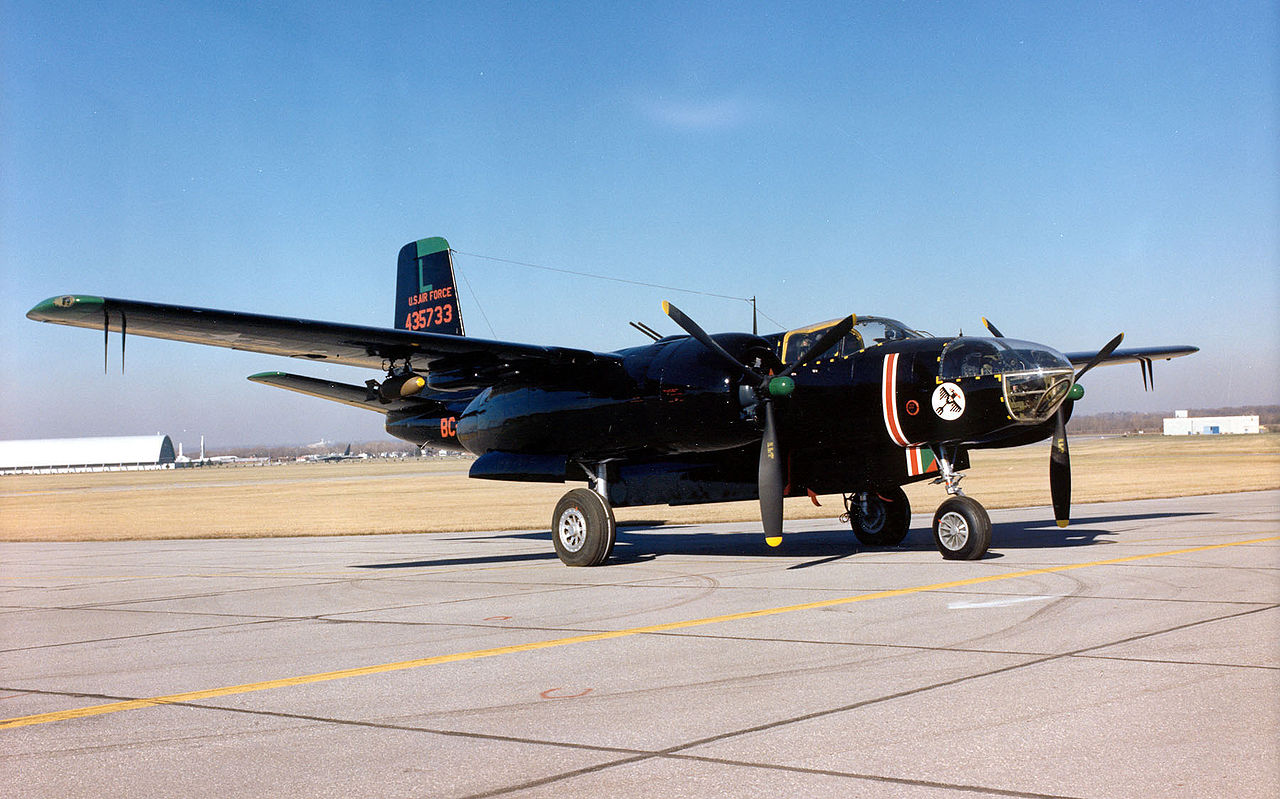




Design and characteristics
The Invader's layout emphasized a slim fuselage, two radial engines and removable nose configurations to suit different missions. Production versions were offered with a glazed nose for precision bombing and bombing navigation, or a solid nose packed with forward-firing guns for ground-attack duties. The airplane usually carried a pilot and additional crew depending on mission fit, and combined an internal bomb bay with provisions for external stores. Its construction and systems reflected late‑World War II design practices that favored ruggedness and maintainability.
- Propulsion: twin piston engines providing a balance of speed and range for tactical operations; see twin-engined and attack aircraft references for similar types.
- Armament: mixtures of forward-firing guns in the nose or cheek positions, defensive gun positions, and internal or external bomb loads for strike missions.
- Configurations: purpose-built bomber nose or solid-gun nose allowed rapid role changes without major airframe modification.
Operational history
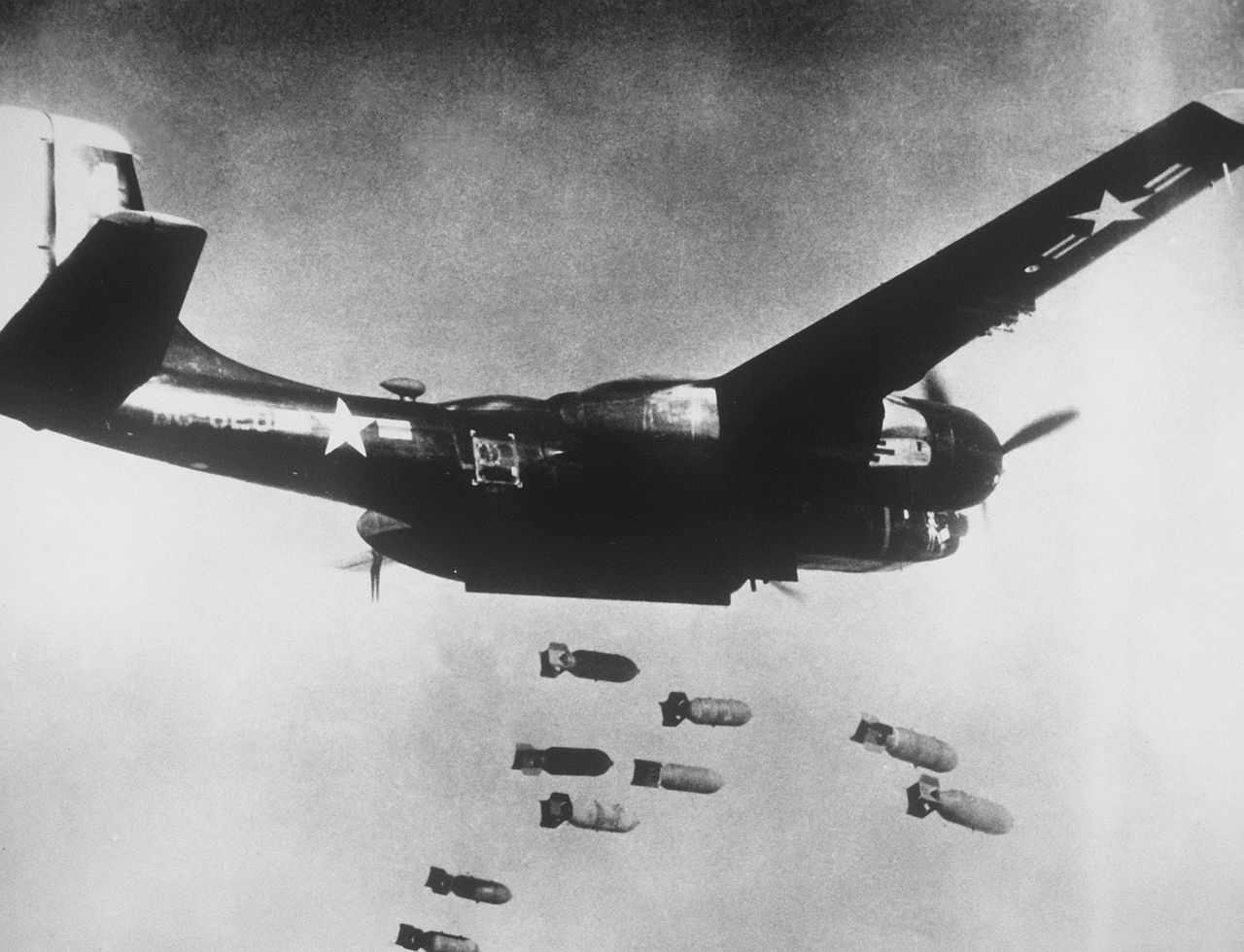
The Invader first saw combat service during World War II and continued to serve in later conflicts. It was operated by the United States Army Air Forces in the latter stages of the war and remained in frontline and support units into the postwar era. The type was exported or leased to allied nations, including France, and used in multiple theaters. U.S. units flew the type in the World War II campaign, and the airplane was later active in the Korean War and the Vietnam War, carrying out interdiction, bombing and night-intruder tasks for the United States.
Foreign service included French use during colonial conflicts in North Africa, where the Invader performed strike and close support operations. The machine proved adaptable to different climates and mission demands, which encouraged continued use by several air arms after the Second World War.
Postwar changes, re-designation and civilian use
In 1948 the United States Air Force changed the aircraft's official role designation from an attack aircraft to a bomber. As a result its letter code was altered from 'A' to 'B' and the type became known as the B‑26 Invader. This re-designation led to some confusion because another World War II design, the Martin B‑26 Marauder, already carried the B‑26 designation. Despite the overlap in names, the two types are distinct in design and operational history.
With military inventories reduced and many airframes retired, surplus Invaders found second lives in civilian roles. A notable peacetime conversion was their use in aerial firefighting: during the 1950s several former military Invaders were adapted to drop fire retardants and water for wildfire suppression. Early firefighting loads included borate-based chemicals before the later adoption of modern water and retardant mixes. Civil conversion programs also adapted Invaders for cargo, executive transport and other specialty roles.
Variants, legacy and notable facts
Operational variants emphasized either bombing/navigation or direct-attack capability, and retrofit programs over the years upgraded avionics, engines and armament packages. The Invader's combination of speed, payload and durability kept it in service longer than many contemporary designs. Its wartime and postwar careers illustrate the way a single airframe type can be repurposed across combat and civilian roles. For concise summaries and additional technical or service information, consult dedicated historical pages and preservation groups: see general references on postwar redesignation, role changes and usage, the category of bomber aircraft, and institutional histories such as the United States Forest Service that document firefighting adaptations.
Today surviving Invaders are found in museums and private collections where they are preserved as examples of a flexible wartime design that transitioned successfully into peacetime roles. Their service life across several conflicts and later civilian applications makes the Douglas A‑26 Invader an instructive example of mid‑20th century military aviation development.
Related articles
Author
AlegsaOnline.com Douglas A-26 Invader Leandro Alegsa
URL: https://en.alegsaonline.com/art/28676