
Don't Say a Word (2001 film)
2001 American psychological thriller directed by Gary Fleder, starring Michael Douglas, Brittany Murphy and Sean Bean. Adapted from Andrew Klavan's novel; a psychiatrist is forced to extract a secret from a traumatized patient.
Don't Say a Word is a 2001 American psychological thriller film adapted from the novel Don't Say a Word by Andrew Klavan. It was directed by Gary Fleder and centers on a tense race to uncover a hidden clue that could lead to missing loot. The picture blends crime procedural elements with a focus on trauma and manipulation, and it is anchored by a small principal cast.
Image gallery
1 Image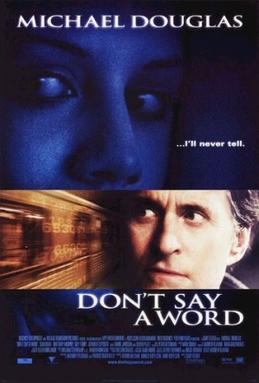
Plot overview
Michael Douglas plays New York-based psychiatrist Nathan Conrad, whose ordinary life is shattered when his daughter is abducted. The kidnappers — led by a determined gang leader — hold the girl hostage to force Conrad to obtain a single piece of information from a patient who is unable or unwilling to speak. That patient is a young woman in a near-catatonic state, suffering from post-traumatic stress disorder. The antagonist believes the patient knows the location of a stolen diamond, and the story follows Conrad's attempts to reach her and outwit the criminals while time runs out.
Cast and characters
- Michael Douglas as Dr. Nathan Conrad, the central protagonist and psychiatrist.
- Brittany Murphy as the traumatized patient whose silence holds a vital secret.
- Sean Bean as Patrick Koster, the gang leader who orchestrates the kidnapping.
- Supporting roles include law-enforcement figures and members of the criminal ring who complicate the central moral choices.
The film is set in New York, where urban settings and confined interiors contribute to a claustrophobic tone. The narrative frequently shifts between the procedural efforts of police and the psychological strategies employed by Conrad to break through his patient's defenses.
Production, themes and reception
As a screen adaptation of a contemporary thriller novel, the film emphasizes suspense over ambiguity, relying on performances and pacing to sustain tension. Critics and audiences noted the film's competence in delivering a conventional genre experience: it foregrounds ethical dilemmas — professional boundaries, coercion, and the lengths a parent will go to save a child — while also engaging with representations of trauma and memory. Technical aspects such as score, cinematography, and editing are used to heighten urgency, though opinion varied on how successfully the movie balanced psychological depth with action.
Today the film is often discussed alongside early-2000s mainstream thrillers that combine crime plots with a psychological centerpiece. For viewers seeking a tight, plot-driven story with moral stakes and brisk pacing, it remains a clear example of its genre.
Related articles
Author
AlegsaOnline.com Don't Say a Word (2001 film) Leandro Alegsa
URL: https://en.alegsaonline.com/art/28491