
Dog Day Afternoon
1975 American crime drama directed by Sidney Lumet about a real-life Brooklyn bank robbery; acclaimed for Al Pacino’s performance and Frank Pierson’s Oscar-winning screenplay.
Overview
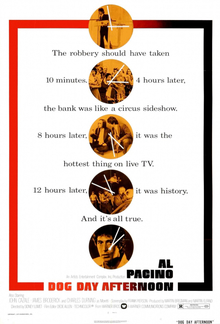
Dog Day Afternoon is a 1975 American crime drama film directed by Sidney Lumet and adapted for the screen by Frank Pierson. The screenplay was based on a magazine account in Life that described a real 1972 Brooklyn bank robbery. The movie is noted for its tense, character-focused approach and its blend of suspense with social commentary.
Image gallery
3 Images

Key elements and cast
The film presents a tight, largely real-time narrative that emphasizes motives, negotiations, and atmosphere over spectacle. Its principal cast includes:
- Al Pacino as the desperate, volatile protagonist.
- John Cazale as his close associate and foil.
- Charles Durning in a prominent supporting role.
- Chris Sarandon and others who contribute to the film's urgent ensemble feel.
Production and style
Shot on location in New York City, the film uses naturalistic dialogue, crowded interiors, and improvisational touches to create immediacy. Lumet's direction emphasizes human behavior under stress, while the camerawork and editing sustain a sense of confinement and unpredictability. The story revolves around a bank heist and the fraught hours that follow the robbery attempt, a situation that exposes personal motives and public spectacle.
Themes and historical background
More than a simple crime story, the film explores themes of desperation, identity, media frenzy, and the intersection of private motives with public attention. It was inspired by reporting on the actual event and rooted in the social climate of early 1970s America, reflecting urban anxieties and shifting attitudes toward law, politics, and personal liberty.
Reception, awards, and legacy
At release the film received widespread critical praise for its performances, writing, and realistic tone. Frank Pierson won major recognition for the screenplay, and the picture has remained influential in portrayals of crime as character study rather than mere action. The film is often cited in discussions of 1970s American cinema and of Lumet's restrained, actor-centered approach (more on Lumet).
Notable facts
The narrative hinges on a bank robbery (bank robbery) that becomes a media event and a negotiation, illustrating how real-time news coverage can shape public perception. Contemporary viewers also recognize the movie for its strong ensemble and memorable central performance, elements that helped it endure as a touchstone of realistic, character-driven filmmaking.
Related articles
Author
AlegsaOnline.com Dog Day Afternoon Leandro Alegsa
URL: https://en.alegsaonline.com/art/28181
Sources
- boxofficemojo.com : "Dog Day Afternoon, Box Office Information"
- news.google.com : Bank robber wins parole
- ejumpcut.org : Real Dog Day hero tells his story
- imdb.com : Awards for Dog Day Afternoon
- news.yahoo.com : "25 new titles added to National Film Registry"