
Doctor Faustus: Marlowe's Tragical History and Cultural Legacy
An overview of Christopher Marlowe's Doctor Faustus: plot, themes, sources, textual history, notable lines, and later adaptations including the 1967 film starring Richard Burton.
Overview
The Tragical History of the Life and Death of Doctor Faustus, commonly called Doctor Faustus, is a late 16th‑century English tragedy traditionally attributed to Christopher Marlowe. The play tells the story of a learned scholar who makes a pact with a demonic agent in exchange for supernatural powers and worldly pleasures, and who ultimately faces judgment for his choice. It explores ambition, temptation, faith, and the limits of human knowledge.
Image gallery
4 Images
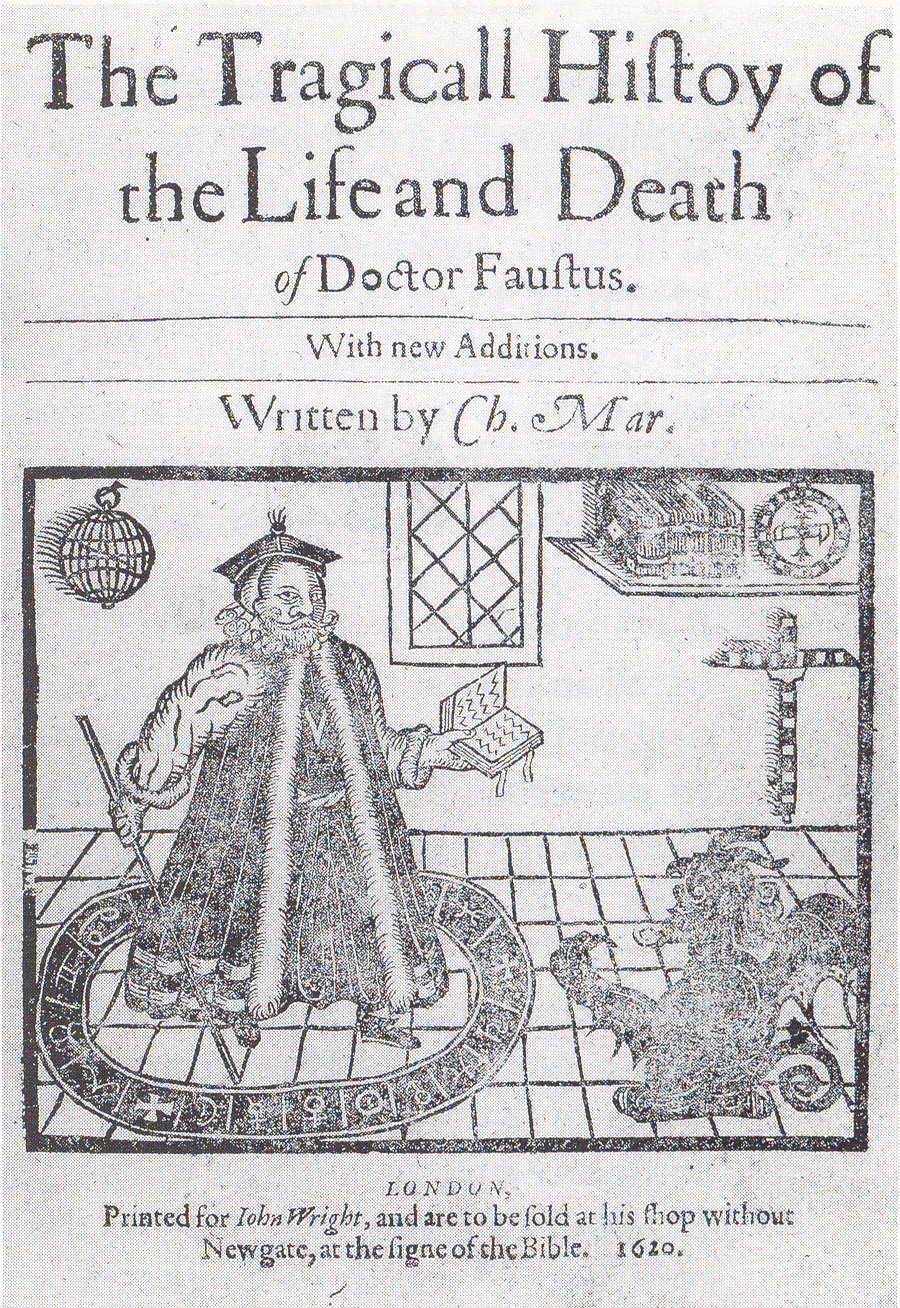


Structure and principal elements
The drama mixes serious, moral questioning with moments of comic relief and spectacle. Its central characters include Doctor Faustus, the demonic Mephistopheles (often spelled Mephistophilis), Faustus's servitor Wagner, and contrasting allegorical figures such as the Good Angel and the Bad Angel. A chorus appears in some versions to comment on events and provide moral framing.
- Themes: the thirst for knowledge and power, hubris, salvation and damnation.
- Genres: tragedy with elements of morality play and Elizabethan stagecraft.
- Famous line: the play contains the celebrated description of Helen of Troy—"Was this the face that launch'd a thousand ships?"—used to evoke the costs of desire and illusion.
Origins and textual history
Marlowe drew on popular continental legends about Faust as well as an English popular pamphlet known as the English Faust Book (often dated to the 1590s). The drama was performed in the early 1590s and first appeared in print in 1604. Two principal early printed versions survive, and editors have long debated differences between them; some variations may reflect revision, memorial reconstruction, or later editorial additions.
Performance, adaptations, and reception
Doctor Faustus was an influential work in the Elizabethan theatre, and its moral ambiguities and theatrical demands have made it a frequent subject for revival and adaptation. It has been staged in numerous productions and adapted for film and radio. A notable screen adaptation was released in 1967 as a film that brought renewed attention to the play and starred the actor Richard Burton. For background on Marlowe and the play's provenance see sources on Christopher Marlowe and adaptations such as the 1967 film listed at film references.
Legacy and critical significance
Scholars value Doctor Faustus for its intense exploration of Renaissance concerns about learning, ambition, and conscience. The play stands between medieval morality plays and later tragic forms, and its ambiguous ending—Faustus's mixture of repentance, defiance, and despair—continues to provoke debate about responsibility and free will. Its memorable imagery and lines have entered broader culture, and it remains a staple of literary and theatrical study.
For readers and theatre practitioners, Doctor Faustus offers both a cautionary tale about the unchecked pursuit of power and a powerful example of Elizabethan dramatic invention: compact scenes, vivid characters, and moral urgency that still resonate in modern adaptations and criticism.
Related articles
Author
AlegsaOnline.com Doctor Faustus: Marlowe's Tragical History and Cultural Legacy Leandro Alegsa
URL: https://en.alegsaonline.com/art/28120