
Diving suit: types, components, history and common uses
Protective garments worn by underwater swimmers and divers to provide thermal insulation, physical protection and pressure management. Covers wetsuits, dry suits, hard suits, history and applications.
A diving suit is protective clothing designed for people working or travelling beneath the water's surface. It serves several functions: reducing heat loss in cold water, shielding the wearer from abrasions, stings and contaminants, and — in specialized forms — helping manage ambient pressure. Recreational scuba divers, commercial divers and rescue teams rely on different suit types to meet mission needs. Broad explanations and manufacturer guides are linked under general diving suit information.
Image gallery
10 Images



Common types and designs
Diving suits range from simple to highly engineered. The principal categories include:
- Wetsuits — made of closed-cell foam such as neoprene; they trap a thin layer of water next to the skin that the body warms, providing insulation. See more about wetsuits.
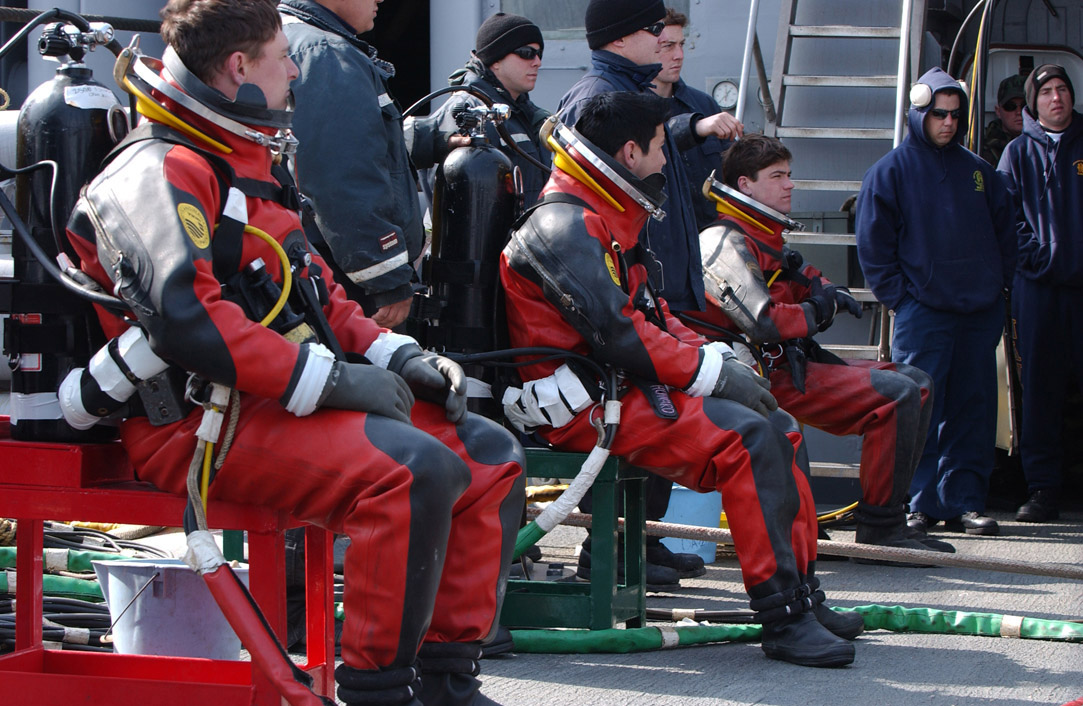
- Dry suits — watertight garments that keep the diver dry by using seals and an inflator/deflator valve; insulation is worn underneath. See more about dry suits.
- Hot-water suits — supply-heated water through a hose for extreme cold diving, often used by professional divers.
- Atmospheric/hard suits — rigid, articulated shells that maintain one atmosphere of internal pressure, allowing deep operations without full decompression of the occupant.
- Historic standard diving dress — the heavy, surface-supplied helmet-and-suit combinations used in earlier commercial diving work.
Components and how they work
Most suits share basic elements: a body envelope, closures or zippers, seals at necks and wrists, boots or integrated footwear, and attachment points for tools or weights. Wetsuits rely on material thickness and fit to reduce convective heat loss; dry suits depend on seals and an internal gas layer for insulation. Specialized valves, inflation hoses and overpressure relief features control buoyancy and comfort. For reference and further details consult technical pages about marine environments and thermal protection (oceans, lakes and rivers) and the physics of underwater heat loss (thermal insulation).
Fit and correct selection are important: a poorly fitting suit reduces thermal performance and mobility. Suit maintenance typically involves rinsing in fresh water, drying thoroughly, checking seals and zippers, and following manufacturer repair guidance.
Historically, diving garments evolved from diving bells and early surface-supplied 'dress' systems in the 18th and 19th centuries to the mid-20th century innovations that made independent underwater breathing and lightweight thermal protection practical. Modern materials, manufacturing and pressure-system designs expanded safe working depths and comfort for recreational and commercial use.
Uses of diving suits span recreational scuba, scientific sampling, underwater construction, salvage, military diving and search-and-rescue. Important distinctions to remember: wetsuits and dry suits achieve warmth differently; hard suits isolate occupants from ambient pressure; and no suit prevents the need for safe diving practices to avoid hazards such as decompression sickness or cold-water incapacitation.
Related articles
Author
AlegsaOnline.com Diving suit: types, components, history and common uses Leandro Alegsa
URL: https://en.alegsaonline.com/art/27811