
Dispersion (wave phenomena)
Dispersion describes how a wave's speed depends on frequency, causing different spectral components to travel at different velocities; it affects optics, water waves, seismic waves and pulse transmission in communications.
Overview
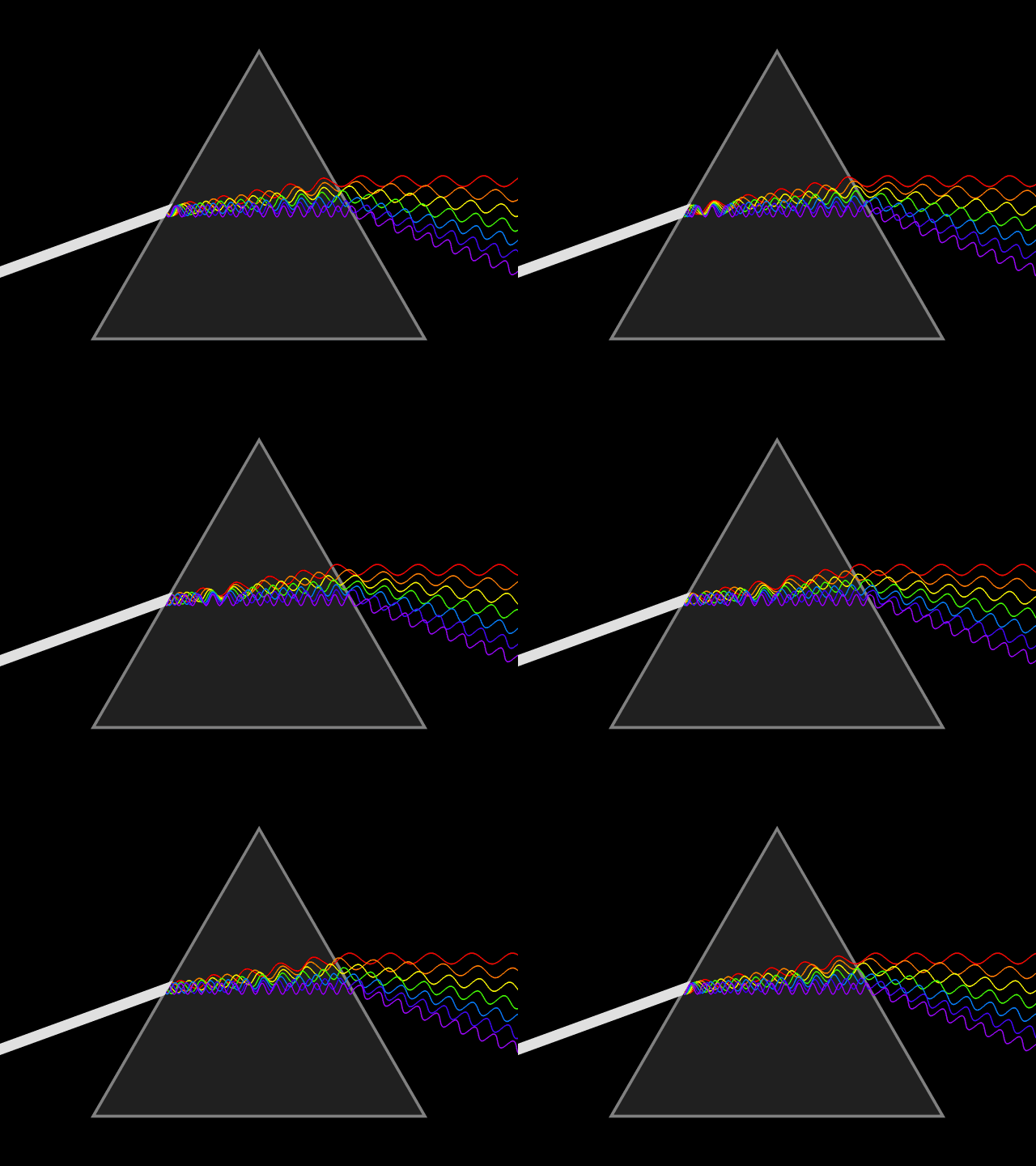
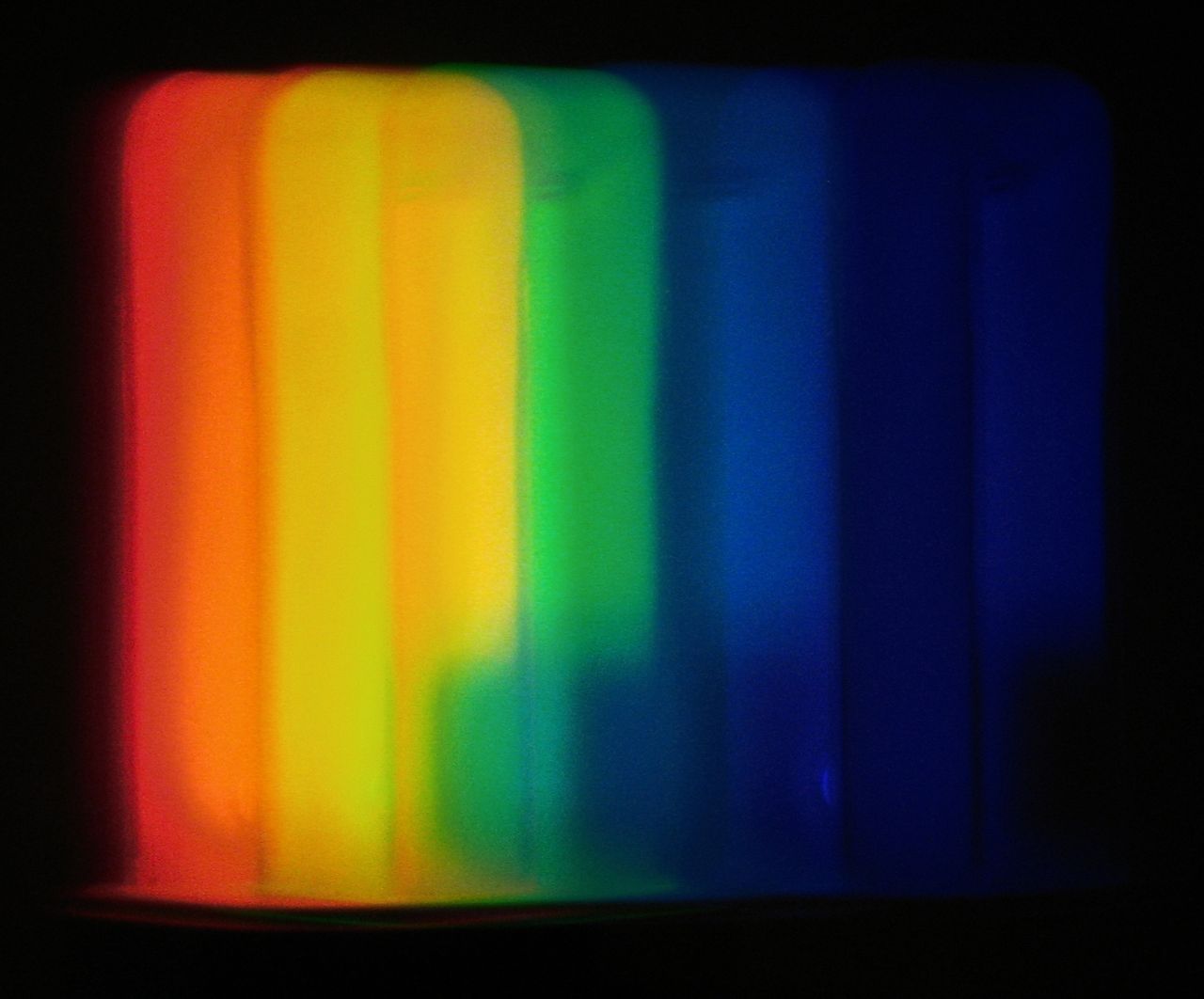
Dispersion is the general term for the dependence of a wave's velocity on its frequency. In many media the speed at which a wave crest or a modulation travels varies with frequency, so different spectral components of the same signal separate as they propagate. Key concepts often used to describe dispersion are frequency, velocity and the material response that produces refraction of waves. In everyday optics dispersion is visible when white light (white light) is split into a color spectrum and forms a rainbow.
Image gallery
4 Images

How dispersion arises
At the microscopic level, dispersion comes from how a medium’s constituents respond to different frequencies: bound charges, resonances, and structural geometry change the refractive index or the effective stiffness and inertia seen by a wave. Analytically this relation is expressed by a dispersion relation linking angular frequency and wavenumber; its slope gives the group velocity while the ratio gives the phase velocity. When group and phase velocities differ, wave packets distort and pulses broaden.
Examples and applications
Optical prisms and diffraction gratings separate light by frequency and are classical demonstrations of dispersion. In fluid dynamics long and short water waves travel at different speeds, which shapes wave trains on the sea. Seismic waves show dispersion because Earth materials vary with depth. In telecommunications (telecommunication), dispersion causes pulse spreading in optical fibers and wired channels and is a primary limit on data rate and transmission distance.
- Types: material (intrinsic), waveguide (geometry), and modal (multi-mode) dispersion.
- Optical effects can be measured by refractive index versus wavelength curves and modeled by empirical formulas.
- Practical tools include prisms, gratings and chirped mirrors to manage spectral components.
History and mitigation
Newton and others first studied visible dispersion with prisms. Modern engineering addresses unwanted dispersion with compensation techniques: dispersion-compensating fibers, grating pairs, nonlinear pulse shaping and adaptive equalization. Measurement of dispersion is routine in optics and radio engineering and remains central to improving instrument resolution and communication bandwidth.
For deeper technical introductions and experimental data see resources on frequency dependence and velocity in dispersive media, and practical guides to refraction and spectrum analysis (white light, color spectrum, rainbow).
Related articles
Author
AlegsaOnline.com Dispersion (wave phenomena) Leandro Alegsa
URL: https://en.alegsaonline.com/art/27703