
Doppler radar: measuring motion by frequency shift
Doppler radar uses the Doppler effect to determine the radial velocity of targets. It is widely used in weather observation, traffic enforcement, air traffic control and military tracking.
Doppler radar determines how fast an object is moving toward or away from the instrument by detecting a change in the frequency of returned radio waves. This frequency change is the Doppler effect; a target moving along the radar beam produces a shifted return proportional to its radial velocity. The basic relation between the measured frequency shift and speed is widely used in science and engineering; for background on the underlying phenomenon see Doppler effect.
Image gallery
5 Images


Key types and system elements
Implementations vary by waveform and signal processing. Common categories include:
- Continuous-wave (CW): transmits a continuous signal and measures Doppler shift directly; good for velocity but not for unambiguous range unless modulated.
- Pulsed, coherent radar: sends short pulses with preserved phase information so both range and radial velocity can be estimated from returns.
- Frequency-modulated continuous wave (FMCW): sweeps frequency over time to derive range and velocity in compact systems.
All variants rely on coherent detection and digital processing such as pulse-pair methods or Fourier analysis to extract velocity from noisy echoes. For an overview of radar fundamentals see radar basics.
Operation, strengths and limitations
Doppler radar provides a precise measurement of radial velocity—the component of motion along the radar beam. It does not directly measure transverse motion, so full vectors require scans from multiple directions or additional sensors. Practical challenges include ground clutter, moving-target interference, and velocity ambiguity (aliasing) when doppler shifts exceed system limits. Signal processing mitigates many problems but cannot recover non-radial components from a single look.
Applications and examples
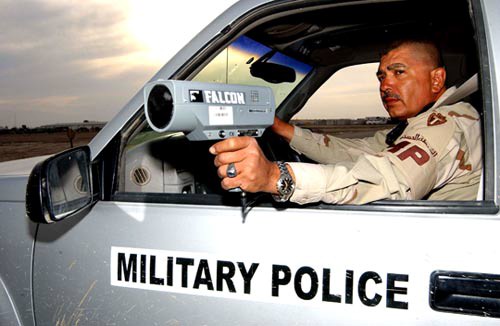
Doppler radar is central to modern weather surveillance, where it reveals wind speed, shear and rotation inside storms and helps detect tornado signatures. Law enforcement speed radars use the same principle to measure vehicle speeds. Air traffic control, maritime surveillance and many military trackers employ Doppler methods to separate moving objects from background and to estimate approach or retreat rates. The technique is closely related to Doppler ultrasound used in medicine, though the hardware and frequencies differ. For practical performance and measurement considerations consult technical resources.
History and notable facts
The Doppler effect was described in the 19th century and later adapted to radio and radar in the 20th century as electronic and signal-processing technologies matured. Doppler capability transformed meteorology and target-tracking by adding motion information to range and bearing. Modern weather radars combine Doppler velocity with reflectivity and scanning strategies to produce three-dimensional depictions of atmospheric motion.
Related articles
Author
AlegsaOnline.com Doppler radar: measuring motion by frequency shift Leandro Alegsa
URL: https://en.alegsaonline.com/art/28524