
Dido, Queen of Carthage
Overview of Christopher Marlowe’s Elizabethan tragedy Dido, Queen of Carthage: sources, themes, dramatic features, historical context and legacy in early modern literature.
Overview
Dido, Queen of Carthage is an Elizabethan stage tragedy traditionally attributed to Christopher Marlowe. The play adapts the story of Dido and Aeneas from classical sources, presenting the Carthaginian queen's passionate love and ruin. The exact date of composition is uncertain, but many scholars consider it an early work by Marlowe, possibly written during or shortly after his time at Cambridge. The earliest extant print edition appears later, and its text reflects both classical influence and the rhetorical intensity associated with Marlowe's drama.
Image gallery
1 Image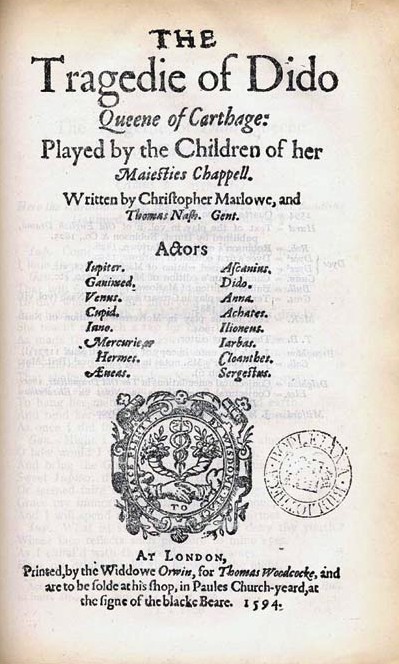
Sources and plot basis
Marlowe drew on Roman and Augustan poetry for his plot. Principal models include Virgil's narrative in the Aeneid and elements from Ovid's letters in the Heroides. From these texts he adopted the familiar outline: Aeneas arrives in Carthage, a divinely instigated romance develops, and Aeneas ultimately abandons Dido to pursue his destined mission, leading to her despair and suicide. Marlowe, however, reshapes these materials to intensify Dido's experience rather than foregrounding Aeneas's imperial destiny.
Dramatic features and themes
- Emphasis on individual passion: the play foregrounds Dido's emotional life and moral conflict.
- Rhetorical blank verse and poetic declamation common in Marlowe's work.
- Themes of love, fate versus will, political responsibility, and the clash between personal desire and public duty.
- Use of classical myth to probe questions of gender and authority in an Elizabethan setting.
History, authorship and reception
Scholarly opinion varies about collaborative involvement and exact dating; some critics have noted stylistic differences that suggest revision or multiple hands. The play has not enjoyed the same continuous performance history as some contemporaneous works, but it has been the subject of modern revivals and academic study because it illuminates Marlowe's developing dramatic voice and the period's engagement with classical epic. Its treatment of Dido influenced later English responses to the Aeneid, including dramatic and musical adaptations.
Legacy and notable facts
While the more famous English musical setting of the Dido story is Henry Purcell's opera Dido and Aeneas, Marlowe's stage version remains important for its early, dramatic reshaping of a well-known myth. The play is studied as an example of how Renaissance dramatists translated classical sources into questions about identity, power and passion on the early modern stage.
Related articles
Author
AlegsaOnline.com Dido, Queen of Carthage Leandro Alegsa
URL: https://en.alegsaonline.com/art/27249