
Edward II (play) — Christopher Marlowe's history tragedy
A late 16th-century history play long attributed to Christopher Marlowe, treating the downfall of King Edward II, his relationship with Piers Gaveston, and themes of power, favoritism, and violence.
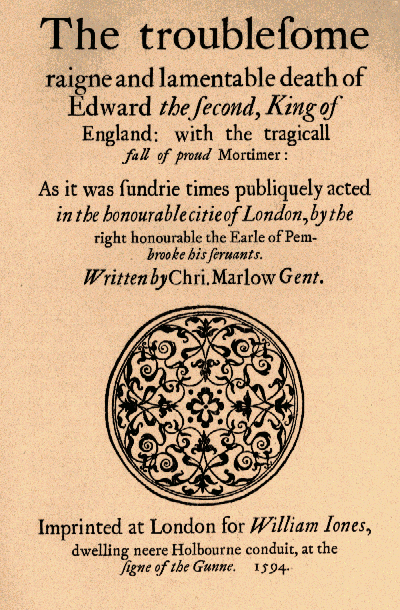
The Troublesome Reign and Lamentable Death of Edward the Second, King of England, with the Tragical Fall of Proud Mortimer is an early modern history play commonly associated with Christopher Marlowe. It dramatizes the political collapse of King Edward II of England and the violent consequences of his reliance on royal favourites, most notably Piers Gaveston. The play is usually dated to no earlier than 1590 and is often discussed alongside other Elizabethan history dramas for its direct treatment of power and personal desire. Play title and text and the author are frequently linked to Christopher Marlowe in critical accounts.
Image gallery
2 Images
Themes and dramatic qualities
Marlowe's drama (or the text attributed to him) foregrounds the tensions between kingship and personal attachment, exploring how favoritism can undermine royal authority. Its candid depiction of affection between Edward and Piers Gaveston was striking for the period and remains a focus of modern commentary. The play uses energetic speech, confrontation scenes, and episodes of political plotting to examine tyranny, honor, and revenge. Technically, it displays many features of Elizabethan tragedy and history plays, including forceful blank verse and scenes that move quickly between court intrigue and public crisis.
Sources, composition, and textual history
The principal narrative source for the drama is the chronicle tradition exemplified by Raphael Holinshed's Chronicles, which provided the historical framework and many episodic details. The surviving text comes down to readers in early printed forms and has been edited repeatedly; scholars debate details of composition, revision, and authorship but agree on its broadly late-16th-century origin. The play adapts historical material to intensify personal and political stakes, emphasizing dramatic conflict over strict documentary accuracy.
Performance, adaptations, and legacy
The work has enjoyed intermittent stage revivals and scholarly attention, and it has inspired modern reinterpretations that highlight its sexual politics and vivid portrayals of betrayal. Notable 20th- and 21st-century productions and adaptations, including film and stage reinterpretations, have drawn on its raw presentation of power and victimhood. The figure of Piers Gaveston in the drama remains one of the more famous literary representations of a medieval royal favourite.
Notable features
- Focus on the personal as the catalyst for political crisis.
- Plain, forceful rhetoric characteristic of Marlowe's dramatic style.
- Early modern engagement with themes of governance, legitimacy, and sexual politics.
The play continues to be taught, adapted, and staged because it combines historical narrative with intense individual drama, providing a rich text for discussions about monarchy, favoritism, and the representation of desire in early modern literature.
Related articles
Author
AlegsaOnline.com Edward II (play) — Christopher Marlowe's history tragedy Leandro Alegsa
URL: https://en.alegsaonline.com/art/30274