
Diamagnetism: Weak magnetic repulsion and its physical basis
Diamagnetism is a universal, typically weak form of magnetism in which materials develop an induced magnetic moment that opposes an applied magnetic field.
Overview
Diamagnetism is a form of magnetism in which an applied magnetic field induces a magnetic moment in a material that opposes the field, producing a weak repulsive effect. It is present in all materials but is usually masked by stronger kinds of magnetism in substances that also show paramagnetism or ferromagnetism. For a general introduction to magnetic behavior, see magnetism.
Image gallery
3 Images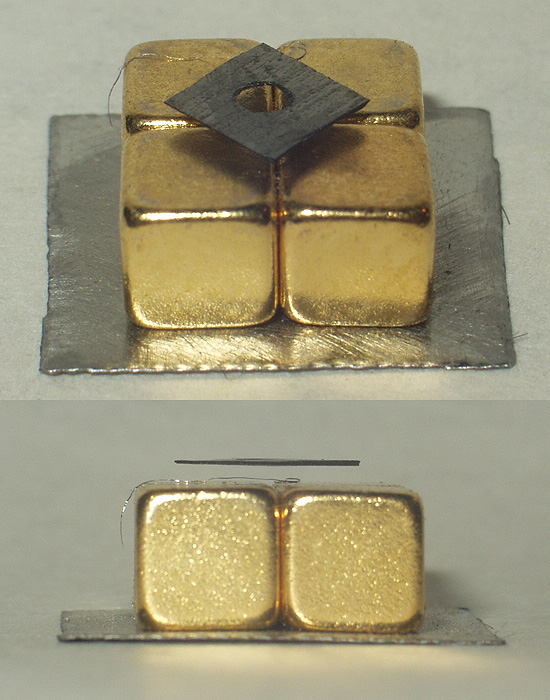

Physical mechanism
At the microscopic level diamagnetism arises from changes in the motion of electrons when an external magnetic field is applied. According to electromagnetic induction (Lenz's law), circulating electronic currents are induced that create a magnetic moment opposite to the applied field. In atoms and molecules this response is typically very small and proportional to the field strength; the magnetic susceptibility is negative. Diamagnetism is strongest where electrons are paired and no permanent magnetic moments are present.
Characteristics and examples
Diamagnetic effects are generally weak but detectable in several materials. Notable examples include:
- Bismuth and antimony, historically important because they were among the first materials observed to repel a magnet; early observations date from 1778 and are often cited in historical accounts — see also bismuth and antimony.
- Water and most biological tissues, which are largely diamagnetic because of their water content; this is why a very strong magnet can measurably affect water.
- Pyrolytic graphite, used in tabletop levitation demonstrations because it exhibits comparatively strong diamagnetism among non-superconducting materials.
History and notable demonstrations
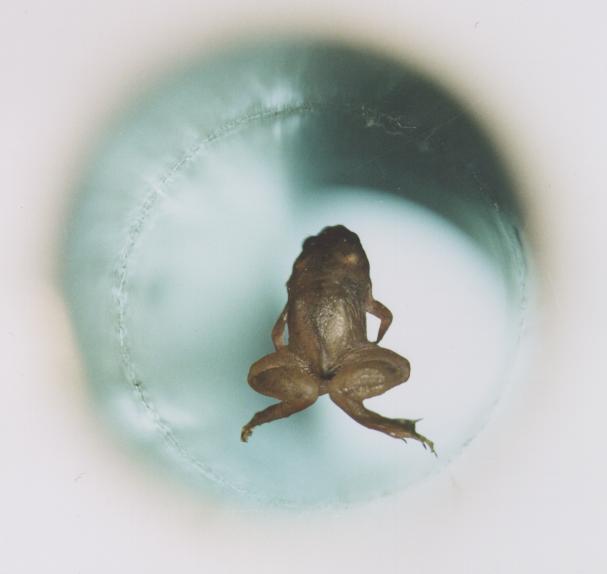
Observations that some substances repel magnets go back to the 18th century. In the 19th century Michael Faraday systematically studied magnetic response and helped establish diamagnetism as a distinct category. In modern times dramatic demonstrations — including levitating small objects and even a live frog in a very strong field — illustrated diamagnetism's reality despite its feeble strength.
Applications and distinctions
Diamagnetism is used mainly in scientific measurement and demonstration rather than in everyday magnetic devices. It contrasts with paramagnetism (weak attraction due to unpaired electrons) and ferromagnetism (strong, permanent magnetization). A special case is superconductivity: superconductors expel magnetic fields completely (the Meissner effect) and behave as perfect diamagnets in the superconducting state. Practical uses include sensitive magnetic susceptibility measurements and educational levitation displays.
For further reading on magnetic phenomena and measurement techniques see magnetic repulsion experiments and related resources.
Related articles
Author
AlegsaOnline.com Diamagnetism: Weak magnetic repulsion and its physical basis Leandro Alegsa
URL: https://en.alegsaonline.com/art/27100