
Antimony (Sb): properties, history, and uses
A concise overview of antimony (Sb): its identity, physical and chemical properties, natural occurrence, historical uses, modern applications and safety considerations.
Antimony is a chemical element often referenced by its symbol Sb, derived from the Latin name stibium. It has atomic number 51 and an approximate atomic mass of 121.8. For a general reference on the element see antimony. In bulk it appears as a brittle, blue-gray metalloid that shows traits intermediate between metals and nonmetals; many of its compounds and its elemental form are toxic in sufficient amounts.
Image gallery
10 Images


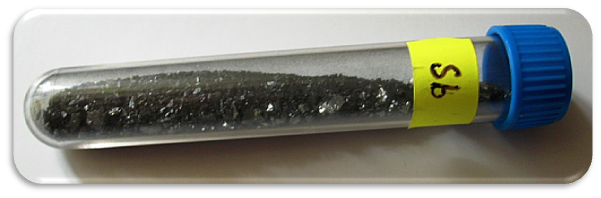


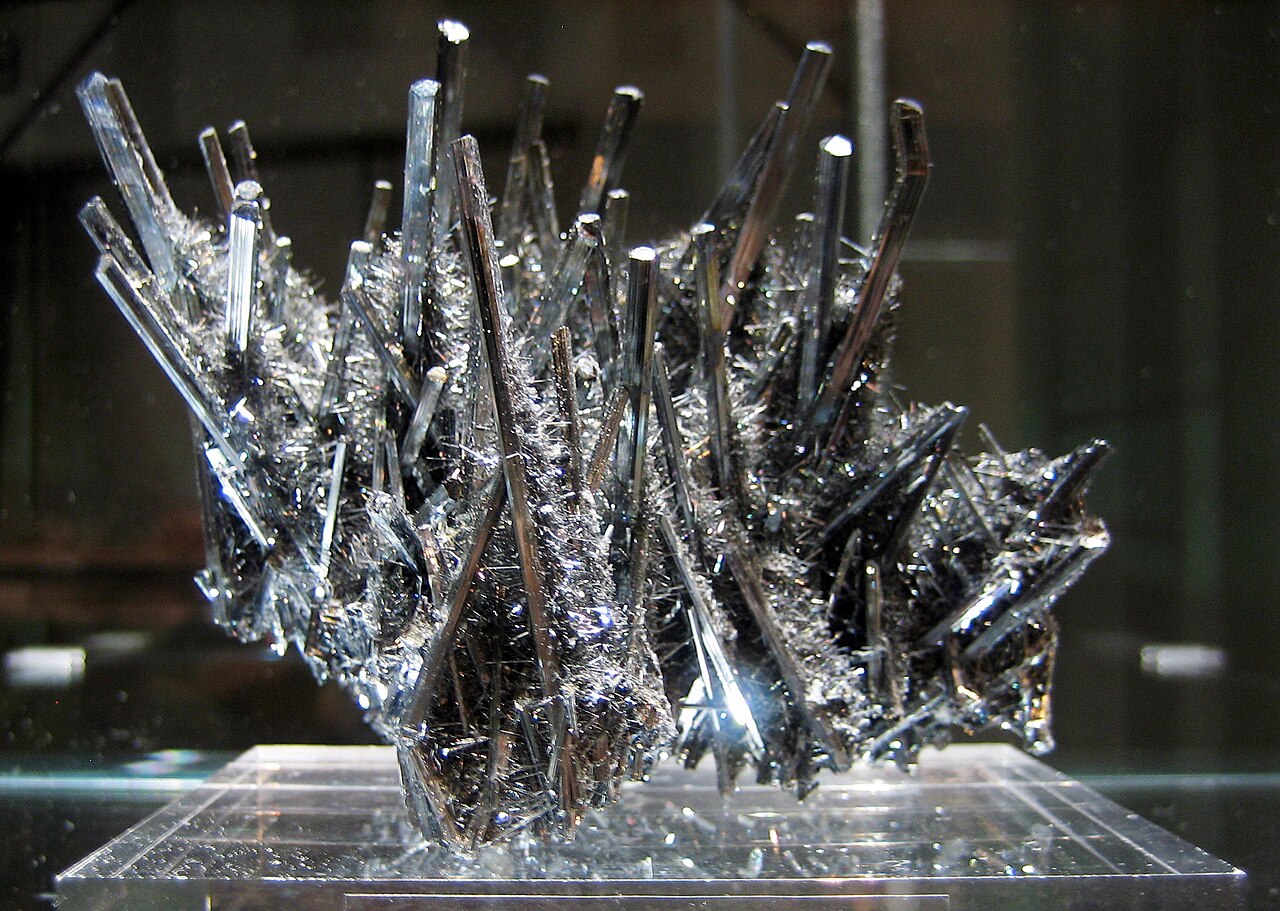

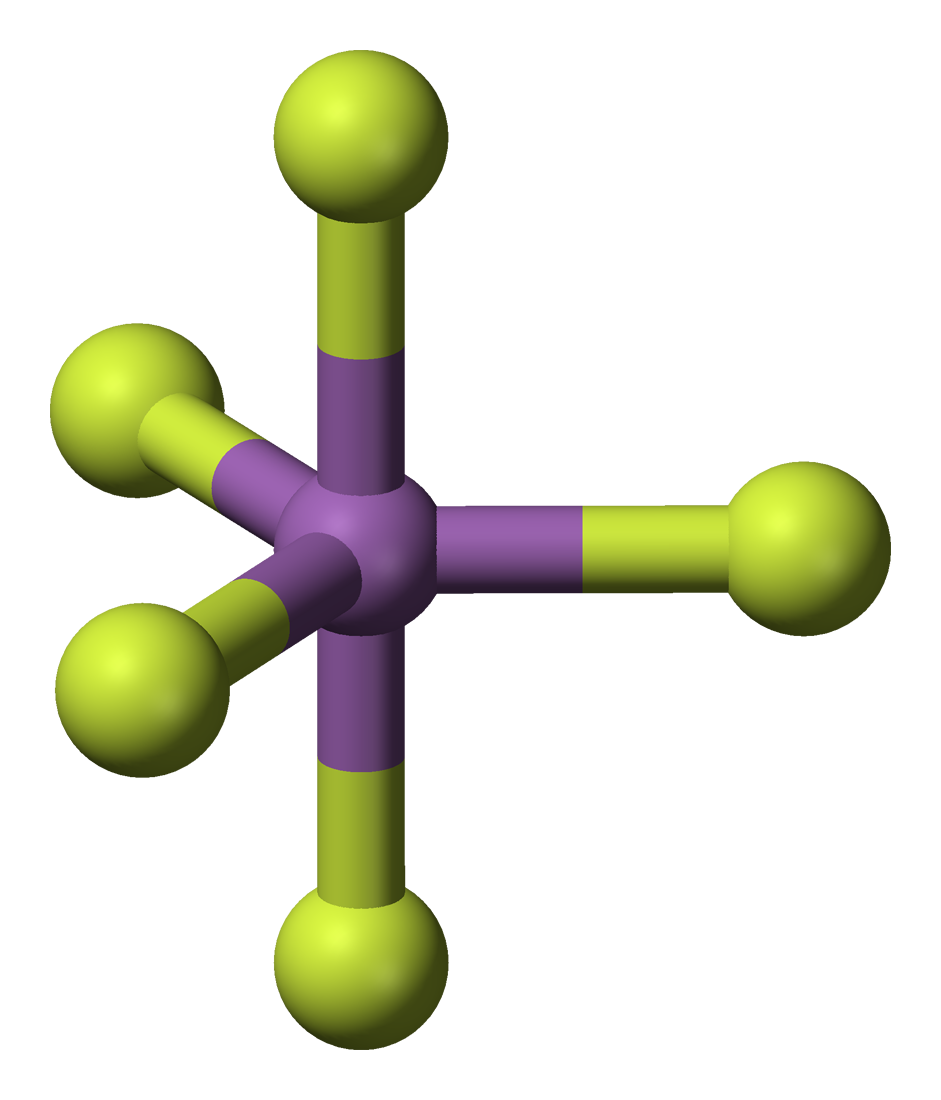
Properties
Antimony displays a metallic luster and is relatively brittle at room temperature. Chemically it most commonly exhibits +3 and +5 oxidation states and forms a variety of oxides, sulfides and halides. The principal ore is stibnite (antimony sulfide), from which the element is traditionally extracted. As a group 15 element it shares chemical relationships with arsenic and bismuth.
Occurrence and extraction
Antimony is found in mineral deposits worldwide, often as stibnite (Sb2S3). Historically important deposits have been worked in several regions, and modern production is centered where large, accessible ores exist. Recovery typically involves concentration of the ore followed by roasting or chemical reduction to produce metallic antimony or antimony compounds.
Uses and applications
Antimony and its compounds have diverse industrial uses. Major applications include:
- Flame retardants: certain antimony oxides are used with halogenated materials to inhibit combustion.
- Alloys: small additions of antimony harden lead and tin alloys, improving battery grids, solder and pewter.
- Electronics and optics: antimony compounds are used in some semiconductor and infrared detector materials.
Because it modifies mechanical and electronic properties, antimony remains important in niche metallurgical and chemical roles.
History, safety and notable facts
Antimony-bearing minerals were used by ancient cultures—most famously as the eye cosmetic kohl. Its distinctive name reflects a long record of human use. Modern handling recognizes health and environmental risks: inhalation or prolonged exposure to certain antimony compounds can be harmful, so occupational and environmental controls limit releases and exposure. In the periodic table antimony occupies group 15 and period 5, between arsenic and tellurium, and is usually classified as a metalloid rather than a true metal.
Questions and answers
Q: What is Antimony?
A: Antimony is a chemical element.
Q: What is the chemical symbol for Antimony?
A: The chemical symbol for Antimony is Sb.
Q: What is the origin of the symbol Sb?
A: The symbol Sb comes from the Latin name of 'stibium' for the element.
Q: What is the atomic number of Antimony?
A: The atomic number of Antimony is 51.
Q: What is the atomic mass of Antimony?
A: The atomic mass of Antimony is 121.8.
Q: What is the appearance of Antimony?
A: Antimony is a blue-gray element.
Q: Is Antimony toxic?
A: Yes, Antimony is somewhat toxic.
Tags
Related articles
Author
AlegsaOnline.com Antimony (Sb): properties, history, and uses Leandro Alegsa
URL: https://en.alegsaonline.com/art/4670